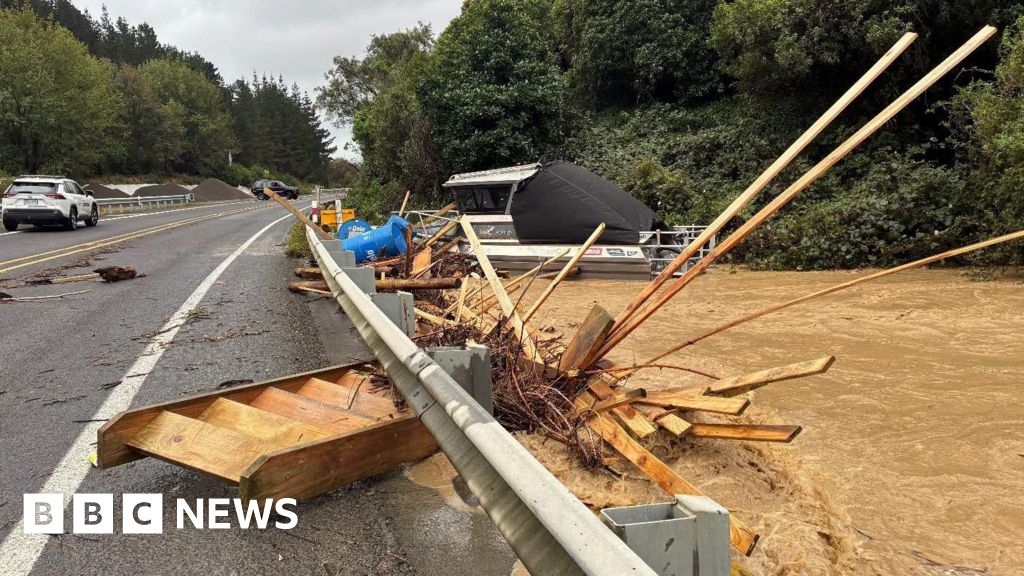
Wellington has declared a state of emergency after record rainfall of 77mm in less than an hour triggered flash flooding, landslides, evacuations, and at least one missing person. Some flights at Wellington Airport were cancelled and several schools shut their campuses as authorities warned residents to delay non-essential travel and prepare for worsening weather. The event adds to regional disruption less than a week after Cyclone Vaianu hit New Zealand's North Island.
This is a near-term disruption event, not yet a macro regime change, but the second-order effects are meaningfully more interesting than the headline damage. The immediate winners are high-quality balance sheet assets with minimal exposure to localized traffic interruption; the losers are businesses whose revenue depends on physical footfall, airport throughput, and just-in-time deliveries. In the next 24-72 hours, the key transmission channel is operating leverage: a small hit to occupancy, dining, rentals, or local retail can translate into an outsized earnings miss because fixed costs remain intact.
The bigger medium-term issue is insurance and reinsurance. Repeated flood/landslide events compress underwriting margins, raise renewal rates, and can force stricter exclusions on low-lying property stock, which is a slow-burn negative for residential real estate valuations and mortgage risk appetite. For transport and tourism, the risk is not only canceled flights today but a short-lived reputational drag: leisure travelers rebook, but business travel and event traffic often do not fully recover, and that can linger for several weeks after weather normalizes.
The contrarian angle is that the market often over-penalizes the first-order damage while underpricing the insurance and remediation spend that follows. Construction, drainage, cleanup, and temporary accommodation demand can offset some of the local economic loss over 1-6 months, especially if infrastructure repair budgets are accelerated. The real tail risk is a compounding weather pattern: if another storm lands before recovery, you get a much larger hit to confidence, municipal finances, and property pricing than a one-off event would justify.
AI-powered research, real-time alerts, and portfolio analytics for institutional investors.
Overall Sentiment
strongly negative
Sentiment Score
-0.65
