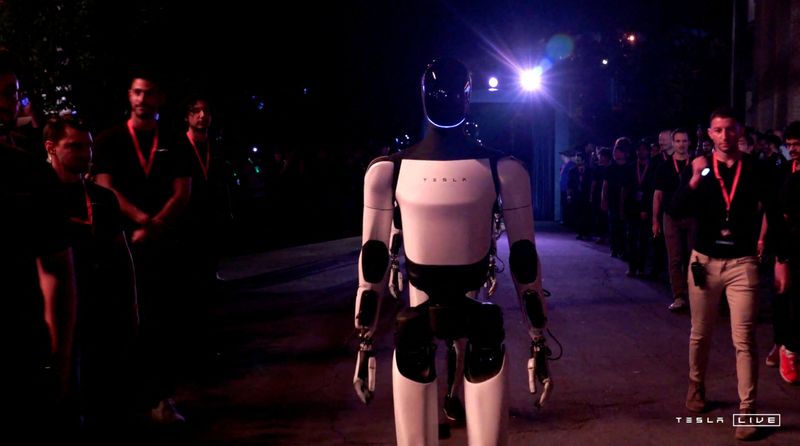
Piper Sandler reiterated an Overweight rating on Tesla with a $500 price target, saying its updated model values the stock at about $400 per share before any value is assigned to Optimus. The firm argues investors are effectively getting the Optimus humanoid robot business for free, with those future businesses potentially worth roughly $100 per share. While 2026-2027 estimates are below consensus, the note is constructive overall and could modestly support sentiment in TSLA.
The market is implicitly re-rating TSLA as a sum-of-parts story where the optionality now matters more than the near-term car cycle. That’s constructive for the stock because it shifts the debate from cyclical auto margins and delivery trends to higher-multiple software/robotics monetization, which can support valuation even if core unit growth stays sluggish. The second-order effect is that TSLA increasingly trades like a venture portfolio inside a public mega-cap: the better the market believes in FSD/robotaxi/Optimus timelines, the less the vehicle business matters to the equity.
The main risk is not whether Optimus exists, but whether investors are paying up too early for a revenue stream that will likely be back-end loaded by years. If the next 6-12 months produce slower deliveries, weaker regulatory credit contribution, or any evidence that autonomy commercialization remains episodic rather than scalable, the market can easily compress the “AI premium” even without a fundamental disaster. In that scenario, TSLA’s downside is less about earnings misses and more about multiple de-rating as the free-option narrative gets pushed out.
The contrarian read is that the stock may already be close to fully reflecting the near-term value of the core business, so the upside from here depends on credible evidence of execution in non-auto lines. That means catalysts matter more than estimates: robotaxi milestones, insurance attach rates, and anything that quantifies inference revenue could re-anchor expectations within 1-2 quarters. Without that, the current setup is vulnerable to a classic over-earning of the optionality theme, where investors are effectively underwriting a future that may take several product cycles to reach.
For competitors, the bullish read on TSLA is a warning shot for pure-play EV makers and legacy OEMs: if Tesla’s equity can be supported by software/robotics optionality, then capital markets will continue to reward names with credible AI adjacency and punish commodity auto exposure. Suppliers tied to Tesla’s autonomy stack and robotics components could see more durable demand than traditional drivetrain vendors, but that benefit is uneven and likely delayed until prototype-to-production transitions become visible.
AI-powered research, real-time alerts, and portfolio analytics for institutional investors.
Request DemoOverall Sentiment
mildly positive
Sentiment Score
0.35
Ticker Sentiment
