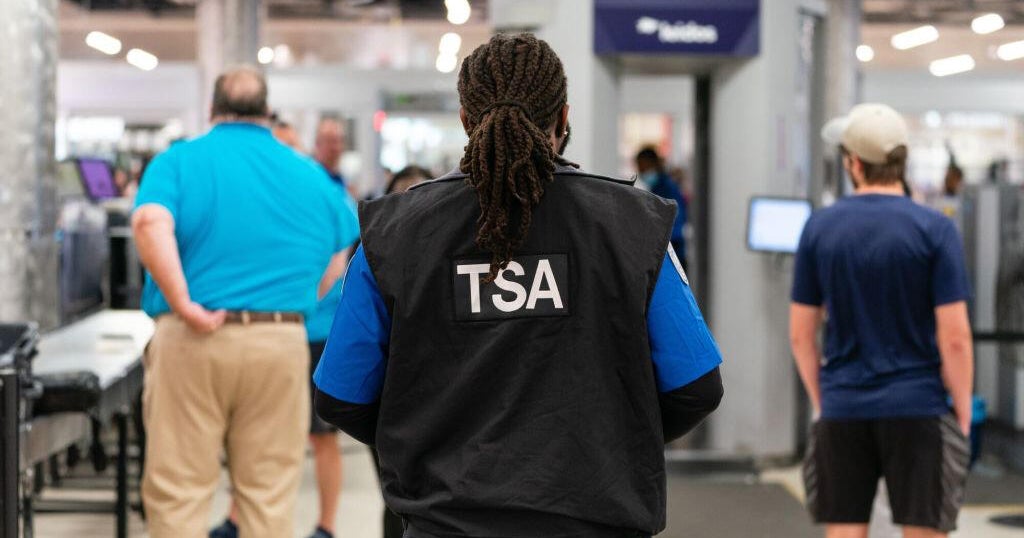
50,000 TSA officers are required to work without pay amid a Department of Homeland Security funding lapse that began Feb. 14, producing the first full missed paycheck and more than doubling unscheduled absences with over 300 employees leaving the agency. Staffing shortages have caused long security lines and at least one checkpoint closure (Philadelphia), with long waits reported at multiple airports and an alleged assault at Dallas Love Field leading to federal charges. President Trump publicly thanked unpaid TSA workers while blaming political opponents, increasing political friction around resolving the shutdown and raising near-term operational risk for airports and the travel sector.
Operational friction at airport security cascades into quantifiable P&L stress for multiple stakeholders: airlines face incremental re-accommodation and fuel burn from delayed turnarounds, airports and concessionaires lose per-passenger ancillary spend when throughput is impaired, and ground-transport providers see changes in demand elasticity. Model: a sustained 5% reduction in screening throughput at peak hubs can translate into a 2–4% reduction in same-day connections and a ~$30–100m/week incremental cost pool for large US carriers through rebookings, compensation and disrupted aircraft utilization.
Politically-driven fixes are the highest-probability catalyst for normalization within days–weeks, while procurement and structural changes play out over 6–24 months. If the federal response shifts from short-term stopgaps to durable remediation, expect an accelerated RFP cycle for automated screening and outsourced operations that could create a $0.5–1.5bn incremental federal procurement opportunity for a small set of contractors over the next 12–24 months.
Non-obvious winners include curb-to-curb transport and short-notice mobility services that capture demand leakage from stressed terminals, while travel booking platforms bear conversion risk when passenger experience degrades. Tail risk — a high-profile security incident tied to screening gaps — would force immediate, large-scale spending and regulatory change, quickly crystallizing winners (security tech & integrators) and losers (airlines with weak balance sheets) within 7–30 days.
AI-powered research, real-time alerts, and portfolio analytics for institutional investors.
Request DemoOverall Sentiment
moderately negative
Sentiment Score
-0.60
