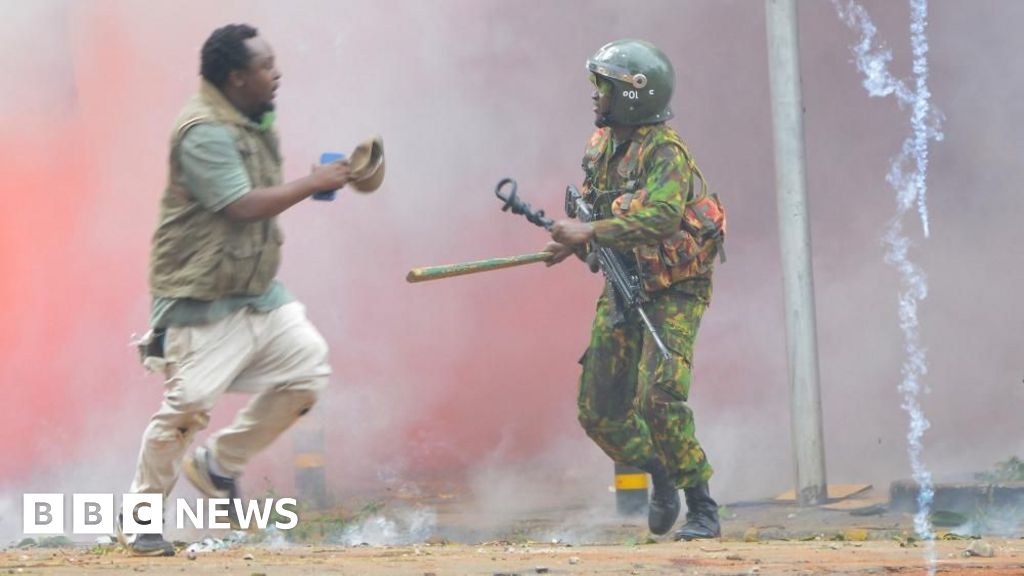
Kenya is experiencing significant political instability following widespread anti-government protests that resulted in at least eight deaths and 400 injuries, including eight gunshot wounds, as police clashed with demonstrators. These protests, which included calls for President William Ruto's resignation, occurred exactly a year after similar deadly unrest, signaling persistent challenges to national peace and stability. The government's attempts to restrict media coverage, despite a High Court reversal, underscore the escalating tensions.
Kenya is experiencing a significant escalation in political and social instability, marked by widespread anti-government protests that have resulted in at least eight fatalities and 400 injuries. The demonstrations, which echo a similar wave of deadly unrest from the previous year, signal persistent and deep-seated opposition to President William Ruto's administration. The direct challenges to state authority, including attempts by protesters to reach the presidential residence and calls for the president's resignation, underscore a volatile political climate. The government's attempt to impose a media blackout, subsequently overturned by the High Court, highlights friction between state institutions and an increasingly tense domestic environment. This situation points to a material increase in country-level risk, threatening economic stability and the operational environment for any assets exposed to Kenya.
AI-powered research, real-time alerts, and portfolio analytics for institutional investors.
Request DemoOverall Sentiment
strongly negative
Sentiment Score
-0.65
