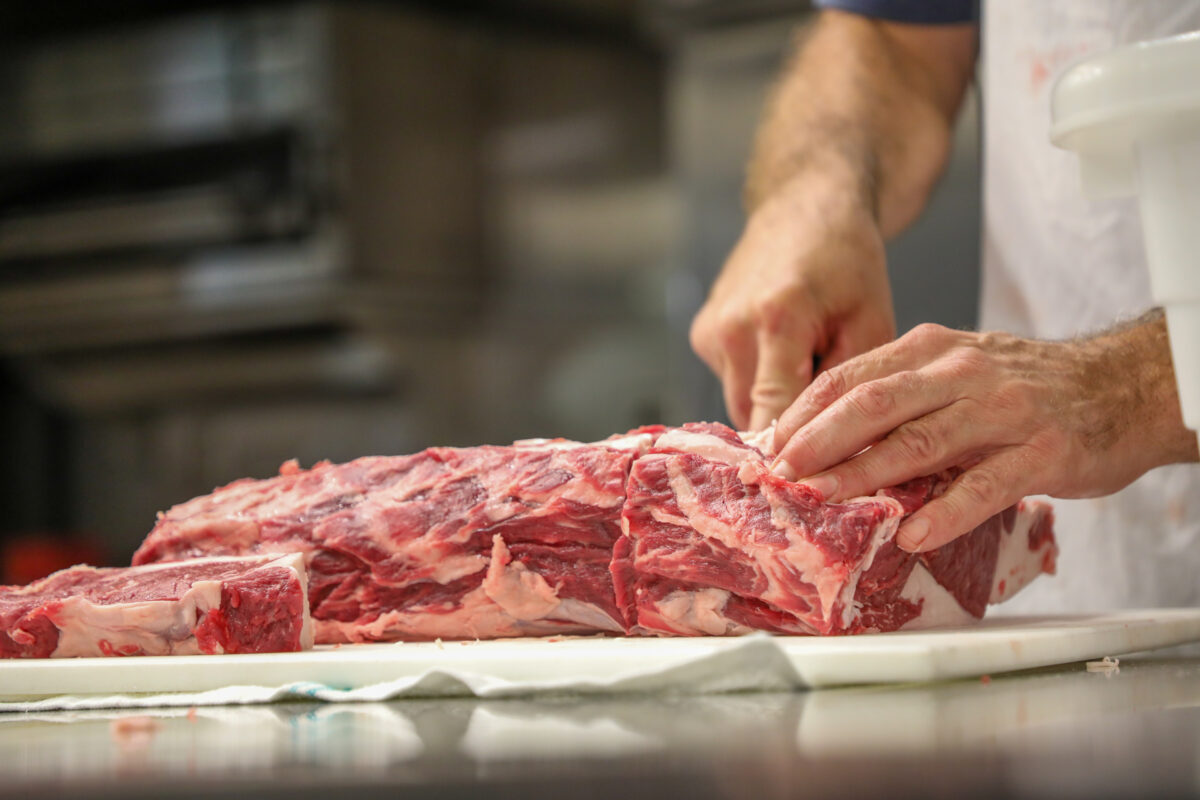
U.S. meat demand remains strong, with 2025 meat sales at $112 billion and USDA forecasting higher beef, pork and chicken consumption in 2026. Beef prices hit a record $9.64 per pound in April, up about 13% year over year, while pork chops averaged $4.33 per pound, up 9 cents, and boneless chicken breasts averaged $4.17 per pound, down 1 cent. The article points to tight cattle inventories and avian flu recovery as key supply factors, but the overall tone is informational rather than market-moving.
The bigger market implication is not “meat inflation” but a widening divergence across the protein complex. Beef scarcity is a margin windfall for vertically integrated cattle and beef processors with inventory already locked in, while it remains a margin headwind for downstream foodservice and branded packaged-food names that lack pricing power. The most important second-order effect is that sustained beef inflation creates a substitution ladder: consumers trade down to pork first, then chicken, which can tighten poultry pricing faster than current data implies and quietly improve earnings leverage for suppliers exposed to volume rather than spot cattle costs.
The supply response timeline is asymmetric. Beef cannot normalize quickly because herd rebuilding takes years, so elevated retail prices can persist well into next year even if demand softens modestly. Chicken has the shortest cycle and is the most likely to absorb incremental demand without a major price spike, but that also means any renewed avian flu or feed-cost shock would hit margins immediately. Pork sits in the middle: it is the cleanest relative-value beneficiary from beef substitution, but it is also the first place where export weakness or disease headlines would challenge the current stability narrative.
For inflation, the key is that protein is a visible consumer basket item, so it can keep food-at-home inflation sticky even if broader CPI cools. That matters for retailers and restaurant chains because menu pricing lag will compress traffic before it restores margins. The contrarian view is that the market may be underestimating how much substitution can offset headline beef inflation; if consumers trade down aggressively, beef price gains can stall before producers meaningfully rebuild margins, while pork and chicken capture volume without equivalent pricing power.
AI-powered research, real-time alerts, and portfolio analytics for institutional investors.
Request DemoOverall Sentiment
neutral
Sentiment Score
0.05
