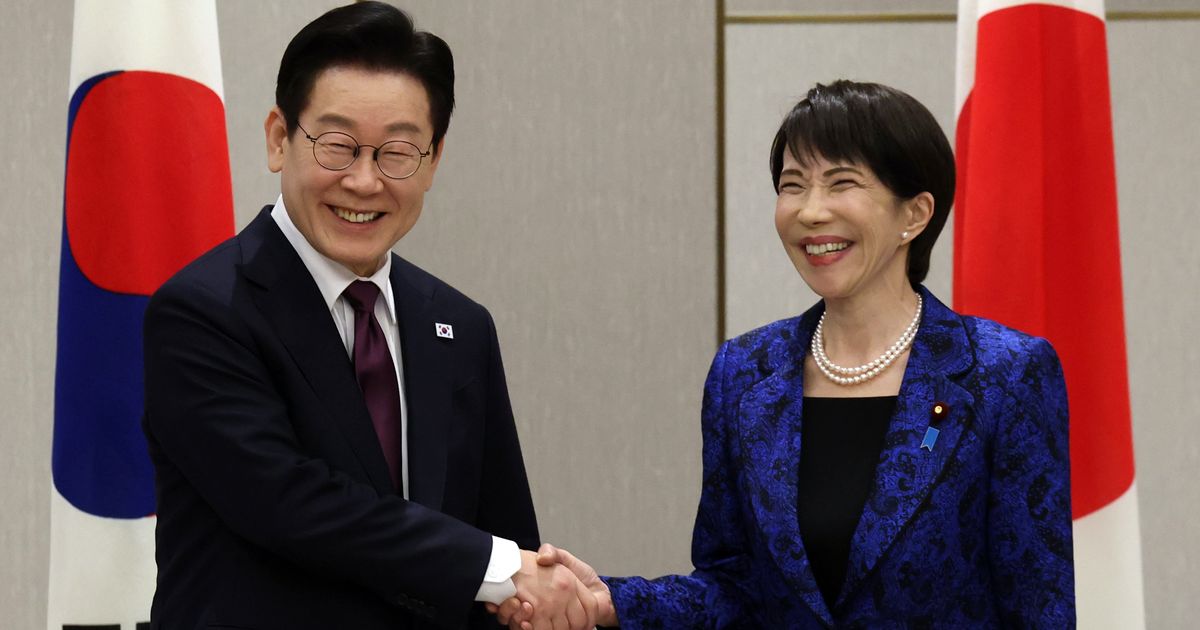
South Korean President Lee Jae Myung and Japanese Prime Minister Sanae Takaichi met in Nara and agreed to deepen cooperation on economic security, supply-chain resilience, artificial intelligence, defense coordination and DNA analysis of wartime remains, while reaffirming collaboration on North Korea denuclearization. The rapprochement may modestly reduce regional political risk and enable incremental coordination on tech and supply-chain policy, but absent concrete trade or fiscal measures and given Tokyo’s domestic political uncertainties, near-term market impact is limited.
Market structure: The summit biases wins to Japan/Korea defense primes, semiconductor equipment vendors and AI infrastructure suppliers as governments signal deeper economic-security procurement and localized supply chains. Expect 12–36 month revenue re-rating for incumbents (potential +10–30% bid pipelines) and marginal pricing power for local suppliers as onshore content requirements rise.
Risk assessment: Tail risks include a Taiwan flashpoint, a nationalist backlash over wartime issues, or a snap-election reversal in Tokyo; any of these could wipe 15–40% off re-rated small-cap defense names in days. Time buckets: immediate (days) — FX and equities knee-jerk; short (weeks–months) — MOUs and budget announcements; long (quarters–years) — capex and localization execution. Watch US export controls and China reactions as critical hidden dependencies.
Trade implications: Favor 6–18 month long exposure to Japan/Korea defense primes and semiconductor-equipment vendors; add 12–36 month exposure to rare-earth/mining names that benefit from diversification away from China. Use concentrated option call-spreads (3–9 month) to capture policy-driven re-rating while limiting premium loss if political risk spikes.
Contrarian angle: Consensus underestimates political fragility — cooperation may be episodic rather than structural. Also underpriced is the inflationary effect of reshoring (higher input costs); miners and specialty materials (rare earths, tungsten) could outperform even if headline equities rally. Key trigger thresholds: Japan defense budget +5% YoY or a signed Japan–Korea supply-chain MOU within 90 days.
AI-powered research, real-time alerts, and portfolio analytics for institutional investors.
Request DemoOverall Sentiment
neutral
Sentiment Score
0.05
