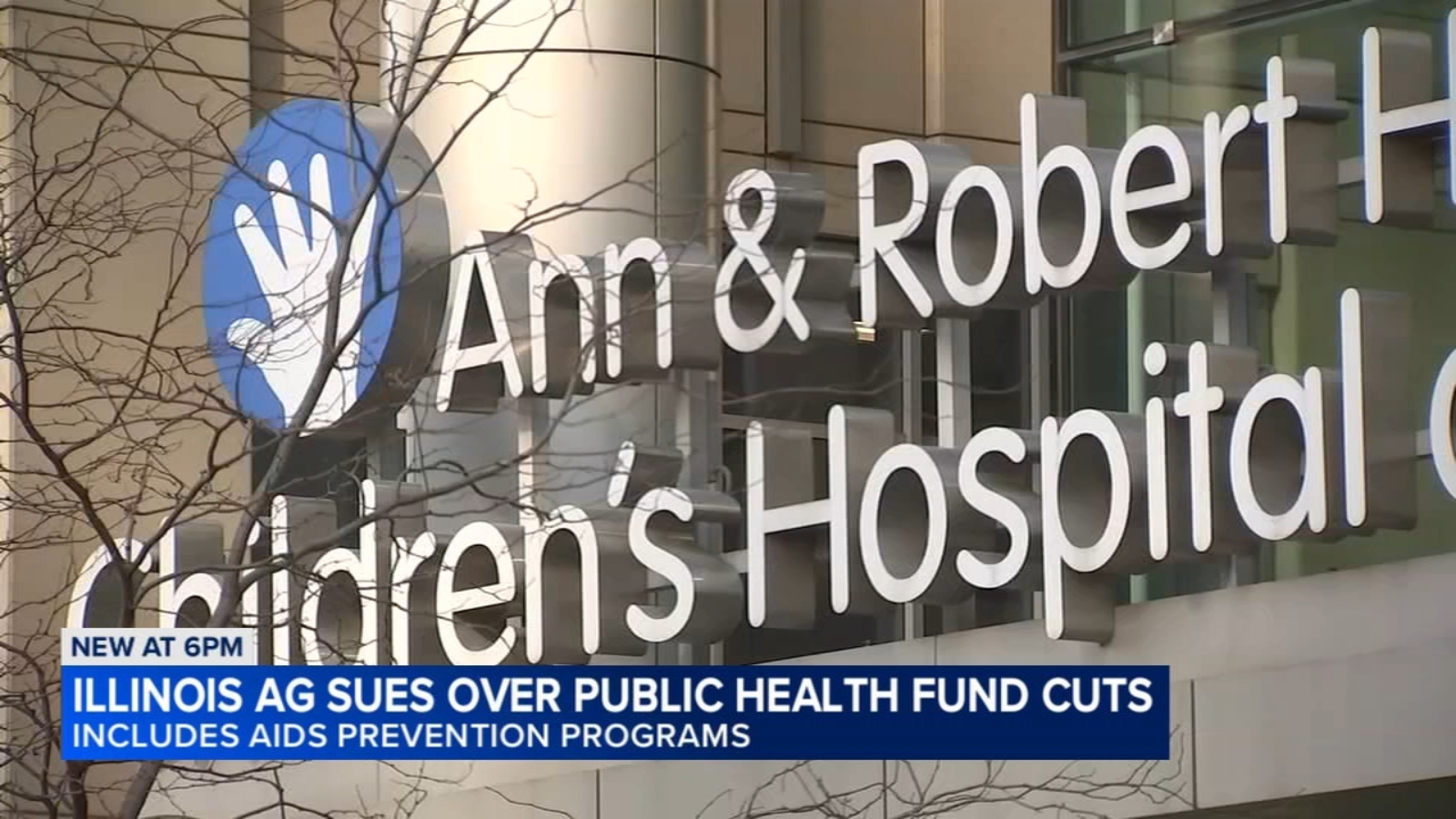
The Trump administration plans to terminate roughly $600 million in CDC public-health grants to four Democratic-led states, prompting Illinois Attorney General Kwame Raoul to sue to block the cuts; targeted programs include multimillion-dollar HIV/STI prevention grants. One affected program is a hospital-run initiative at Lurie Children's Hospital facing a $5.2 million shortfall that supports HIV prevention among Black women, and advocates say cuts will disproportionately harm minority communities. The dispute raises legal and political risk around federal funding priorities for health services, though direct market implications are limited.
Market structure: The announced $600M rescission is concentrated, not systemic, but it directly hurts public-health NGOs, city-run programs and smaller safety-net hospitals that rely on grants (e.g., $5.2M loss at Lurie). Large, diversified hospital operators (HCA, UHS) have pricing power and payer mix resilience while smaller, high-uncompensated-care operators (CYH, some community hospitals) face margin pressure and potential cash-flow squeezes over 3–12 months.
Risk assessment: Tail risks include broader rollbacks of federal grants (up to $10B already signaled) or protracted litigation that freezes funds for 6–12+ months, amplifying unpaid-care and state credit stress. Immediate risk (days) is political headlines; short-term (weeks–months) is operating stress for grant-reliant providers; long-term (quarters) is municipal credit re-pricing in affected states if cuts expand.
Trade implications: Expect modest knee-jerk widening in Illinois and similar-state muni credit spreads (~5–25bp depending on duration) and safe-haven demand into Treasuries. Direct equity plays favor large-cap, diversified hospital stocks (HCA) and larger pharma with HIV exposure (GILD) vs levered community hospital operators (CYH) over a 3–9 month horizon; prefer short-duration fixed-income or Treasuries as a hedge.
Contrarian angles: Consensus frames this as purely political; underappreciated is legal friction creating multi-month cash-flow volatility for specific issuers — a catalyst for idiosyncratic distress, not sector collapse. If courts restore funds within 30–90 days, oversold small-cap hospital equities could mean-revert sharply; conversely, prolonged cuts would materially raise defaults among grant-dependent non-profits and widen state muni spreads further.
AI-powered research, real-time alerts, and portfolio analytics for institutional investors.
Request DemoOverall Sentiment
moderately negative
Sentiment Score
-0.45
