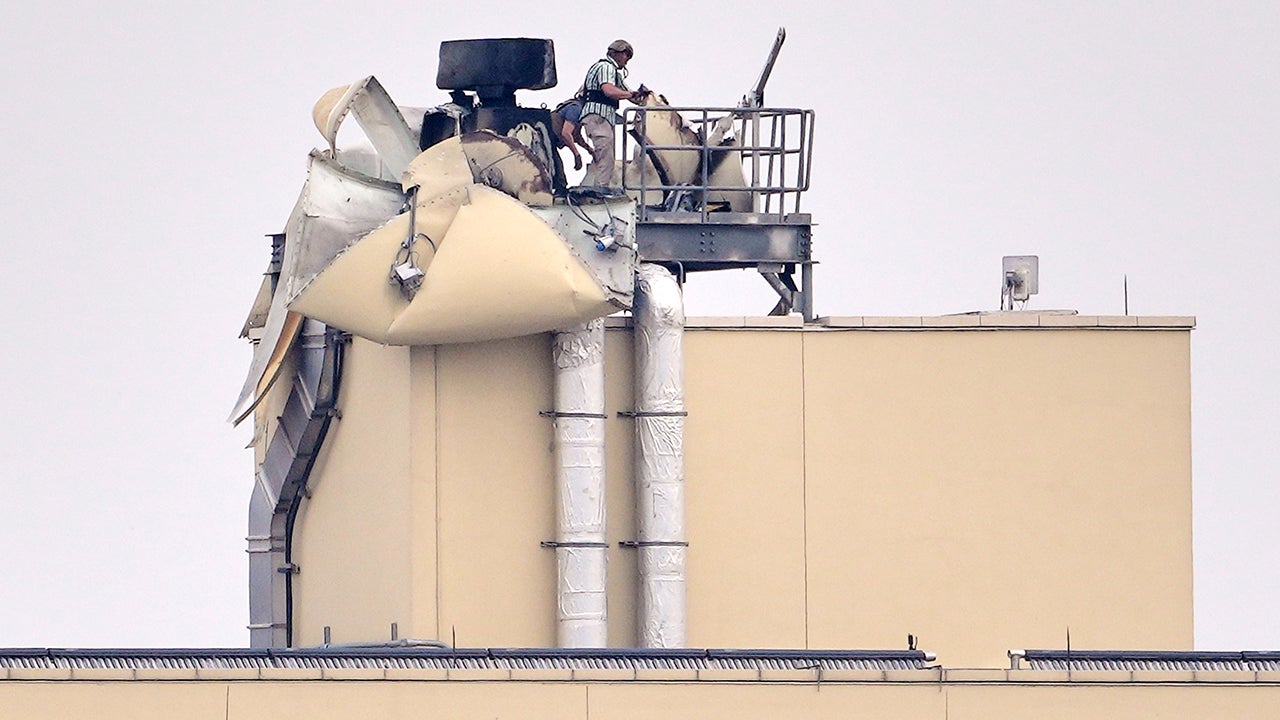
A missile reportedly struck a helipad inside the U.S. Embassy compound in Baghdad and U.S. forces executed a large-scale strike on Kharg Island that CENTCOM says destroyed more than 90 Iranian military targets; Kharg handles roughly 90% of Iran’s crude exports and has ~7 million barrels-per-day loading capacity, posing material risk to oil flows. Fighting and strikes have killed six U.S. service members (KC-135 refueling aircraft lost) and multiple Gulf states report hundreds of missiles/UAVs engaged (e.g., UAE: 9 ballistic missiles + 33 UAVs in one report; UAE cites 294 ballistic missiles, 1,600 UAVs since onset), prompting suspended oil-loading operations and elevated regional disruption risk. The U.S. State Department announced a $10M reward for information on Iran’s new supreme leader and Iran is reported to be using AI for disinformation campaigns, increasing information-warfare and escalation risk.
The most important market mechanism is cost asymmetry: inexpensive unmanned systems can economically exhaust high-cost interceptors and munitions, creating a durable procurement and supply-demand shock in air-defense inventories. Over a 3–12 month horizon this favors firms that can scale low-cost counter-UAS solutions (sensors, directed-energy prototypes, expendable interceptors) and munitions manufacturers with short production lead times; it pressures platforms that rely on single-expensive-shot architectures.
A second-order energy effect is logistical friction: even limited, persistent threats to chokepoints and terminals will raise effective marginal shipping and insurance costs, fragmenting regional crude flows and raising refinery crude slates’ delivered cost by a few dollars per barrel over quarters. That cost is not symmetric—refiners with flexible crude intake and storage capacity capture margin compression, while fixed-export terminals and voyage-dependent tanker owners see revenue upside if rerouting and idle capacity persist.
On the informational front, adversarial use of synthetic media and narrative operations will increase volatility in region-sensitive assets by amplifying false-positive signals for escalation; this raises the value of real-time satellite/intel feeds and data providers that monetize authenticity verification. Over years, buyers (national and corporate) will accelerate de-risking of single-source energy and logistics exposure, increasing long-term demand for diversified storage, crude-swapping platforms, and alternative routing solutions.
AI-powered research, real-time alerts, and portfolio analytics for institutional investors.
Request DemoOverall Sentiment
strongly negative
Sentiment Score
-0.80
