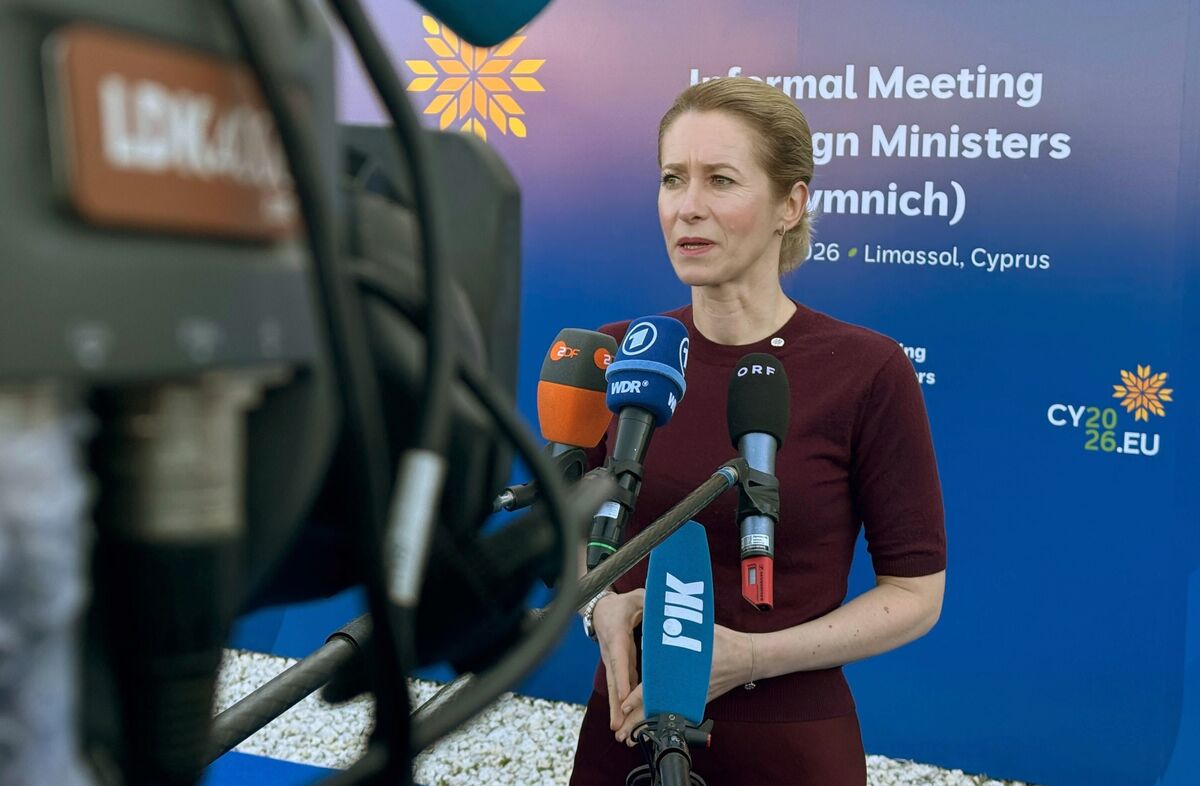
EU foreign policy chief Kaja Kallas warned that discussions about appointing a special envoy to negotiate with Vladimir Putin could play into Russia’s hands. The article highlights diplomatic caution and internal debate among EU ministers rather than a concrete policy shift. The main market relevance is through geopolitics and sanctions risk, but the direct near-term financial impact appears limited.
The market implication is less about diplomacy optics and more about who gains leverage from a fragmented Western process. Any perceived opening to direct channels with Moscow would likely widen intra-EU policy dispersion, which is bearish for the credibility of future sanctions enforcement and export-control coordination; that helps Russia at the margin by increasing arbitrage opportunities across border states, intermediaries, and dual-use supply chains.
The second-order beneficiary set is more interesting than the headline suggests. European defense primes and homeland security names can outperform if the debate reinforces the view that deterrence still depends on rearmament, while energy infrastructure and LNG logistics get a quieter bid if investors conclude that geopolitical risk premia are persistent rather than transient. Conversely, sectors exposed to easing sanctions expectations — industrial automation, machine tools, specialty chemicals, and Baltic/CEE transport links — face a near-term multiple cap because any negotiation talk can delay capex decisions without actually reducing uncertainty.
Catalyst timing matters: this is a policy narrative with a weeks-to-months half-life, not an immediate earnings shock. The tail risk is not a breakthrough with Moscow; it is a prolonged messaging fight that softens compliance and leads counterparties to assume future restrictions may be negotiated away, which would weaken enforcement before any formal rule change. That creates an asymmetric setup where the downside to sanction-sensitive assets can arrive faster than any upside from de-escalation.
Consensus may be underpricing the probability that “talks” themselves become a sanctions leak. If market participants read this as a step toward normalization, the wrong trade is to fade defense too early; historically, credibility losses in coalition policy show up first in lower-risk assets tied to European discretionary growth, then later in direct beneficiaries like defense procurement. The better contrarian framing is that rhetorical de-escalation can be bearish for Europe’s political cohesion even if it looks superficially bullish for risk assets.
AI-powered research, real-time alerts, and portfolio analytics for institutional investors.
Request DemoOverall Sentiment
mildly negative
Sentiment Score
-0.15
