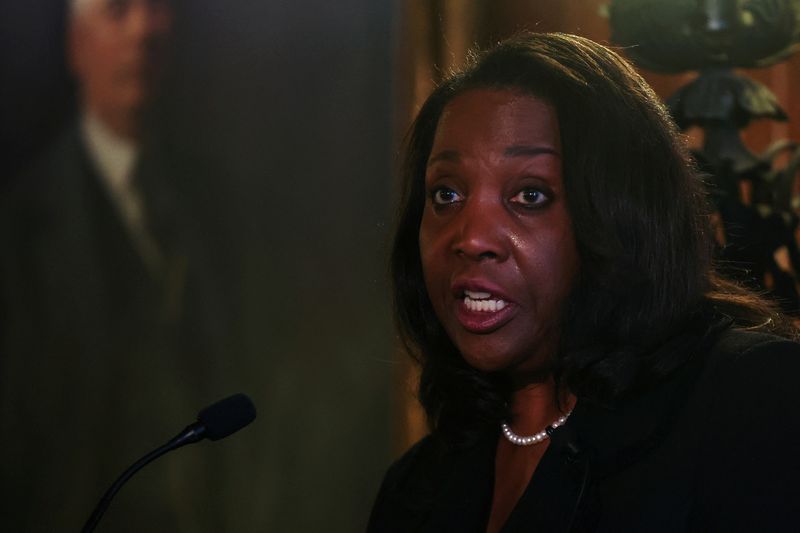
Fed Governor Lisa Cook said the policy rate should stay unchanged for now at 3.50%-3.75% but reiterated she is prepared to raise rates if inflation does not moderate. She cited upside inflation risks from tariffs, higher oil prices tied to the Iran war, and AI-driven demand pressures, while noting the labor market remains stable with unemployment at 4.3% in April. The comments are hawkish and reinforce a higher-for-longer rates backdrop, with potential market-wide implications.
The biggest market implication is not the Fed’s near-term hold itself, but the rising probability that policy stays restrictive longer than consensus expects if energy and tariff-driven inflation remain sticky. That is a negative for long-duration growth, but the effect should be uneven: hardware names with real earnings leverage and AI capex exposure can still work if investors shift from multiple expansion to fundamentals. The second-order risk is that AI infrastructure spending becomes its own inflation impulse through construction wages, power demand, and component bottlenecks, which could compress margins across the broader semicap equipment stack even as headline AI demand stays strong. For SMCI, this is a mixed-to-positive setup tactically but not cleanly bullish strategically. If data center capex remains intact, server integrators benefit from higher near-term spend; however, a higher-for-longer rate path increases financing friction for customers and raises the hurdle rate for incremental AI deployments, which can slow order conversion in 2H. APP is more interesting: ad tech should be less sensitive to rates than unprofitable software, but a delayed easing cycle keeps pressure on consumer discretionary spending and can cap upside to ad budgets, making the stock more of a relative winner than an absolute one. The contrarian view is that the market may be overestimating how persistent the inflation impulse is from oil and tariffs, while underestimating how quickly a peace/diversion of shipping risk could unwind the energy component over a 1-3 month window. That would shift the narrative from ‘higher for longer’ back toward easing, which would likely re-rate the most duration-sensitive AI beneficiaries first. In other words, this is a regime where near-term macro can hurt multiples, but any credible de-escalation in geopolitics could create a sharp squeeze in the exact names investors are forced to own as AI winners.
AI-powered research, real-time alerts, and portfolio analytics for institutional investors.
Request DemoOverall Sentiment
mixed
Sentiment Score
-0.10
Ticker Sentiment
