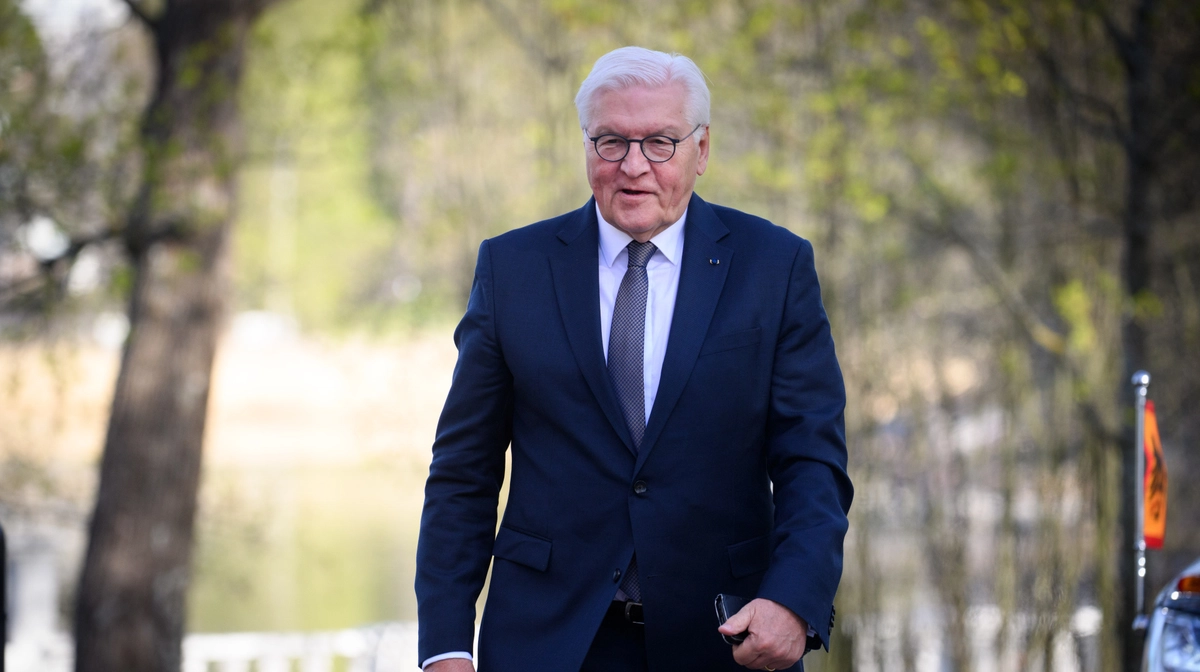
Germany's ruling coalition is reportedly considering incumbent President Frank-Walter Steinmeier as a possible EU negotiator in the Russia-Ukraine peace process, potentially alongside former chancellor Gerhard Schröder. The proposal appears exploratory and politically divisive, with no confirmed support level or formal decision. Market impact is likely limited, though the story underscores ongoing diplomatic maneuvering around the war.
This is less a peace-process headline than a signal that Berlin is testing whether it can convert diplomatic ambiguity into domestic political optionality. The key market effect is not immediate policy change, but a higher probability of coalition friction inside Germany and the broader EU on how to engage Russia; that tends to widen dispersion between “hard line” European defense beneficiaries and sectors exposed to any future normalization trade. If Steinmeier becomes part of a formalized channel, the market will begin pricing a longer tail for ceasefire probability, but the path is noisy and highly reversible because any perceived concession to Moscow would trigger backlash in both German politics and Eastern Europe.
The second-order effect is on defense spending credibility. A more visible negotiation track can temporarily cap the urgency premium in European defense names, yet it may ultimately strengthen rearmament if talks fail and leaders need to prove deterrence. That creates a tactical window: defense equities could underperform on headlines, while any disappointment in the diplomacy narrative likely reinstates the structural bid over the next 1-3 months. The other underappreciated effect is on German political risk: SPD internal splits raise the odds of a more fractured policy process, which can weigh on EUR sentiment at the margin if markets infer slower fiscal and strategic decision-making.
The contrarian read is that Putin’s preferred names may be designed to pollute the process rather than advance it. If so, the median outcome is not peace but distraction, with incremental headline risk and no durable regime shift in energy or defense fundamentals. In that case, any dip in European defense or energy-transition beneficiaries on negotiation optimism should be treated as a fade unless there is a concrete institutionalized framework and cross-party support, which currently looks unlikely.
AI-powered research, real-time alerts, and portfolio analytics for institutional investors.
Request DemoOverall Sentiment
neutral
Sentiment Score
0.00
