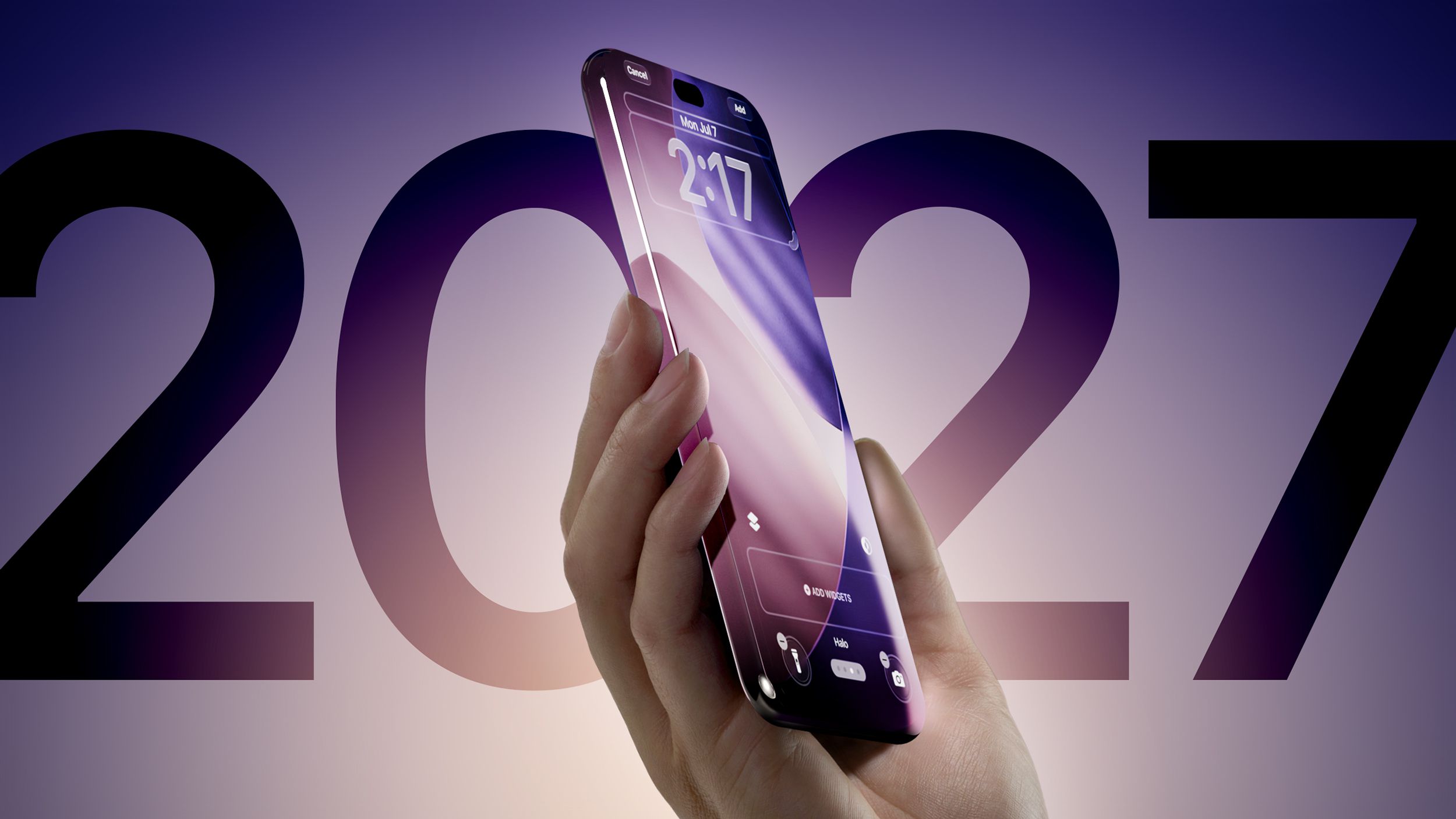
Apple's 20th-anniversary iPhone in 2027 is reportedly targeting a near bezel-free, four-edge curved display using Samsung-supplied equal-depth quad-curved panel technology and COE OLED, which could make the device brighter and thinner. The design may be branded a "Liquid Glass Display," but under-display Face ID remains uncertain and could force a front camera cutout. The news is product-focused and supportive of Apple's innovation narrative, though it is unlikely to materially move shares on its own.
This is less about a single handset spec and more about Apple using the iPhone as a proof point for a new display architecture that can reset premium-tier expectations. If Apple can compress bezel, brightness, and perceived screen immersion into a flagship form factor, it raises the bar for Android OEMs that have already exhausted the easy design levers; the second-order effect is more pricing power for the whole top end of the market, while mid-tier devices get further commoditized. The most interesting winner may be Samsung Display, which would gain leverage as the de facto enabler of Apple’s hardest-to-replicate hardware differentiator.
The main timing risk is that this kind of redesign is highly execution-sensitive and likely to slip in stages rather than all at once. The market is prone to over-assigning certainty to 2027 form-factor narratives, but Apple’s historical pattern is to hold features until the manufacturing yield curve is clearly stable; that means the bullish read-through is real, but the monetization may be deferred by 6-18 months if under-panel sensing or edge optics underperform. In the interim, the supply-chain beneficiaries can trade earlier than the handset headline itself, while Apple’s own upside is more likely to come from mix and margin than unit acceleration.
The contrarian view is that a visually cleaner display is not enough to move the earnings needle unless it drives a meaningful upgrade cycle. Apple’s installed base is mature, and the ceiling on enthusiasm is lower if the device still carries any visible cutout or if AI/software features remain the dominant upgrade reason. In that case, the market may overpay for a “design supercycle” story that produces only modest ASP uplift, leaving room for disappointment once the product comes into focus and the wow factor gets normalized.
For competitors, the pressure is asymmetric: premium Android OEMs lose design differentiation, while component suppliers with comparable COE/advanced OLED capability gain bargaining power. The biggest hidden risk is supply concentration—if Apple deepens dependence on a single display stack, any yield or capex hiccup at the panel vendor can become a launch bottleneck and a margin drag for both parties. That creates a cleaner trade in the enablers than in the handset name itself.
AI-powered research, real-time alerts, and portfolio analytics for institutional investors.
Request DemoOverall Sentiment
mildly positive
Sentiment Score
0.18
Ticker Sentiment
