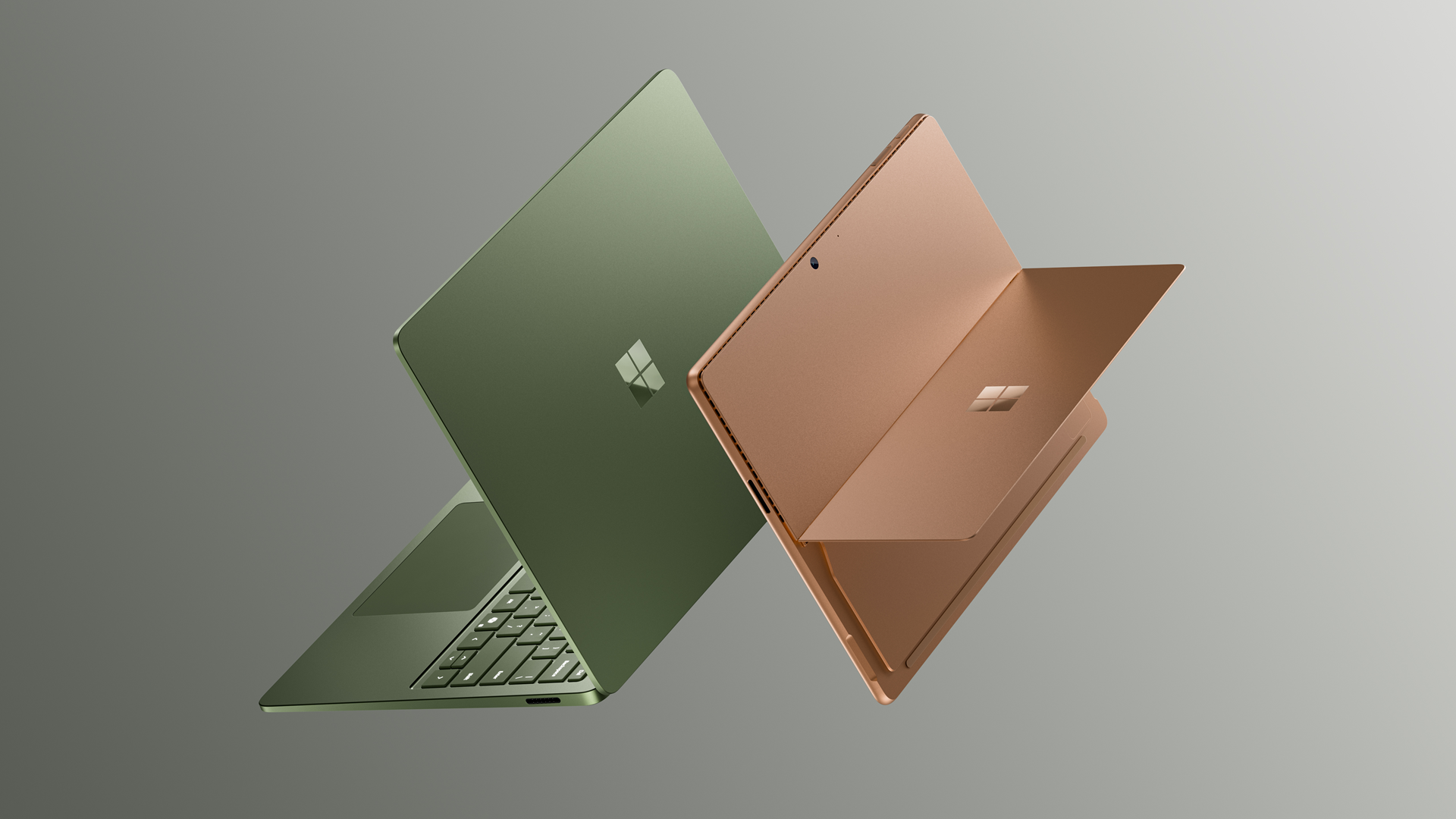
Microsoft introduced new Surface Pro and Surface Laptop devices powered by Snapdragon X2 processors, with availability starting June 16 and Surface for Business availability on July 14. The new Surface Pro starts at $1,499 and the Surface Laptop at $1,599, with claimed graphics performance gains of up to 53% and 58%, respectively, plus improved battery life of up to 20 hours. The launch expands Microsoft's Surface lineup with new AI-capable hardware, haptics, repair tools, and sustainability features, but the news is primarily product-focused and likely modest in market impact.
This is less about a single handset refresh and more about Microsoft extending its surface-area in the PC stack at the exact point where AI workloads are fragmenting between local inference and cloud. That matters because it reinforces Windows as the orchestration layer for mixed compute, which is strategically more valuable than any one device SKU and supports higher attach across M365, Copilot, security, and developer tooling. The incremental risk is to premium Windows OEMs and PC component suppliers exposed to a slower replacement cycle if Microsoft’s own hardware becomes the reference design for AI PCs.
The second-order beneficiary is Qualcomm, not just from unit growth but from validation: Microsoft is effectively using a flagship enterprise consumer brand to normalize Snapdragon in productivity devices. If enterprise buyers accept ARM-based Windows at scale, the mix shift could pressure Intel’s pricing power in thin-and-light notebooks while widening Qualcomm’s addressable market beyond smartphones. The bigger competitive threat is indirect: Apple loses some differentiation at the high end if Windows laptops close the gap on battery life and responsiveness, though Apple still holds the ecosystem and silicon lead.
The near-term catalyst is channel sentiment into the back-to-school and enterprise refresh windows over the next 1-2 quarters. The key reversal risk is execution, not demand: if app compatibility, thermal throttling, or AI feature utility disappoints, this becomes a spec-sheet story rather than a platform shift, and early ARM adopters could face returns or muted follow-through. Over 12-24 months, the real swing factor is whether Microsoft can convert device enthusiasm into recurring Copilot and subscription monetization; without that, hardware mix gains alone won’t move the earnings needle enough to justify premium multiple expansion.
The market may be underappreciating how much this supports Microsoft’s own ecosystem monetization even if Surface remains a low-single-digit revenue contributor. Every successful Surface install that runs local AI and cloud AI seamlessly is a proof point for Windows as the enterprise AI runtime, which should help retention and upsell across Microsoft 365 and developer services. The contrarian view is that the launch may already be partly priced in as “AI PC” enthusiasm has been crowded; if so, the better trade is not chasing MSFT beta, but using this as a relative-value signal for winners in silicon and software attached to the workflow shift.
AI-powered research, real-time alerts, and portfolio analytics for institutional investors.
Request DemoOverall Sentiment
moderately positive
Sentiment Score
0.55
Ticker Sentiment
