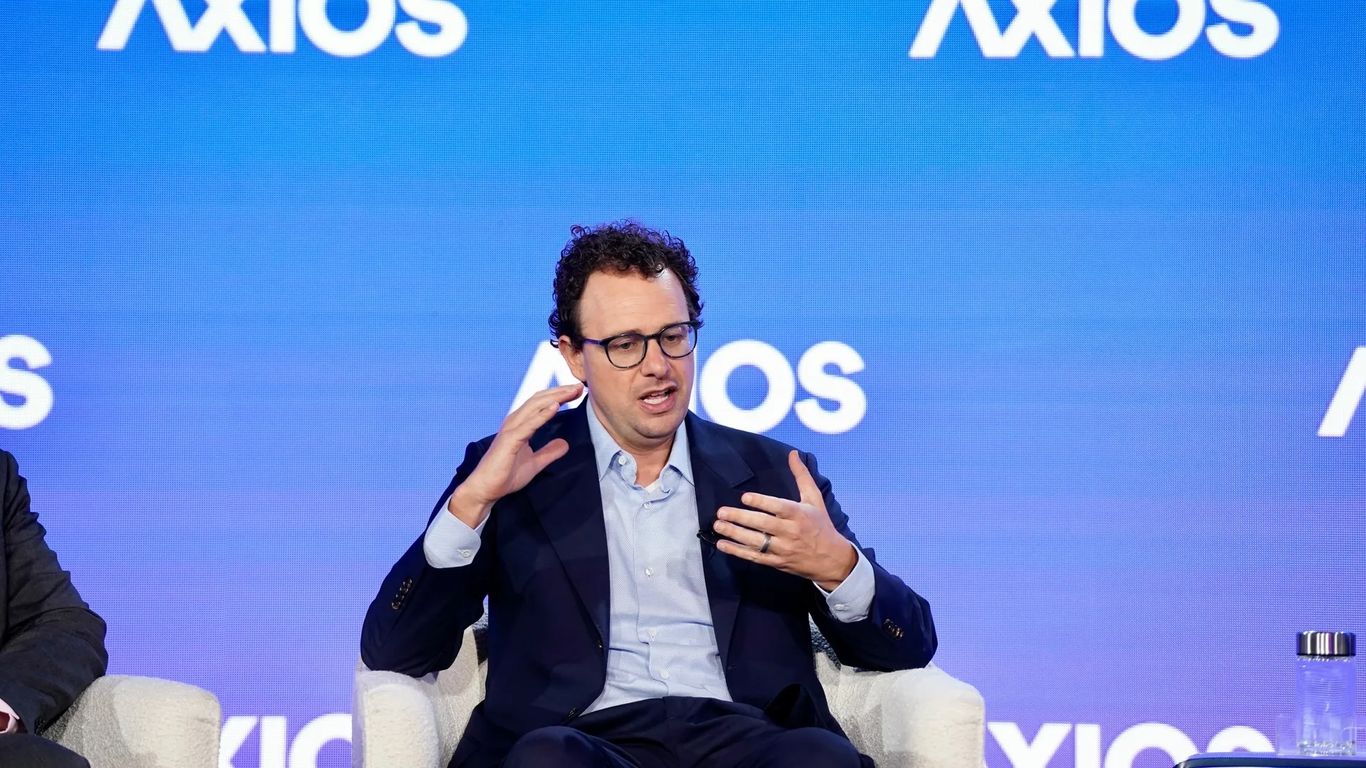
The Axios 2025 AI+ DC Summit revealed a stark policy divide on managing AI-driven job displacement, a critical future challenge for the U.S. government. Anthropic CEO Dario Amodei warned of a potential "white-collar bloodbath" and advocated for government intervention, including taxing AI companies, to support workers. Conversely, White House economic adviser Jacob Helberg championed private sector-led adaptation, while legislators like Rep. Ro Khanna and Sen. Mark Kelly proposed government-run "AI Academies" or tech-funded "trust funds" for retraining, underscoring a nascent but significant political and economic debate.
The recent Axios 2025 AI+ DC Summit underscored a significant and growing policy schism regarding the management of AI-driven labor market disruption, introducing a medium-term regulatory overhang for the technology sector. A stark warning of a potential "white-collar bloodbath" from Anthropic CEO Dario Amodei anchors one side of the debate, advocating for direct government intervention potentially funded by new taxes on AI companies. This contrasts sharply with the White House's current stance, articulated by economic adviser Jacob Helberg, which favors private sector-led adaptation and relies on market resourcefulness. Bridging this gap are emerging legislative proposals, such as Sen. Mark Kelly's plan for a tech-funded public "trust fund" for worker retraining, financed through taxes on AI-based revenue or fees on resource consumption. The framing of this issue as a key topic for the 2026 and 2028 elections indicates that while immediate policy action is unlikely, the debate over assigning fiscal responsibility for societal transition costs to the AI industry is poised to intensify, creating future uncertainty for the sector's cost structure and profitability.
AI-powered research, real-time alerts, and portfolio analytics for institutional investors.
Overall Sentiment
moderately negative
Sentiment Score
-0.40
