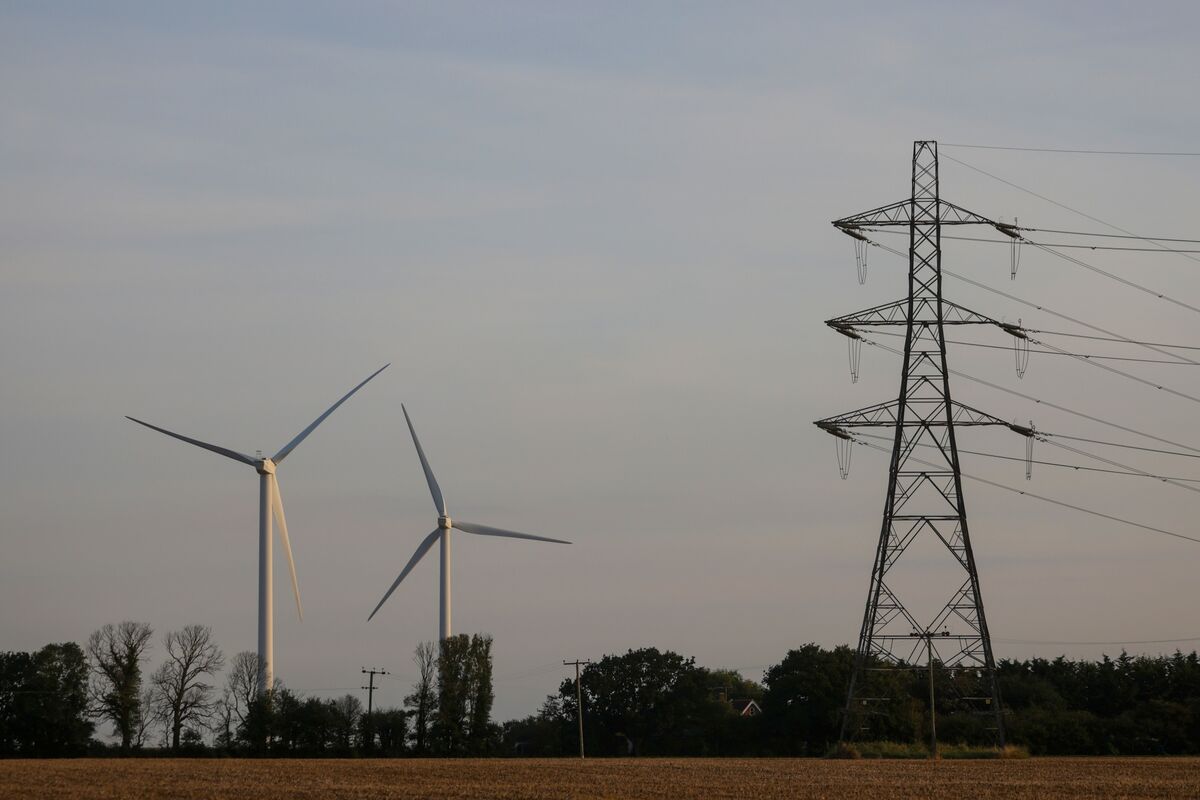
The UK government plans to let Parliament directly approve major clean energy projects and designate key offshore wind farms and power stations as of "Critical National Importance," sharply limiting judicial reviews. The move is designed to accelerate infrastructure buildout and support economic growth, which is constructive for UK renewable and grid development. It could reduce permitting risk for major energy projects and is likely to be sector-moving for utilities, developers, and grid infrastructure names.
This is a structural de-risking of UK infrastructure execution, and the main economic beneficiary is not the developers themselves but the entire financing stack behind them. By lowering judicial-review optionality, the state is effectively compressing development timelines and reducing legal contingency premia, which should improve bankability for offshore wind, grid reinforcement, and ancillary transmission assets over the next 12-36 months. The first-order read is higher capex conversion; the second-order read is tighter spreads for project finance lenders, equipment suppliers, and construction contractors with UK exposure.
The less obvious winner is the grid bottleneck trade. Faster approvals for generation without equivalent execution gains in transmission would widen the value of bottlenecked assets: interconnectors, flexibility providers, storage, and firms that can monetize congestion. That means the market may overreact by pricing the whole renewables complex equally positive, while the real uplift accrues to companies that can actually connect power to load. Any names exposed to permitting rather than engineering will see the biggest multiple expansion if this becomes a credible policy regime rather than a one-off statement.
The key risk is political durability. A change this explicit is likely to invite constitutional and environmental backlash, and if challenged in the courts or softened in implementation, the market may unwind the optimism quickly because the benefit is mainly about timing certainty, not demand growth. Near-term upside could be visible within days in UK-listed utilities and renewable developers, but the larger re-rating requires proof that projects can move from designation to financial close without new bottlenecks in planning, labor, or supply chain capacity.
The contrarian view is that this may be more bearish for the long-duration legal overhang than bullish for near-term earnings. If approvals speed up, competition for turbine supply, engineering labor, and grid equipment will intensify, squeezing margins for late-cycle entrants and reducing the scarcity premium on existing pipeline assets. In that sense, the policy could shift alpha from “who can get permitted” to “who can execute cheapest,” which is a very different equity leadership profile.
AI-powered research, real-time alerts, and portfolio analytics for institutional investors.
Request DemoOverall Sentiment
mildly positive
Sentiment Score
0.20
