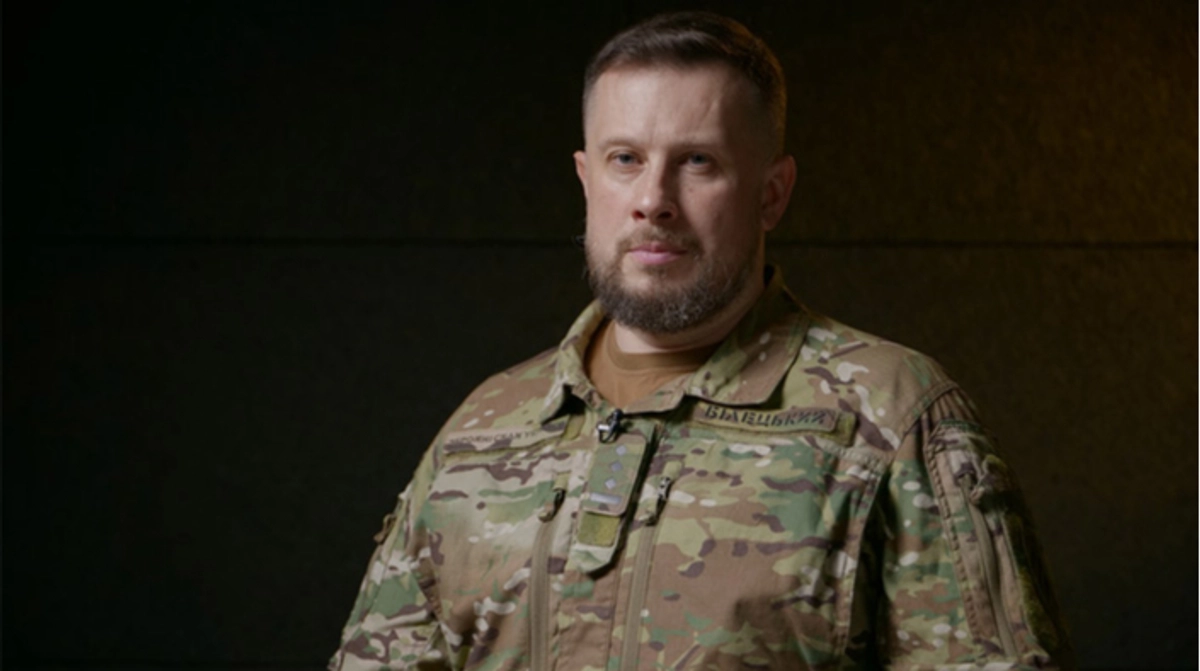
Brigadier General Andrii Biletskyi says Ukraine has a 6-9 month window, with the next 6 months being most critical, to seize battlefield initiative and negotiate from a position of strength. He argues Russian forces are exhausted, lacking personnel and major breakthrough capability, while Ukrainian mid-range strikes and sustained tempo could improve Ukraine's position ahead of peace talks. The article is geopolitical in nature and has limited direct market impact, though it reinforces defense-sector and risk sentiment.
The marketable implication is not an immediate “peace rally” but a six-month window where battlefield momentum can re-price negotiation odds. That tends to favor assets tied to endurance, logistics, and replacement capacity rather than headline battlefield maps: the side that can keep drones, EW, artillery shells, and repair cycles humming gets the lever on future talks. For Ukraine-linked exposures, the key second-order effect is that sustained operational tempo usually pulls forward procurement, maintenance, and air-defense spending, while degrading the Russian ability to sequence offensives or force a favorable settlement. The more important signal is Russian force-quality attrition, not just manpower depletion. When junior and mid-level command structures degrade, offensive effectiveness falls nonlinearly: fewer successful combined-arms pushes, slower recovery from losses, and higher consumption of precision munitions for diminishing territorial gain. That creates a longer tail of elevated casualty replacement and equipment attrition, which can pressure Russian logistics, defense-industrial bottlenecks, and any risk assets that assume a quick frozen conflict. Contrarian risk: this is a time-bounded thesis, and the “turning point” framing can be wrong if external funding or air-defense support lags even modestly over the next 1-2 quarters. If Western aid cadence softens, or if Russia can reconstitute assault units faster than expected, the initiative thesis unwinds quickly and negotiation odds revert to stalemate. In that scenario, the biggest loser is the assumption of a near-term truce premium; the right trade is to avoid chasing front-loaded optimism and instead own optionality on either a prolonged conflict or a sudden ceasefire. The cleanest setup is to express the view through defense procurement and logistics beneficiaries rather than directionally on Ukraine headlines. The trade should be sized around a six-month catalyst horizon: if battlefield initiative improves, budget visibility and replenishment demand rise; if talks stall, the same names still benefit from sustained consumption and restocking. The market is likely underpricing the second-order effect that attrition warfare creates recurring demand even when headline intensity appears to plateau.
AI-powered research, real-time alerts, and portfolio analytics for institutional investors.
Request DemoOverall Sentiment
neutral
Sentiment Score
0.05
Ticker Sentiment
