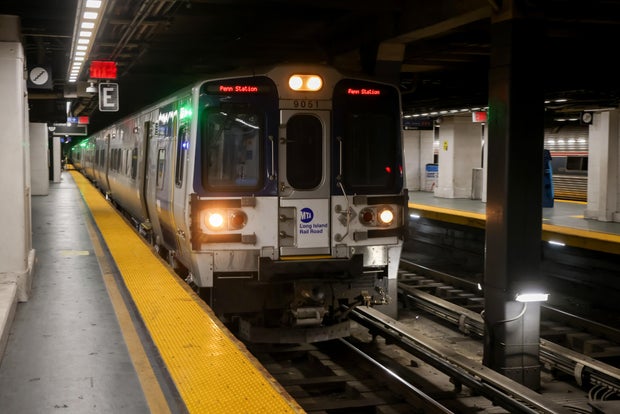
The Long Island Rail Road shut down just after midnight Saturday in its first strike since 1994, affecting more than 250,000 daily riders and tens of thousands of commuters in southeastern New York. The dispute centers on a four-year contract, with unions seeking a 5% pay increase versus the MTA's 3% offer that could rise to 4.5% with work-rule concessions. The shutdown is likely to cause severe congestion, trigger prorated refunds for May monthly tickets, and potentially pressure fares and the MTA budget if wage demands are met.
The immediate market read is not on MTA equity value — it’s on regional economic friction. A prolonged rail shutdown is a near-term tax on Long Island retail, hospitality, and office attendance, with the sharpest pain concentrated in weekday service businesses that rely on commuter flow rather than destination demand. The second-order winner is not “cars” broadly, but the entire disruption stack: parking operators, ride-hailing, suburban gas stations, and last-mile transit substitutes should see a temporary volume lift as commuters re-route.
The more important medium-term risk is political spillover into budget discipline. Even if the strike resolves quickly, the bargaining outcome will likely set a precedent for wage expectations across other public transit unions, increasing the probability of fare hikes or service cuts later this year. That creates a nuisance overhang for New York transit-sensitive sectors because the state’s policy response is structurally asymmetric: politicians can pressure a deal, but they cannot repeal the arithmetic of wage costs without pushing deficits onto riders or taxpayers.
The clearest contrarian point is that the strike’s economic damage is front-loaded, while the market may overestimate its persistence. If mediation restarts within days, the tradeable impact shifts from direct congestion losses to a cleaner political storyline around leadership competence — useful for headline risk, but not enough to justify a broad de-risking of New York assets. The real tail risk is a multi-week standoff that forces deeper concessions and raises the odds of fare increases, which would be a negative medium-term demand shock for transit usage and a modest positive for suburban auto-dependent businesses.
AI-powered research, real-time alerts, and portfolio analytics for institutional investors.
Request DemoOverall Sentiment
moderately negative
Sentiment Score
-0.35
Ticker Sentiment
