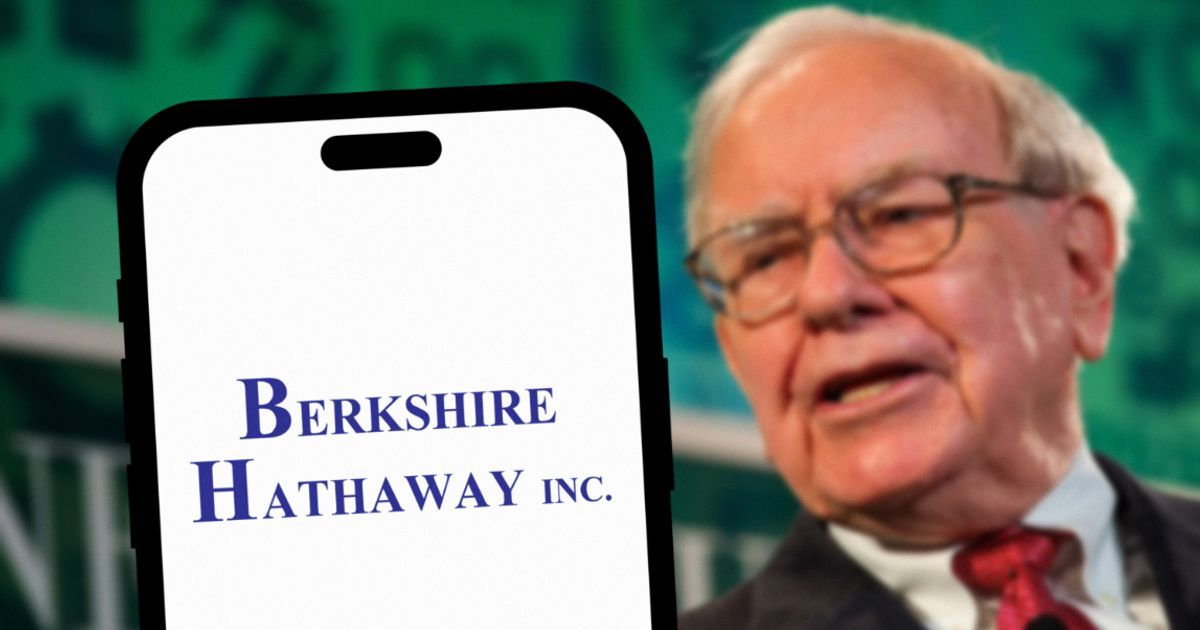
Berkshire Hathaway disclosed that Greg Abel, who assumed the CEO role on January 1, will receive an annual salary of $25 million—far above Warren Buffett’s longtime $100,000 pay—and follows Abel’s $21 million compensation in 2025. The SEC filing signals a shift toward a more conventional executive pay structure aligned with large-cap norms (S&P 500 CEOs averaged $18.9 million in 2024), while Buffett remains chairman and continues to influence strategy. The change formalizes succession and governance normalization and may modestly affect investor perceptions of stewardship and compensation policy rather than indicate an immediate strategic or operational turnaround.
Market structure: The $25m salary normalization mainly benefits institutional investors who prefer conventional governance and Greg Abel’s alignment with market pay norms; compensation is ~0.0036% of a ~$700bn market cap so immediate P&L impact is immaterial. Winners also include executive-search/compensation advisory firms and peers benchmarking S&P CEO median ($18.9m in 2024); purist Buffett devotees are the primary losers, potentially reducing sentiment premium. The competitive dynamic inside conglomerates shifts marginally toward more acquisitive incentives—expect modest uptick in deal activity under Abel, not a wholesale strategy change, over 12–36 months. Risk assessment: Tail risks include an activist campaign or reputational backlash that could dent the stock by 3–8% in a worst-case 3–6 month window, or regulator/GAAP scrutiny if incentive structure is opaque. Immediate (days) impact is likely ±1–2% on headline news; short-term (weeks–months) sentiment re-pricing of 0–3% as funds rebalance; long-term (years) effects hinge on M&A outcomes—a 50–200bp swing in consolidated ROIC over 3 years could translate to ±5–15% valuation delta. Hidden dependencies: Buffett’s continued chair influence and Berkshire’s decentralized capital allocation will mute CEO pay’s behavioral effects unless incentive metrics change; catalysts include 2026 proxy details, any announced deal, and 10-K compensation disclosures. Trade implications: Direct: establish a 2–3% long position in BRK.B within 30 days (ticker BRK.B), add on any dip >3% in next 3 months; target 12-month upside 8–15%, stop-loss 8%. Options: implement a 12-month call spread for leveraged upside with limited cost — buy 1 Jan 2027 15% OTM BRK.B call, sell 1 Jan 2027 35% OTM call sized to equal 1–2% notional exposure. Pair: long BRK.B vs short SPY (equal beta-neutralized) to capture conglomerate/value re-rate if macro stabilizes over 6–12 months. Contrarian angles: Consensus underestimates that pay change is economically tiny but governance-significant — stock reaction is likely underdone; mispricing may persist because headline-driven retail flows overshadow fundamentals. Historical parallels: founder-to-professional CEO transitions (e.g., 2011 transitions at large caps) usually cause short-term noise but long-term stability; unintended consequence: conventional pay may attract activists who could demand faster buybacks or divestitures, creating a catalyst for re-rating within 6–18 months.
AI-powered research, real-time alerts, and portfolio analytics for institutional investors.
Request DemoOverall Sentiment
neutral
Sentiment Score
0.05
Ticker Sentiment
