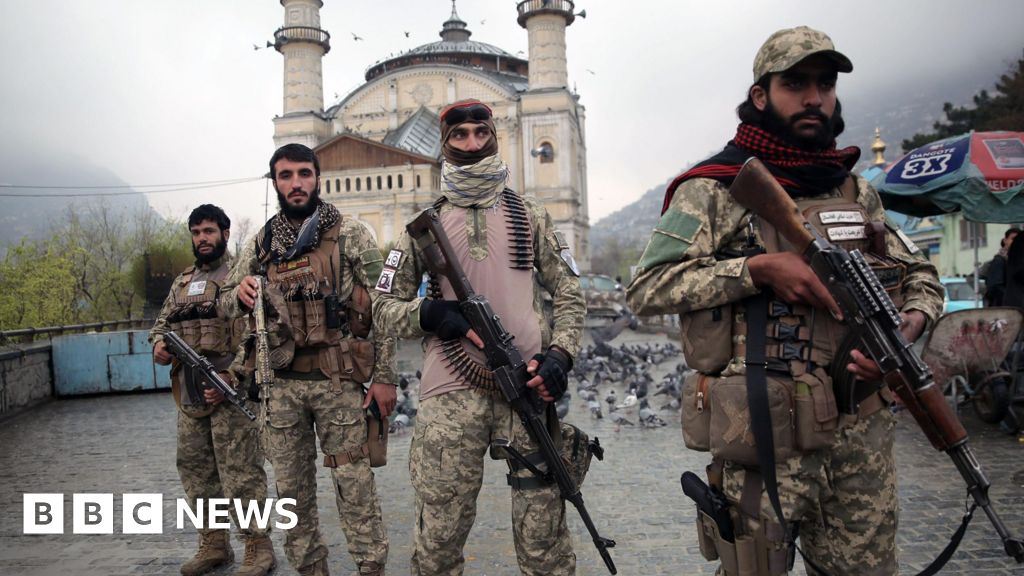
At least 7 people were killed and 75 injured in reported Pakistani attacks in Afghanistan’s Kunar province, including students and a professor at Kunar University. The Taliban says 30 of the injured are university students, while Afghanistan’s higher education ministry reported extensive damage to the campus. The escalation comes amid fragile ceasefire talks and raises the risk of further cross-border conflict between Pakistan and Afghanistan.
The market relevance is not direct commodity shock, but escalation risk around a brittle Pakistan-Afghanistan frontier that can spill into broader South Asian risk assets. The immediate second-order effect is a higher probability of localized airspace disruption, border closures, and insurance premia on regional transport and logistics routes; that tends to hit Pakistani and Afghan-facing corporates first, then lenders and consumer names with cross-border cash flows. The bigger macro issue is that repeated kinetic incidents make it harder for Pakistan to stabilize external financing conditions just as it needs policy credibility and FX calm.
From a competitive-dynamics lens, any sustained rupture weakens Pakistan’s counterterror bargaining leverage and raises the odds of a more militarized posture that diverts fiscal capacity away from infrastructure and reform. That matters for any asset where the market is implicitly underwriting IMF continuity, reserve stability, or disinflation: conflict tends to shorten policy horizons and increase the probability of capital controls or subsidy reversals over the next 1-3 months. In Afghanistan, the obvious losers are civilian institutions and transport corridors; the less obvious loser is regional trade normalization, including any China-linked transit or reconstruction optionality that requires a quiet border.
The contrarian point is that headline violence may be trading above its medium-term economic impact unless it persists for several weeks. Historically, markets can tolerate isolated border incidents if they do not disrupt energy flows, sovereign financing, or urban centers; the real risk is retaliation cycles that hit major nodes or force Pakistan to choose between escalation and de-escalation under domestic political pressure. So the key catalyst is not this strike itself, but whether the next 7-14 days produce follow-on attacks, airspace restrictions, or diplomatic suspension.
For positioning, the cleaner expression is relative value rather than outright risk-off: short Pakistan-sensitive assets on strength and hedge with broader EM long exposure. If escalation continues, financials and airlines with South Asia revenue concentration should underperform first, while defense/security contractors with regional exposure could get a sympathy bid. If the episode fades quickly, the move should mean-revert, which makes options preferable to cash shorts.
AI-powered research, real-time alerts, and portfolio analytics for institutional investors.
Request DemoOverall Sentiment
strongly negative
Sentiment Score
-0.75
