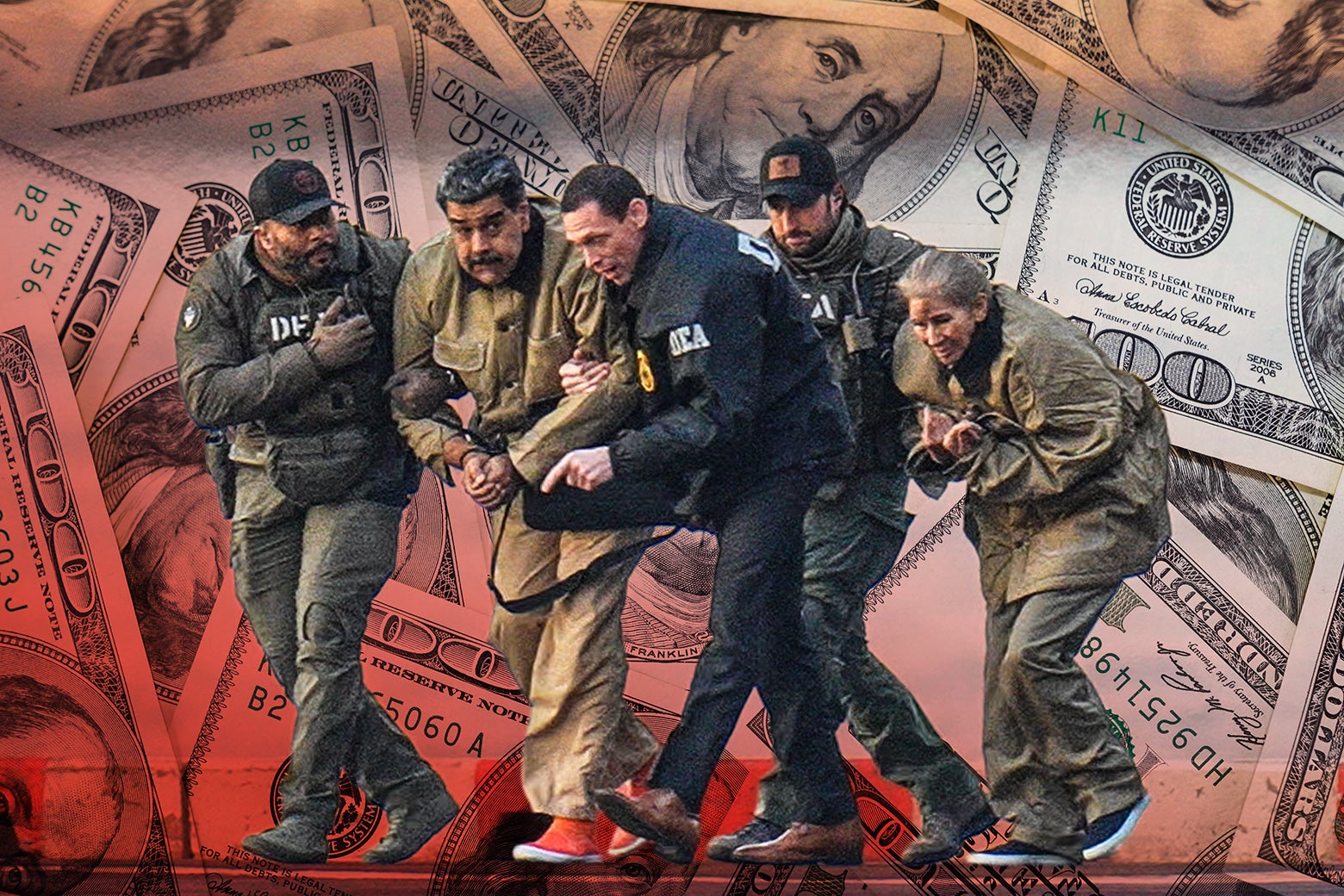
The Justice Department charged Army special forces Master Sgt. Gannon Ken Van Dyke with insider trading-related offenses after he allegedly made about $400,000 in profits from roughly $34,000 of Polymarket bets tied to the Maduro operation. The case raises broader concerns about abuse on prediction markets such as Polymarket and Kalshi, especially around national-security information, political influence, and weak enforcement. While the direct market impact is limited, the news could increase scrutiny of prediction markets and their regulation.
This is less a one-off enforcement action than an early warning that prediction markets are drifting from “information markets” into an unpriced compliance regime. The near-term winner is regulated venues with clearer controls and state-legible governance; the loser is any platform whose product design assumes anonymity plus low enforcement probability. That asymmetry matters because the business model scales on trust, but the easiest source of volume is precisely the flow most likely to trigger future restrictions, fines, or exchange delistings.
The second-order effect is that institutional adoption may accelerate while retail/speculative growth slows. If legal teams start treating prediction-market exposure like MNPI risk in equities, participation from corporates, lobbyists, advisors, and politically connected operators will shrink, reducing event liquidity exactly where pricing quality is supposed to be strongest. In other words, tighter policing can improve headline integrity while simultaneously degrading market depth and making the product less valuable.
The bigger risk is political spillover. Once the enforcement standard is shown to be selective, the issue becomes not whether regulators act, but who gets protected and who gets prosecuted. That creates a months-long overhang for any platform monetizing politics-adjacent contracts, especially if Congress or the CFTC decides to force pre-trade disclosures, KYC expansion, or outright bans on certain event classes.
Contrarian angle: the market may be underestimating how quickly this becomes a governance story rather than a criminal one. If major backers and affiliates are politically connected, the more likely medium-term outcome is not a clean shutdown but a bifurcation: tightly supervised, institutionalized contracts survive, while the most viral, high-growth categories get carved out. That would support a relative-value trade against the broader “prediction markets” theme rather than a blanket short on the space.
AI-powered research, real-time alerts, and portfolio analytics for institutional investors.
Request DemoOverall Sentiment
mildly negative
Sentiment Score
-0.35
