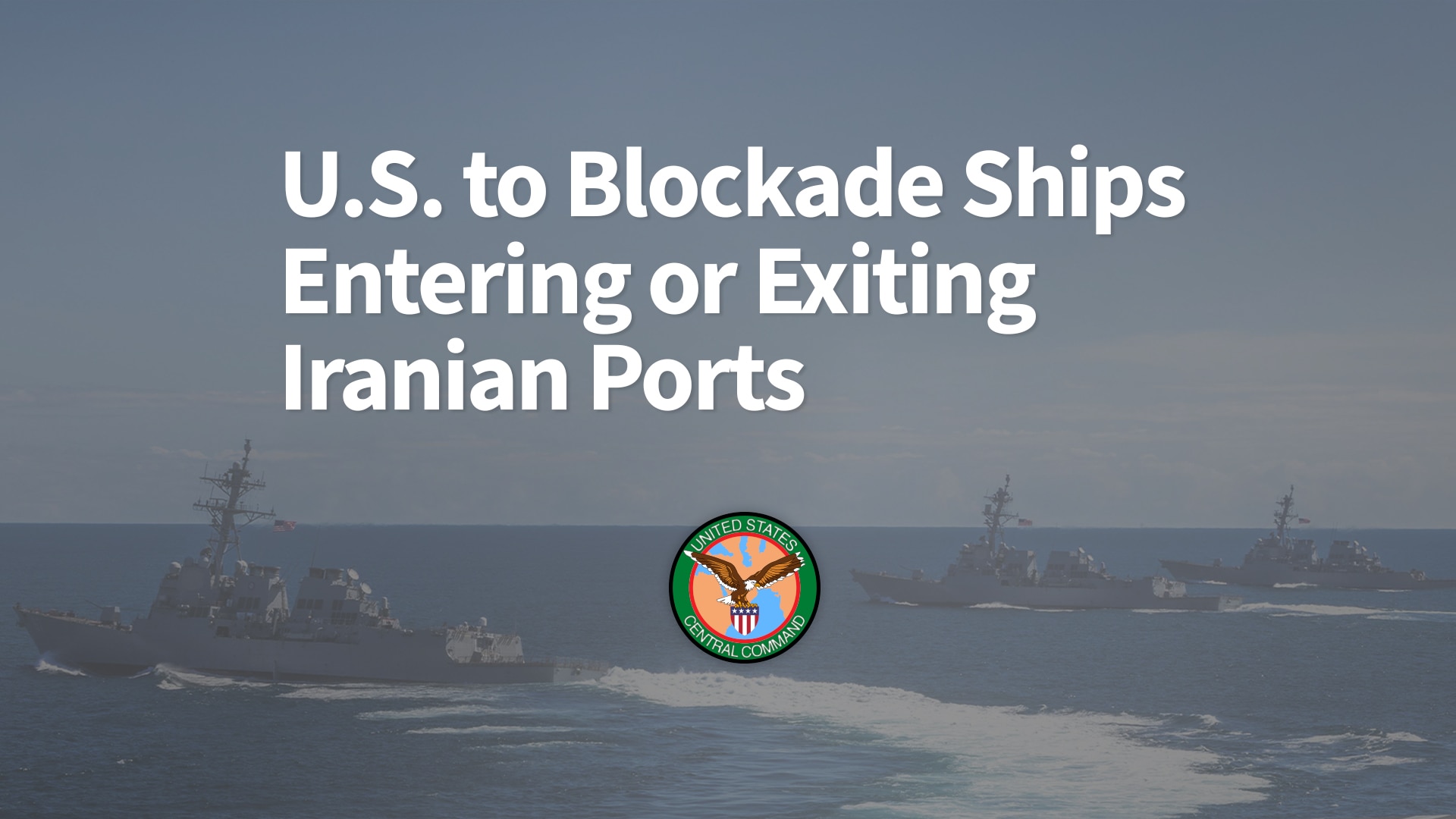
CENTCOM will begin a blockade of all maritime traffic entering and exiting Iranian ports on April 13 at 10 a.m. ET, covering Iranian ports on the Arabian Gulf and Gulf of Oman. The measure excludes vessels transiting the Strait of Hormuz to and from non-Iranian ports, but it still raises a significant geopolitical and shipping risk premium. The announcement is likely to affect regional energy and freight markets immediately.
This is less a generic Middle East headline than a targeted shock to the “frictionless transit” assumption embedded in global shipping, insurance, and energy logistics. Even if the corridor itself remains technically open, the market will price a sharp jump in legal, operational, and insurance friction for any voyage touching Iranian proximity, and that tends to cascade into wider routing premiums for neighboring Gulf flows. The first-order price response may be in oil, but the more durable move is likely in freight, marine insurance, and working-capital strain for importers/exporters relying on just-in-time maritime schedules.
The second-order winner is any supply chain that can absorb higher delivered costs and longer transit times, while the losers are asset-heavy transport names with thin margins and limited fuel surcharge passthrough. Tankers and container lines are especially exposed to voyage delays, detours, and ballast inefficiency; even if actual ton-miles rise, utilization can deteriorate if charterers pull cargoes forward or reroute to avoid congestion risk. Refineries and chemical producers with Gulf-linked feedstock exposure face a more immediate margin squeeze than upstream energy names, because a few days of disruption can create spot dislocations before any fundamental supply loss shows up.
The key catalyst window is days to weeks, not months: risk premia can reprice instantly, but the real earnings impact depends on how long charter rates, war-risk premiums, and port throughput remain impaired. What would reverse the move is credible evidence that trade is being selectively exempted in practice, or that a diplomatic backchannel reduces enforcement intensity; absent that, the market should assume repeated stop-start disruptions. The contrarian risk is that traders overestimate physical supply removal and underweight the broader “logistics tax” — even modest enforcement can be enough to reprice time-sensitive inventories and transport capacity without causing a visible supply shortage.
AI-powered research, real-time alerts, and portfolio analytics for institutional investors.
Request DemoOverall Sentiment
strongly negative
Sentiment Score
-0.55
For portfolio construction, this is a better relative-value than outright macro bet: the most attractive setup is short transport/logistics beta versus long energy or defense-adjacent infrastructure. The asymmetry favors positions that benefit from volatility and dislocation rather than a single directional call on crude, because the headline can fade while frictions persist. If enforcement is uneven, the best trades will be those that monetize dispersion between firms with flexible routing and those with fixed exposure to Gulf throughput.
