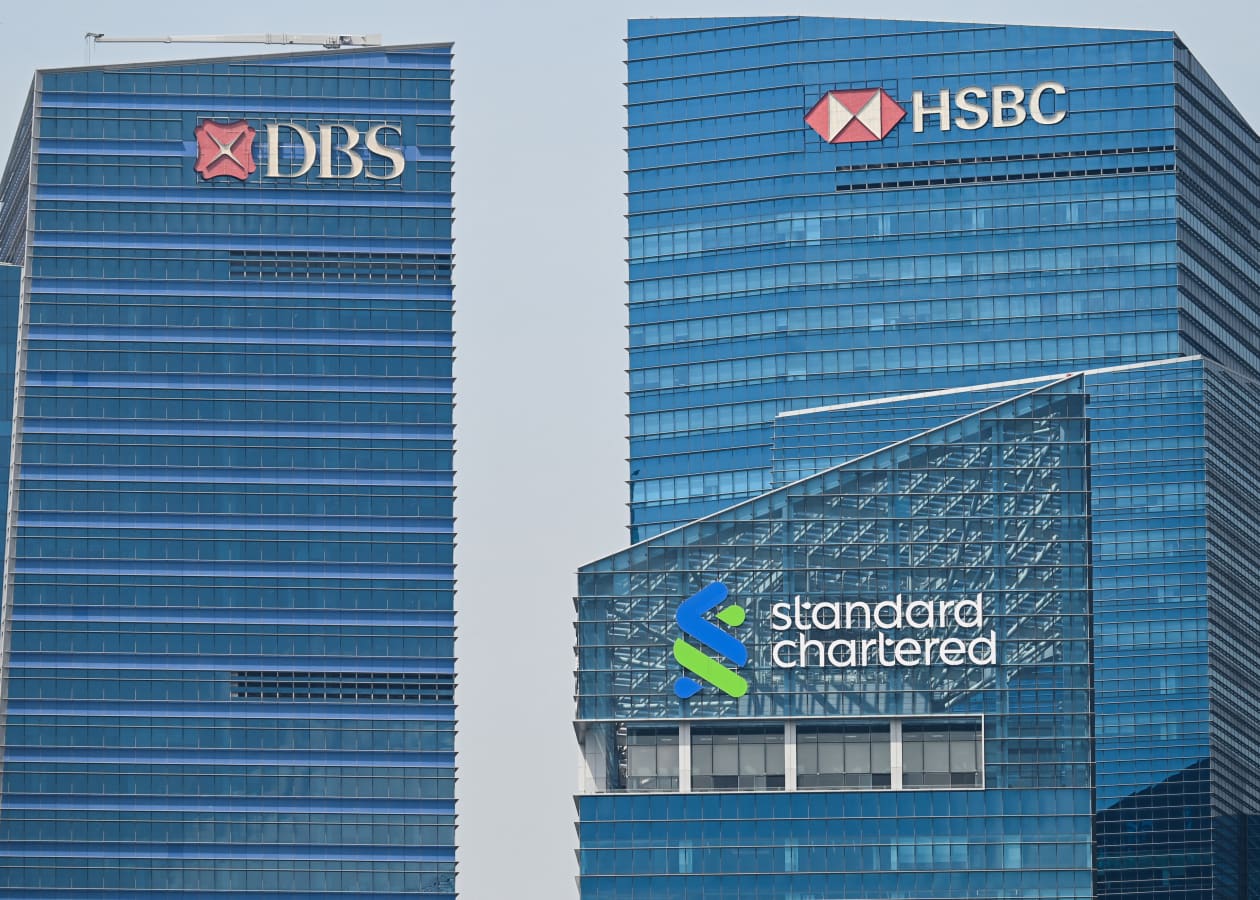
HSBC said it is stress-testing loan-loss provisions against a worst-case scenario with stock markets down 35% and oil at $145 per barrel. The comments came as CFO Pam Kaur explained why first-quarter loan-loss provisions were higher than expected, with risk tied to U.K. firm exposure and Middle East turmoil. The article is mainly cautionary and signals a more defensive credit outlook rather than an immediate earnings shock.
The key read-through is not the size of HSBC’s stress test; it is the direction of sensitivity. A bank publicly anchoring provisions to a scenario that combines equity drawdown with an oil spike is implicitly signaling that the next leg of credit pain is likely to come from geopolitics-driven inflation rather than a classic recession-only shock. That matters because higher oil can keep headline inflation sticky, delay rate cuts, and preserve funding pressure even if nominal loan growth holds up.
For banks with meaningful U.K. consumer and Middle East/EM exposure, the second-order risk is not just higher defaults but weaker collateral values and lower fee income simultaneously. Mortgage books are usually slow-burn, but trade finance, corporate revolvers, and SME exposures can reprice fast if risk sentiment turns, so the earnings risk window is weeks-to-months, not years. The market may underappreciate how quickly “provision conservatism” can become a pre-emptive earnings reset across European banks if one large issuer normalizes a harsher macro baseline.
The contrarian angle is that this kind of guidance can be near-term bearish for the stock but mildly constructive for the sector if it resets expectations early. If HSBC is the first to lean in, peers may follow with smaller upside surprises on provisions later in the year, and that can stabilize financials multiples once the initial selloff clears. The bigger macro signal is that oil at $145 would be a disinflation killer, which is more harmful to rate-sensitive financials than to energy equities, creating a cleaner relative-value trade than a simple outright bank short.
The market is likely missing the asymmetry between headline stress and actual loss realization: if the geopolitical shock stays localized, provisions may prove too aggressive and become a source of future earnings beats. But if energy spikes persist for more than one quarter, the combination of higher funding costs, weaker consumer credit, and tighter risk appetite can compress bank P/Bs materially before defaults spike. That makes timing critical: the trade should be expressed as a short-duration relative-value position, not a long-horizon structural bearish call.
AI-powered research, real-time alerts, and portfolio analytics for institutional investors.
Request DemoOverall Sentiment
mildly negative
Sentiment Score
-0.25
Ticker Sentiment
