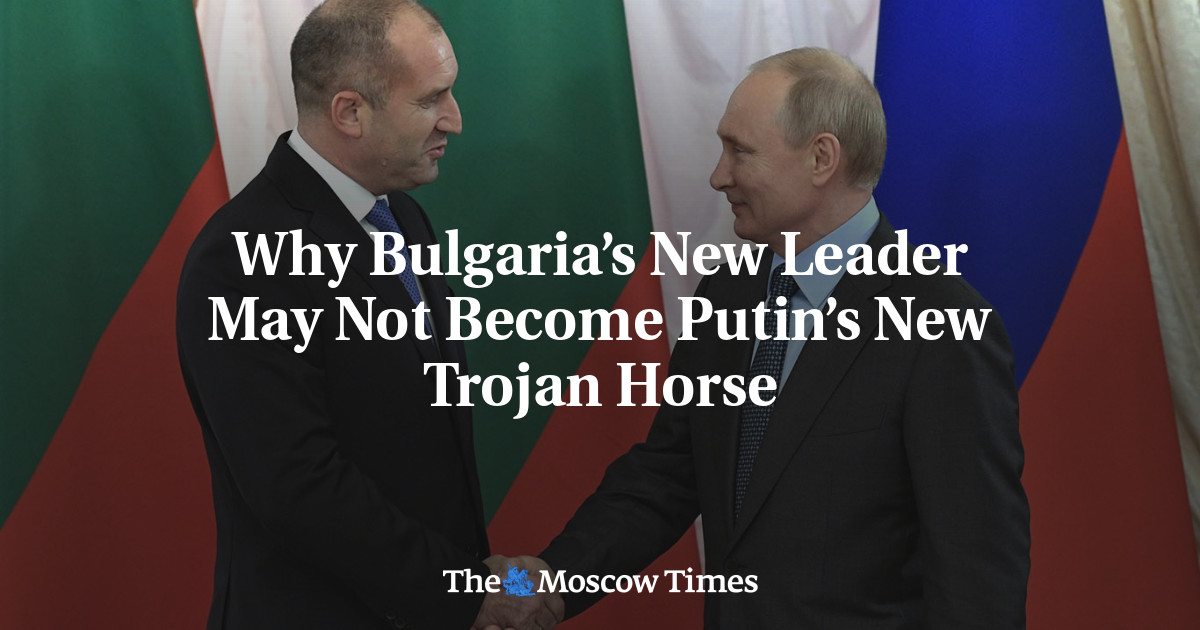
The article argues Bulgaria is unlikely to become an Orbán-style spoiler for EU rearmament or support for Ukraine, despite concerns over its new parliamentary majority and Rumen Radev’s Russia-sympathetic positions. Bulgaria’s leverage is constrained by its reliance on EU funds, including grants averaging just under 3% of GDP, and by the EU’s Rule of Law Conditionality tools. The main takeaway is political risk, but the piece ultimately downplays the odds of a major obstruction to EU defense and foreign policy decisions.
The market implication is not a clean Hungary-style discounting event; it is a gradual reduction in EU policy slippage risk. Bulgaria’s new coalition may try for noisy signaling, but the institutional setup has changed: EU conditionality is now a live constraint, so any anti-Brussels posture is more likely to be used tactically for domestic bargaining than to produce sustained veto behavior. That matters for sovereign spreads and local risk assets because the base case is not rupture, but higher policy volatility that can be monetized only in short bursts.
The second-order winners are the parts of the Bulgarian economy most dependent on Brussels capital and technical coordination: infrastructure, construction, utilities, and defense procurement. If the government needs growth and legitimacy, it is incentivized to keep EU fund flows intact and to avoid actions that would jeopardize project disbursements, which should support public investment execution over the next 2-4 quarters. The losers are Russian-linked energy intermediaries and any domestic firms that benefited from opaque procurement or regulatory arbitrage; those businesses face a higher probability of scrutiny rather than a wholesale ideological reset.
The contrarian point is that the consensus may be overweighting symbolism and underweighting capacity. A fragmented governing party with weak administrative depth is more likely to produce policy drift and scandals than a coherent anti-EU bloc, so the bigger risk is governance failure, not geopolitical rebellion. In sovereign debt terms, that argues for trading volatility rather than directional collapse: spreads can widen on headlines, but without an EU-funds shock the move should fade unless there is a hard confrontation with Brussels over rule-of-law conditions.
Catalyst-wise, the key horizon is 1-3 months for cabinet formation, EU budget messaging, and any first tests of veto rhetoric; 6-12 months for funding disbursement reviews and corruption probes. The tail risk is a symbolic fight that escalates into conditionality freeze, which would hit domestic banks and construction-linked credits first. Absent that, the more likely outcome is a messy but contained government that talks tough and governs cautiously.
AI-powered research, real-time alerts, and portfolio analytics for institutional investors.
Request TrialOverall Sentiment
neutral
Sentiment Score
-0.10
