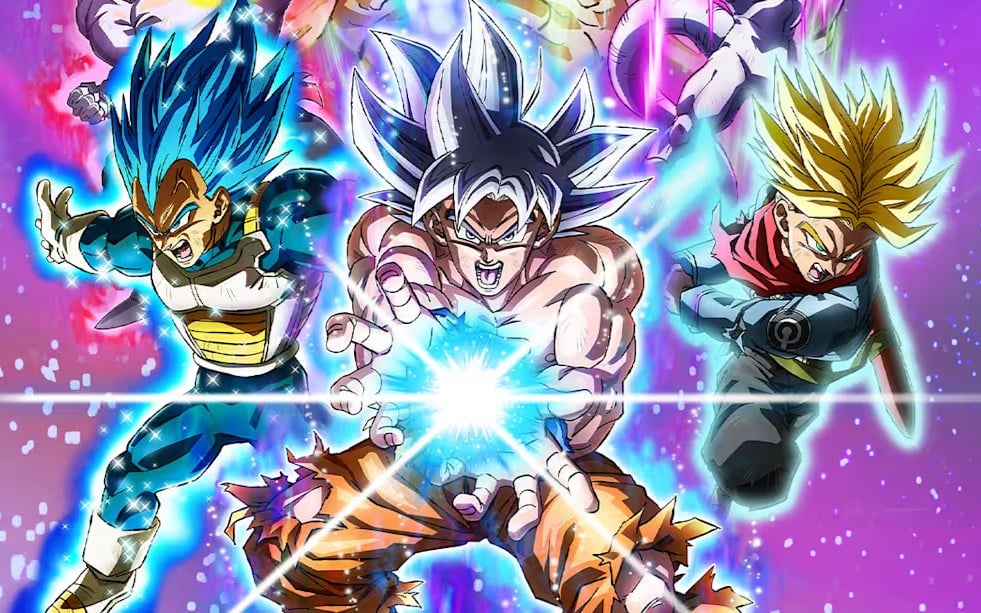
Bandai Namco issued a content update for Dragon Ball: Sparking! ZERO on Nintendo Switch and Switch 2 that adds a limited-time Extreme Warrior Attack mode, enables full-stage selection in Versus when played on Switch 2, updates Custom Battle scenarios/cutscenes/text, and improves system stability. The company previously announced a "major" DLC that will add playable characters, stages and a new single-player mode, and published a 2026 roadmap while confirming a new Dragon Ball project scheduled for 2027. These product updates and the content pipeline support ongoing monetization potential through DLC and platform support, but the itemized changes carry low immediate market-moving significance absent accompanying financial or usage metrics.
Market structure: This update is a classic long-tail monetization play — Bandai Namco (7832.T) captures incremental ARPU via DLC and platform-specific features while Nintendo (7974.T) gets higher Switch 2 attach/usage. Expect a measured revenue bump: DLC releases for tier-1 fighting titles historically add ~5–15% to a title’s digital revenue over 3–12 months; for Bandai Namco this translates to a low-single-digit percentage lift to consolidated gaming revenue if adoption is average. Third-party rival fighting-IP holders see share pressure only if Bandai’s DLC converts hard-core players at scale.
Risk assessment: Tail risks include technical regressions on Switch 2 causing refunds or bad reviews (short-term revenue hit of up to ~1–3% of quarterly sales) and regulatory scrutiny of paid content/loot mechanics (downside 10–20% to DLC monetization in adverse regimes). Immediate impact is minimal (days); expect measurable stock effects around DLC launch windows (weeks–months) and material upside/downside tied to the announced 2027 Dragon Ball project (quarters–years). Hidden dependency: Switch 2 install base growth is the amplifier — weak console uptake caps upside.
Trade implications: Tactical trades: small-capital long on 7832.T (2–3% portfolio weight) into the DLC rollout window, implemented via a 3-month call spread (buy near‑ATM, sell +20% strike) to limit premium spend; complement with a 6‑month covered-call/LEAP on 7974.T to play hardware/software synergies. Consider a relative-value pair (long 7832.T, short 9697.T Capcom) sized 1:1 to isolate Dragon Ball-specific upside; target 15–25% P&L, stop 8–10%.
Contrarian angles: Consensus underestimates repeatable DLC economics for heritage IP — market often treats small DLC as noise; that underreaction is an opportunity if Switch 2 adoption trends positive. Conversely, upside may be capped if Bandai leans too heavily on Dragon Ball and cannibalizes future new-IP investments; historical parallels (Tekken/Street Fighter DLC cycles) show sharp short-term revenue spikes but muted multi-year share shifts unless platform growth follows through.
AI-powered research, real-time alerts, and portfolio analytics for institutional investors.
Request DemoOverall Sentiment
neutral
Sentiment Score
0.10
