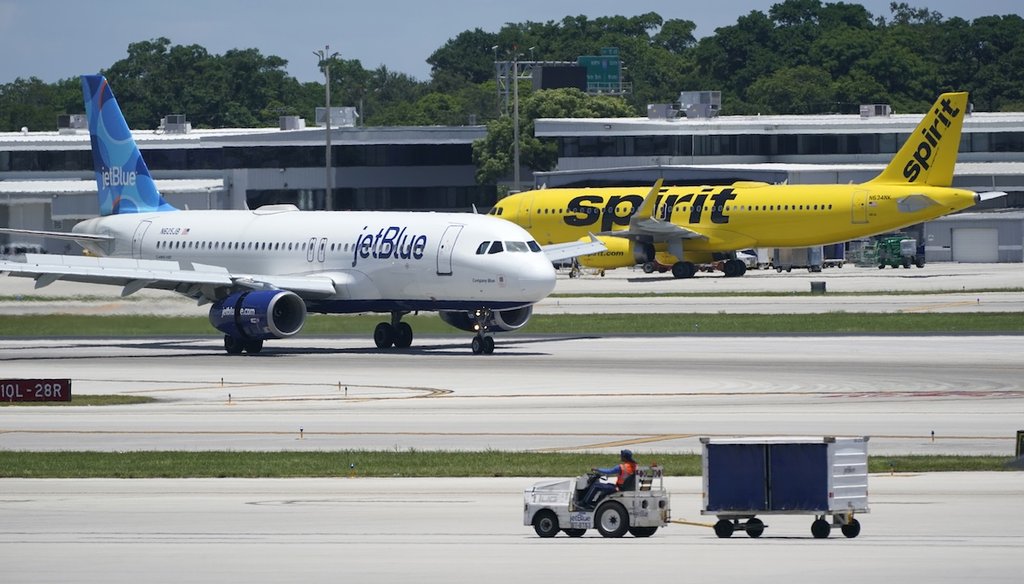
Spirit Airlines shut down operations after citing a sharp rise in oil prices and other pressures, following its bankruptcy filings in 2024 and 2025 and a failed turnaround plan. The article says the Trump administration blamed Democrats for opposing the JetBlue-Spirit merger, but court records and company statements indicate Spirit’s closure was driven by fuel-cost spikes, not the merger collapse. JetBlue and Spirit terminated their merger agreement in March 2024 after a federal judge blocked the deal on antitrust grounds.
The core market takeaway is not the politics around the shutdown; it is that ultra-low-cost capacity remains structurally fragile in a higher fuel regime. When marginal carriers lose access to cheap capital and hedging flexibility, the industry tends to reprice from a fare-war model to a capacity-discipline model, which is bullish for legacy carriers with stronger balance sheets and network pricing power. The immediate loser is ULCC, but the bigger second-order effect is less price pressure in leisure routes, where Spirit’s discipline had been anchoring promotional fares.
For JBLU, the failed transaction is no longer a litigation overhang, but it also removes the only strategic path to meaningful cost synergies and scale in a segment where unit costs still matter. The stock should not trade as if regulatory risk is gone; instead it trades as a carrier that still lacks a clear structural edge versus larger network peers and now must prove standalone margin durability while fare competition is likely to stay rational. The real beneficiary set is likely to be airlines with fortress liquidity and domestic leisure exposure that can hold yields if capacity exits persist for 2-3 quarters.
The contrarian view is that the selloff in ULCC may be overdone if investors assume a permanent demand destruction story rather than a financing failure. If fuel normalizes and bankruptcy claims/restructuring proceeds unlock asset value, the brand and slots could still be monetized through a buyer or piecemeal sale over months, not days. That said, the equity is a deep-out-of-the-money claim on residual value; the burden is on macro fuel relief and fresh financing, both of which look unlikely near term.
AI-powered research, real-time alerts, and portfolio analytics for institutional investors.
Request DemoOverall Sentiment
strongly negative
Sentiment Score
-0.62
Ticker Sentiment
