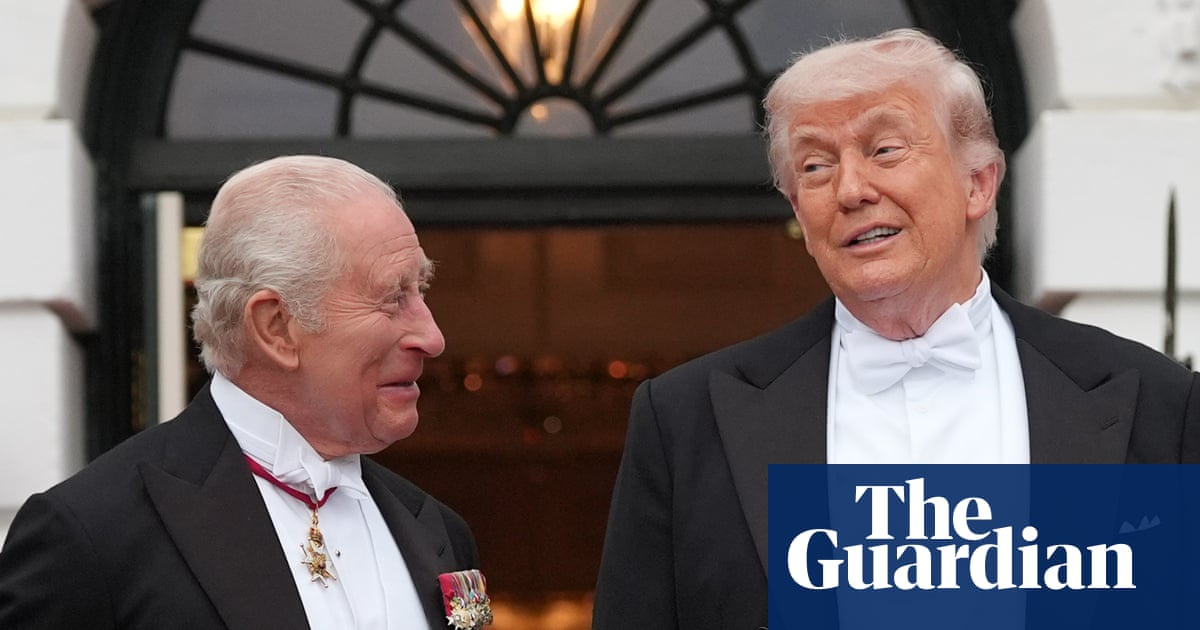
The article is a political-diplomacy piece centered on King Charles III’s UK-US visit, his state dinner remarks, and the symbolic return of the HMS Trump bell, with Trump later announcing tariff relief on Scotch whisky. It highlights tensions around executive power, NATO, Russia/Ukraine, Iran, and historical grievances, but contains no direct corporate or macroeconomic data. Market impact appears limited and mainly symbolic, aside from the whisky tariff comment.
The near-term market implication is not the pageantry itself but the signal that transatlantic policy coordination is increasingly being conducted through personality channels rather than institutions. That raises the value of firms exposed to UK-US discretionary political goodwill, but it also increases volatility around any issue where Trump can reverse stance quickly: tariffs, defense procurement, and trade carve-outs can move on a single social post. The prize is less “improved diplomacy” than a temporary reduction in headline risk for names with UK political sensitivity, especially spirits, defense primes, and companies leaning on cross-border regulatory alignment.
The second-order effect is that soft-power wins can mask hard-policy fragility. If Trump’s ego is being managed through symbolism, the actual policy path remains highly path-dependent and susceptible to later retaliation when another issue reasserts itself. That matters for UK cyclicals because any short-lived tariff relief or goodwill-driven concession can be reversed within days, while capital allocation decisions should assume months, not headlines, as the relevant horizon.
Contrarian angle: the market may be overestimating the durability of the “special relationship” trade. A better read is that the visit reduces immediate tail risk for UK-specific assets, but it does little for structural UK growth, fiscal credibility, or governance overhangs. The more durable beneficiary may be US institutional institutions and defense-adjacent companies if the rhetoric around checks, alliance commitments, and geopolitical order feeds a broader defense-spending narrative, even as the headline mood remains performative rather than policy-deep.
AI-powered research, real-time alerts, and portfolio analytics for institutional investors.
Request DemoOverall Sentiment
neutral
Sentiment Score
0.05
