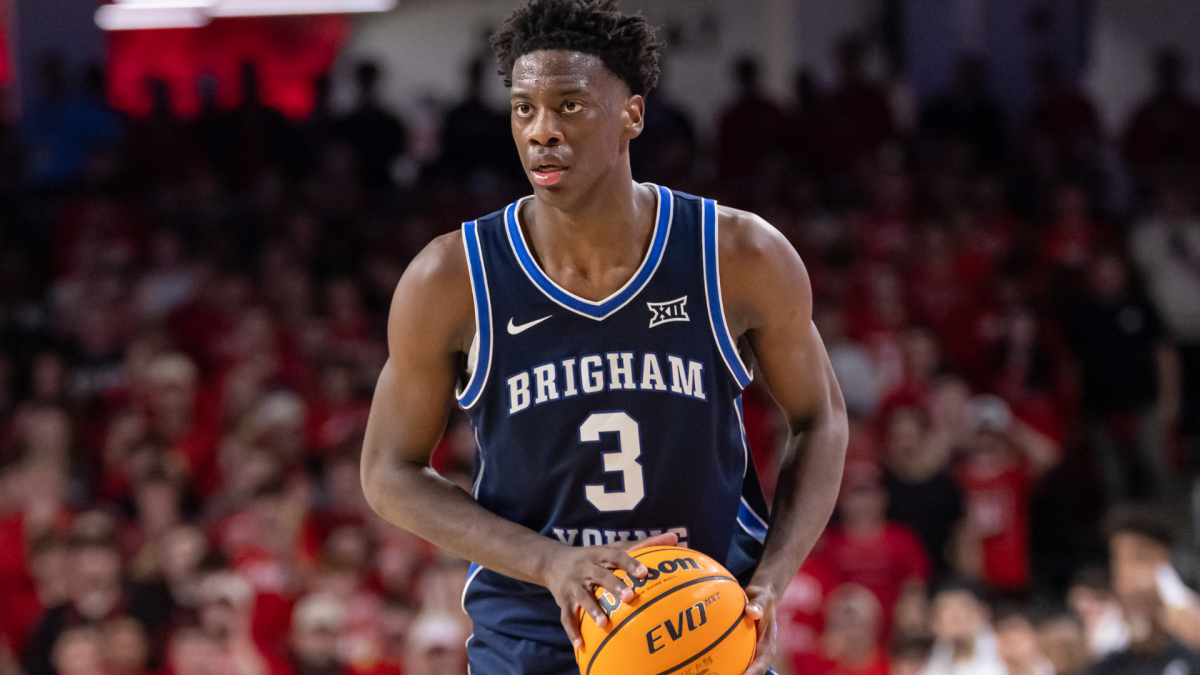
AJ Dybantsa declared for the 2026 NBA Draft after averaging 25.5 points, 6.8 rebounds and 3.7 assists on 51% shooting, making him the projected No. 1 overall pick. The article highlights his elite physical tools and scoring production, while noting BYU could lose two top scorers this offseason and must replace key production. The news is primarily draft and college basketball related, with limited direct market impact.
The only near-term public-market implication here is not BYU-specific, but the reinforcement of Utah basketball as a durable talent magnet. That matters because it increases the probability that Jazz-adjacent local fan engagement and media attention stay elevated into another season, which is a small but real support for regional brand heat and sponsorship narratives; however, this is sentiment, not fundamental earnings power, so the equity impact on JAZZ remains essentially de minimis.
The more interesting second-order effect is on the draft ecosystem: a credible No. 1 candidate creates a bid for elite developmental branding across college programs, which can compress differentiation among top-tier basketball schools and increase the value of staff/coaching continuity. For the NBA side, if the top pick is viewed as a wing rather than a guard, the lottery winner’s roster-building calculus changes materially because a jumbo creator is usually more portable than a small-guard engine; that typically raises the floor of the franchise that lands him by making the acquisition easier to fit alongside incumbent usage-heavy players.
Contrarian risk: the market may be overpricing the certainty of the consensus top pick. In drafts with multiple elite options, the more actionable trade is often around the lottery itself, not the prospect, because a single slot shift can rerate multiple front offices’ timelines by 1-2 years. The real catalyst window is the May 10 lottery: before then, the only edge is optionality, while after the draw the value is in pairing the winner’s fit with existing roster constraints and cap timing.
For JAZZ specifically, this is best treated as a soft-signal item rather than a tradable catalyst. Any enthusiasm from local star power should be faded into strength unless there is a hard linkage to attendance, local sponsorship, or media-rights commentary over the next 1-2 quarters.
AI-powered research, real-time alerts, and portfolio analytics for institutional investors.
Request TrialOverall Sentiment
mildly positive
Sentiment Score
0.25
Ticker Sentiment
