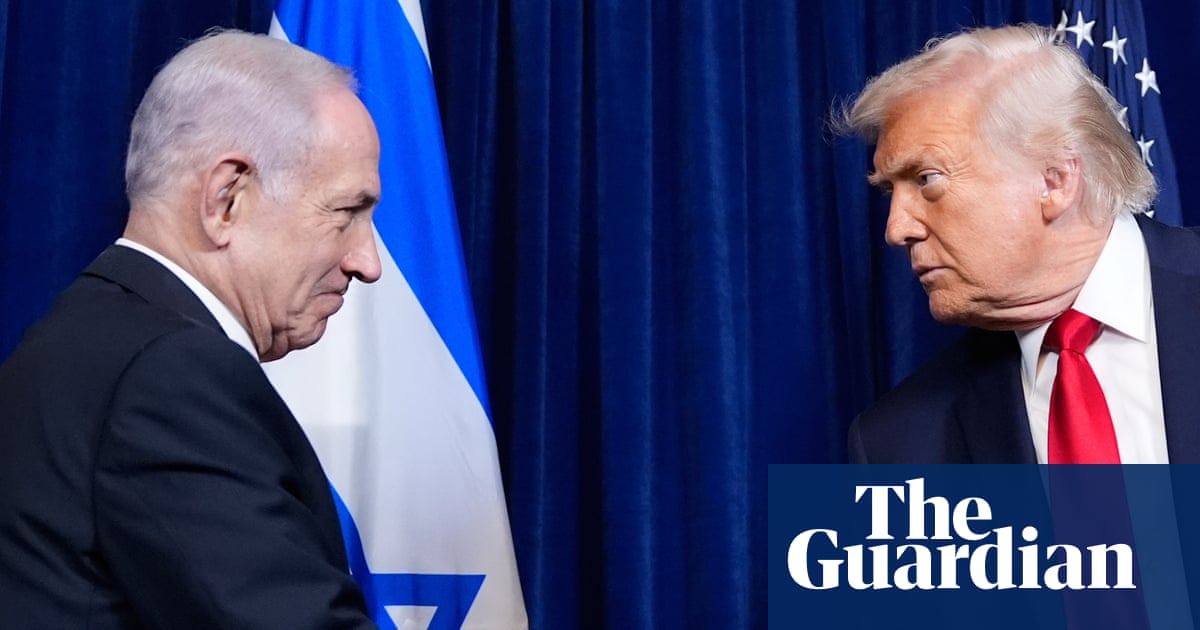
The article describes a failed US-Israeli Iran war strategy that has already triggered damage to US bases and Gulf monarchies, a threatened closure of the Strait of Hormuz, and a global economic crisis. It also highlights a sharp deterioration in Trump-Netanyahu coordination, with Israel reportedly excluded from ceasefire talks and publicly rebuked by Trump. The geopolitical fallout could remain market-sensitive through oil, FX, and broader risk assets, while the conflict is now becoming a domestic political liability for both leaders.
The market implication is not just “Middle East risk on,” but a regime shift in who controls escalation. When Washington starts publicly overruling Jerusalem, the marginal geopolitical premium migrates away from Israel-specific assets and toward Gulf infrastructure, tanker routes, and broader energy volatility. The biggest second-order effect is that every additional day the ceasefire holds increases the odds that risk assets fade the spike, while every renewed exchange of fire re-prices not only oil but also shipping insurance, Gulf sovereign spreads, and defense procurement expectations.
The asymmetric loser is Israel’s own strategic optionality. If the US is leaning into de-escalation ahead of a broader diplomatic reset, Israeli ability to keep pressure on Iran becomes more constrained, which can reduce near-term tail-risk but also weakens the justification for repeated offensive posturing. That creates a mixed read for Israeli defense contractors: headline demand for munitions remains structurally positive, but the cadence of emergency replenishment can be lumpy if Washington imposes discipline or if inventories are accelerated into 2Q rather than sustained into 2H.
Energy is the cleanest macro transmission. The risk is not a permanent supply shock; it is a sequence of 1-3 week air-pocket moves in crude and refined products whenever Hormuz headlines flare, followed by mean reversion if the market concludes the corridor stays open. The contrarian angle is that the strategic failure may cap the upside in crude after the initial spike: if neither side can deliver escalation without damaging its own political standing, the conflict becomes a volatility event rather than a sustained bull case for oil.
Over the next 30-90 days, the most important catalyst is any sign that Washington is forcing a broader regional settlement before it pivots to China. That would be negative for defense beta and positive for airlines, transports, and consumer cyclicals via lower energy input costs. Conversely, any Israeli attempt to reassert relevance with unilateral strikes would likely produce a short, sharp volatility bid in crude and gold, but probably not a durable move unless it visibly threatens shipping lanes.
AI-powered research, real-time alerts, and portfolio analytics for institutional investors.
Request DemoOverall Sentiment
strongly negative
Sentiment Score
-0.72
