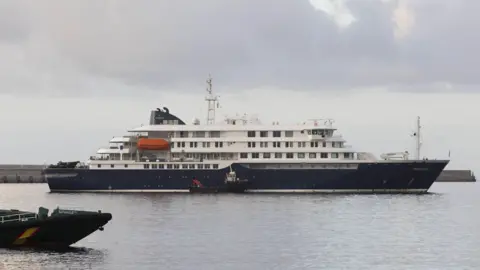
A chartered flight carried 20 Britons evacuated from the MV Hondius cruise ship after a hantavirus outbreak, with passengers taken to Arrowe Park Hospital for 72 hours of isolation and then advised to self-isolate for 42 more days. Three people have died in the outbreak, and the WHO has confirmed six hantavirus cases, including two British nationals being treated overseas. The article is largely public-health focused, with limited direct market impact beyond travel and cruise-sector risk sentiment.
This is not a direct revenue shock to any listed company, but it is a clean read-through for how quickly a localized biosecurity event can become a logistics-and-liability problem for travel operators. The immediate losers are cruise lines and tour operators with exposure to small-ship expedition itineraries, because their customer base is higher-yield, older, and more sensitive to perceived containment failures; even one visible quarantine episode can depress booking conversion for weeks and force higher future trip-disruption reserves. The second-order beneficiary is the medical logistics / containment services stack: air charter, hospital isolation capacity, and specialist cleaning/disinfection providers tend to see incremental demand whenever governments choose repatriation over localized treatment.
The key market risk is less the outbreak itself than the operational precedent. If public health authorities treat this as a template for future cross-border repatriations, then any niche cruise or remote-expedition operator could face materially higher pre-departure screening costs, stricter cancellation terms, and more expensive insurance. That would hit gross margins first, then working capital through deposit refunds and itinerary changes; the effect should show up over the next 1-2 booking seasons rather than immediately in this quarter’s P&L.
The contrarian takeaway is that the event may be too small to justify broad short exposure to travel equities. Because the general-public transmission risk is low and the containment response looks competent, the likely equity impact is asymmetric: small negative revisions to certain operators, but no thesis change for mass-market travel. In other words, this is a stock-specific underwriting issue, not a sector-wide demand collapse, unless a second cluster emerges within the next 2-4 weeks.
AI-powered research, real-time alerts, and portfolio analytics for institutional investors.
Request DemoOverall Sentiment
moderately negative
Sentiment Score
-0.30
