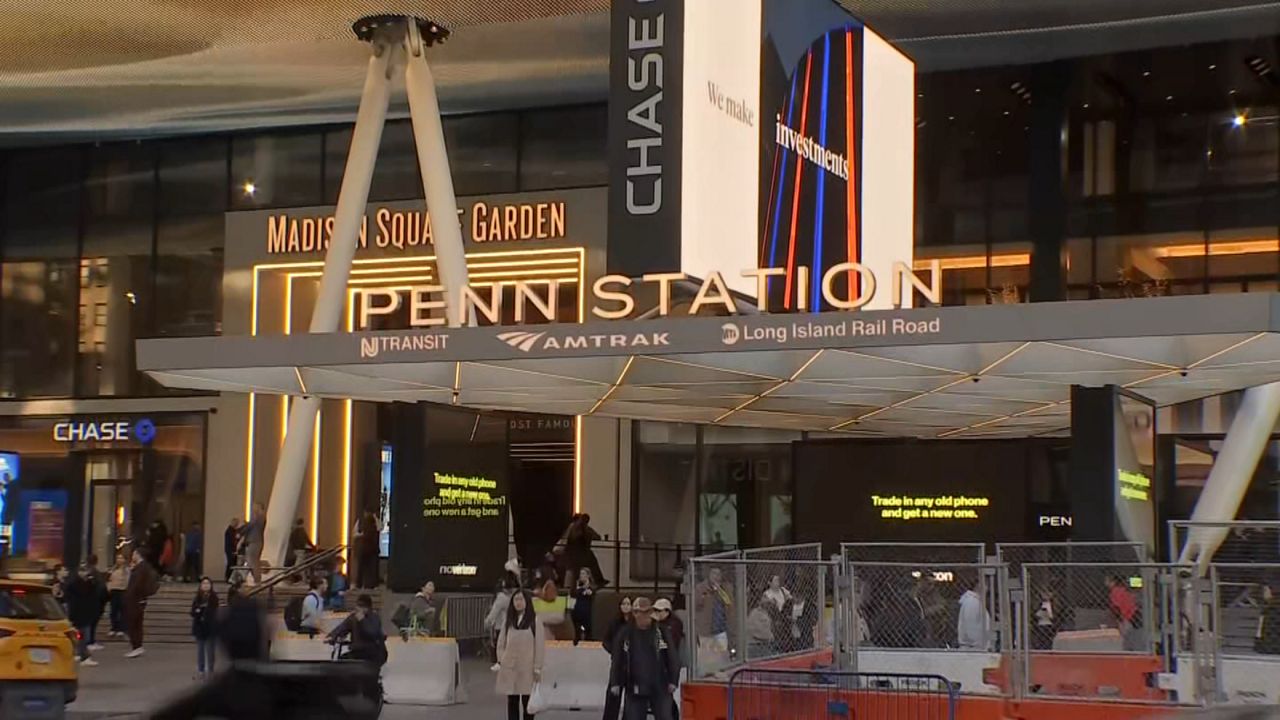
A fire at Penn Station caused major disruptions during the morning commute, including service suspensions and delays across Amtrak, LIRR and NJ Transit. Five civilians were treated for injuries, including two serious cases, while Amtrak said southbound rail service from Penn Station was suspended until at least noon. NJ Transit suspended service between Penn Station New York and Newark Penn Station due to overhead wire damage, with Midtown Direct diverted to Hoboken.
This is a localized but high-conviction operational shock, and the immediate market impact is less about the incident itself than the fragility it exposes in the Northeast rail network. When Penn Station is impaired, the system has limited slack: riders get rerouted into PATH, buses, and alternate terminals, which creates an ugly but temporary demand spike for the few assets that can absorb overflow. The clearest second-order beneficiary is PATH, but the upside is largely volume reallocation rather than true incremental demand, so the market should treat any move as tactical and likely mean-reverting.
The bigger loser set is anyone reliant on just-in-time commuter mobility across the Northeast corridor. Corporate attendance, logistics, and field-service productivity take a same-day hit, but the more durable effect is confidence erosion: repeated transit disruptions can nudge employers toward longer-term hybrid schedules, which slowly compresses peak-hour fare economics and weakens traffic recovery assumptions across urban rail. That matters because the valuation debate in transit-adjacent infrastructure hinges on sustained utilization, not one-off diversions.
For tradeable catalysts, the window is hours to days, not months. If service restoration slips beyond midday or wire/track damage proves more extensive, disruption costs scale nonlinearly because backlog clears into the evening peak, creating a second wave of cancellations. Conversely, once operations normalize, any PATH-related outperformance should fade quickly; the market usually overprices temporary congestion relief as if it were structural share gain.
The contrarian point is that this may be more bullish for public-sector capex than for operators: repeated failure modes at a critical interchange strengthen the case for maintenance spending, redundancy investment, and signal-system upgrades. That is a slower-burn theme, but it supports the thesis that infrastructure modernization budgets remain politically protected even if near-term ridership volatility looks noisy.
AI-powered research, real-time alerts, and portfolio analytics for institutional investors.
Request DemoOverall Sentiment
moderately negative
Sentiment Score
-0.35
Ticker Sentiment
