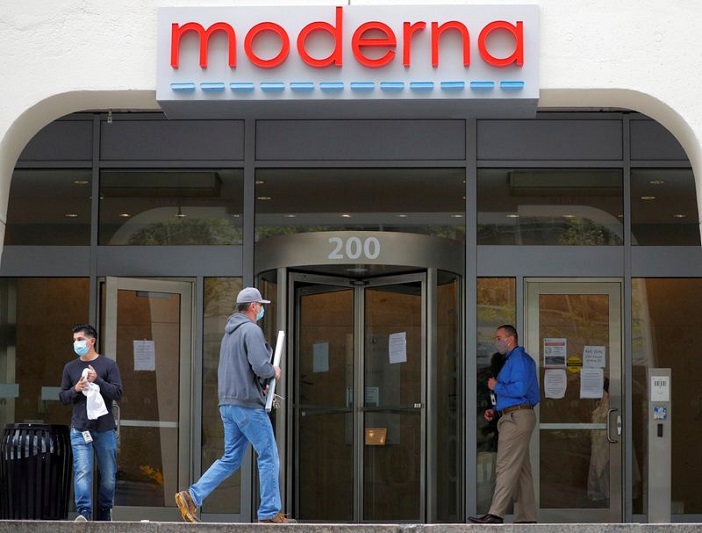
Moderna reported Q1 2026 revenue of $400 million, well above expectations and up $300 million year over year, but posted a larger-than-expected loss of $3.40 per share. The quarter was supported by strong international sales, especially from the U.K., and by EU approval of mCOMBRIAX, while a $950 million litigation settlement drove the GAAP loss and raised cost of sales. Management reiterated full-year 2026 revenue growth of up to 10% and guided Q2 revenue to $50 million-$100 million, helping lift shares 3.13% premarket.
The clean read-through is that the quarter de-risks the top line but does not yet de-risk the equity story. The revenue beat is mostly a proof-of-execution signal for international procurement, which matters because it shifts the debate from “can they still sell?” to “how durable is the non-U.S. base before the next respiratory cycle?” That should help sentiment on the stock in the next few weeks, but it also sets up a higher bar for the back half, where any softness in ex-U.S. deliveries would quickly expose how concentrated the growth bridge really is.
The bigger second-order effect is on competitors and channel partners in respiratory vaccines: a credible combination product with EU traction pressures the weaker players to compete on access, not just efficacy, and that can compress pricing/reimbursement economics across the category. At the same time, the litigation overhang is not just an earnings item; it is a cash scheduling problem that keeps management from getting too aggressive on capital allocation, partnership economics, or buybacks. The market is likely underappreciating that the liability debate can recur as a valuation headwind every time the company tries to re-rate on pipeline progress.
The catalyst stack is asymmetric over the next 2-6 months: FDA timing on the flu asset, EU commercialization progress, and interim oncology readouts can all support the stock, while any one disappointment could reset expectations because the shares have already re-rated hard over the past year. The contrarian takeaway is that the positive print may be mechanically encouraging analysts to stop cutting numbers, but the more important question is whether the company can convert scientific optionality into recurring, high-visibility cash flow before the litigation cash hit and R&D burn constrain flexibility. That makes this more of a “sell volatility into strength” setup than a clean momentum long at current levels.
AI-powered research, real-time alerts, and portfolio analytics for institutional investors.
Request DemoOverall Sentiment
moderately positive
Sentiment Score
0.45
Ticker Sentiment
