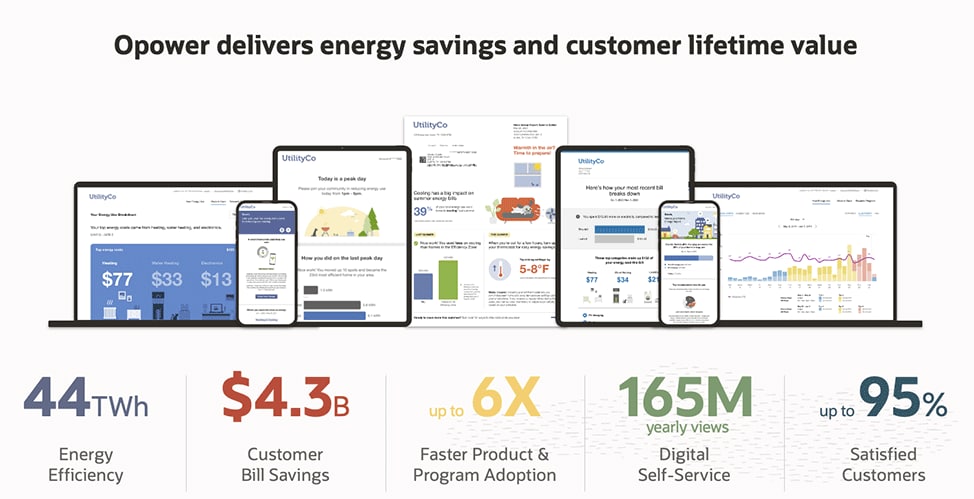
Oracle says nearly 45 million North American households are now benefitting from Opower’s AI-driven energy programs, and its Business Customer Engagement solution serves 4.6 million non-residential customers/sites. Evergy’s Opower-enabled TOU migration drove 30% pre-enrollment, 80% of sign-ups via digital self-service, and more than $2 million in avoided call center costs. The update is supportive for Oracle’s utilities platform and highlights continued adoption of AI-enabled energy management tools, though it is primarily a product and customer-success announcement rather than a market-moving financial event.
Oracle is quietly building a utility-facing software moat that is more about workflow capture than “AI” optics. The valuable second-order effect is that once a utility uses Oracle for rate education, digital self-service, alerts, and load shaping, switching costs rise across billing, customer care, and demand-response operations; that makes the revenue stream stickier than a typical SaaS module sale and can expand Oracle’s land-and-expand opportunity into regulated enterprise accounts. The more interesting read-through is for utility operating leverage. If digital enrollment can materially displace call-center volume during TOU transitions, the economic case scales beyond Evergy: every large utility facing electrification, EV adoption, and dynamic pricing has the same pain point, and customer-service savings can be redirected into grid investment or margin defense. That creates a multi-year adoption runway for Oracle even if top-line recognition is lumpy, because the ROI pitch is now tied to avoided opex and avoided churn, not just “customer engagement.” For EVRG, this is evidence of better regulatory and execution risk management, not an earnings re-rate. The utility’s upside is that better customer education lowers political blowback around rate redesigns and should reduce expense volatility, but the benefit is incremental versus the much larger rate-base and weather-driven drivers. The bigger loser is any competing utility software vendor or in-house platform strategy that lacks Oracle’s scale and behavioral data: the bar for replacement just moved higher. The contrarian view is that the market may over-credit “AI” here and underappreciate that utilities buy compliance, reliability, and lower cost-to-serve. If macro pressure eases or regulators slow TOU/dynamic pricing rollouts, the adoption curve can flatten; the risk is not product failure but slower procurement cycles over the next 6-18 months. The thesis breaks only if utilities decide to standardize on cheaper point solutions or if customer backlash around rate complexity forces a retreat from proactive pricing programs.
AI-powered research, real-time alerts, and portfolio analytics for institutional investors.
Request DemoOverall Sentiment
mildly positive
Sentiment Score
0.45
Ticker Sentiment
