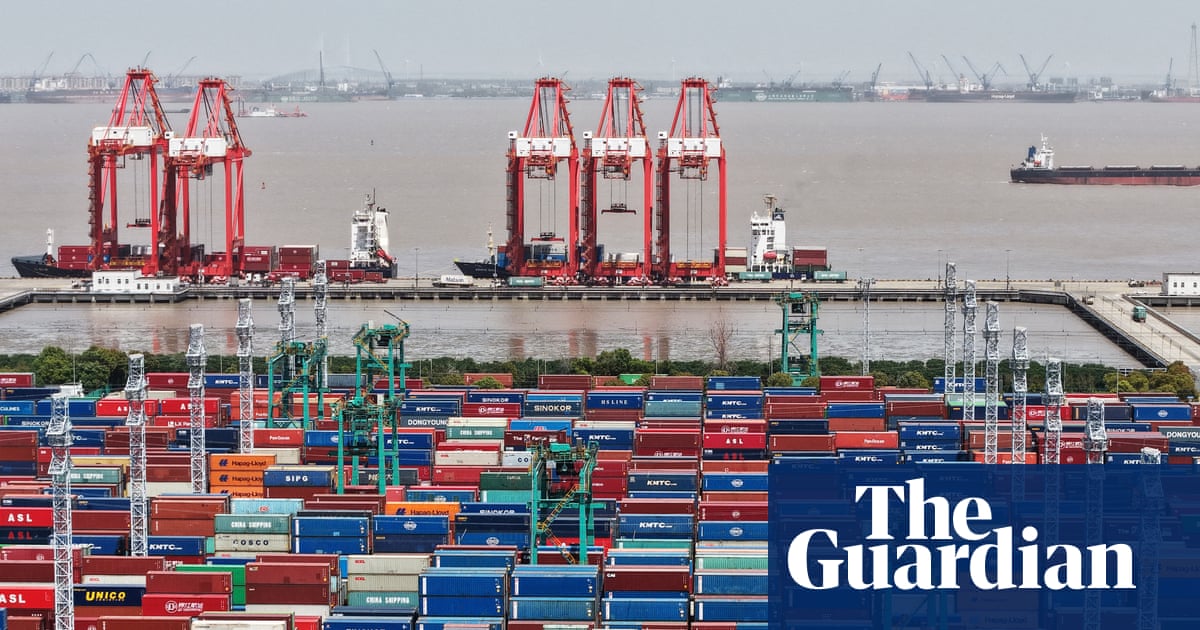
Europe faces a broadening China import shock, with analysts warning that cheap Chinese components and a potentially 40% undervalued yuan are eroding EU industrial production. Germany is highlighted as especially exposed: China has become its top trading partner, the bilateral surplus with Germany doubled to $25bn, and an estimated 250,000 industrial jobs have been lost since 2019, including 51,000 in autos in 2024-2025. Brussels is considering new supply-chain and security rules, but implementation may not arrive until 2027+, leaving near-term pressure on European manufacturers.
The key market implication is not simply cheaper Chinese imports; it is a widening cost-of-capital gap that will force European industrial firms into a slower-margin, lower-utilization regime. Once procurement teams lock in embedded Chinese components, switching costs rise nonlinearly: tooling, QA, certifications, and inventory buffers turn what looks like a 30-50% unit cost advantage into a structural moat for Chinese suppliers. That creates a second-order squeeze on EU midsize manufacturers most exposed to intermediate goods, where pricing power is weakest and fixed-cost absorption deteriorates fastest.
The earliest losers are European machinery, auto suppliers, chemicals intermediates, and industrial automation names with high domestic manufacturing intensity but limited pricing power. The more interesting spillover is into labor and capex: if volume is lost first in components, final-assembly reshoring arguments become harder to finance, so the earnings hit shows up before headline factory closures. Over 6-18 months, this can depress EU industrial margins even without a recession, because firms will be forced to defend share by cutting prices or taking suboptimal localization decisions.
The policy risk is that Brussels reacts too slowly and too narrowly. A tariff-only or security-screening approach is unlikely to bite quickly enough; the real vulnerability is administrative delay, legal challenges, and member-state fragmentation, which lets imports keep flowing while the industrial base erodes. The contrarian view is that the euro weakness that helps Chinese competitiveness could partially unwind if EU growth rolls over harder than China’s, but that would be a macro relief, not a strategic fix, and probably comes too late for affected suppliers.
For investors, the cleanest expression is to underweight European cyclicals with high China intermediate-content exposure and limited pass-through ability, while favoring global industrials with diversified sourcing and US domestic end-markets. This is a multi-quarter rather than days-long trade: the catalyst path is policy meetings and 2027 implementation risk, but the earnings revisions likely start in the next 1-2 reporting cycles as order books and margins weaken. The highest-conviction setup is a relative short in EU capital goods versus long US industrials, where balance sheets and domestic demand insulation are materially better.
AI-powered research, real-time alerts, and portfolio analytics for institutional investors.
Request DemoOverall Sentiment
strongly negative
Sentiment Score
-0.78
