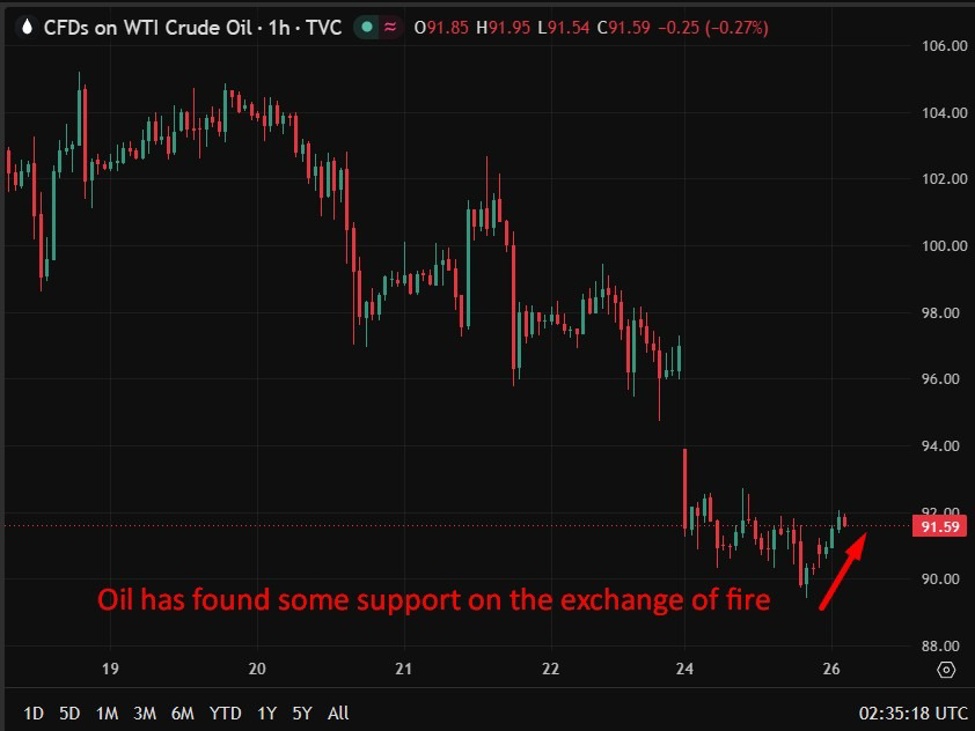
Rubio said the Strait of Hormuz will be reopened "one way or another," signaling that the U.S. may use military force if diplomacy fails. He also said talks in Qatar are still only working through the wording of an initial framework and could take a few more days, with no active scheduled negotiations beyond that. The remarks keep a sizable geopolitical risk premium in oil markets despite Monday's roughly 7% price drop on deal hopes.
The key market error is treating diplomacy and force as substitutes rather than linked levers. If Washington is willing to use military pressure to reopen the Strait, then the path to “normalization” may actually be more volatile near-term: traders can get a headline-driven drop in oil before realizing physical flow risk remains unresolved until the sea lane is demonstrably secure. That argues for a persistent volatility premium in prompt barrels and freight, even if outright prices gap lower on de-escalation headlines.
The biggest second-order winner is not necessarily upstream energy, but option sellers and balance-sheet-heavy firms that can monetize elevated realized volatility without needing a directional oil view. Conversely, refiners, airlines, and chemical names are vulnerable to the sequencing risk of a sharp but temporary selloff followed by a violent re-risking if the strait remains contested; their hedges are most dangerous when entered after a one-day price washout. The market is also underestimating how long insurance, freight, and working-capital frictions can persist after a military reopening, which keeps prompt supply chains tight even if headline flows resume.
Consensus seems too comfortable with “deal within days” as a base case. The more important base case is a corridor of outcomes: either a quick diplomatic language fix with lingering compliance risk, or a forced reopening that still leaves the market with residual disruption risk for weeks. That means the downside in crude on a positive headline is likely capped, while upside on any setback is asymmetric because positioning is still crowded for peace.
The trade setup is therefore to own convexity, not direction. Short-dated upside in oil and tanker volatility is cheaper than chasing outright futures after a 7% selloff, while defensives that benefit from lower energy input costs can be funded against energy exposure if the truce holds. The best risk/reward is to fade the complacency in downside hedges and keep powder dry for a second wave of geopolitical headlines.
AI-powered research, real-time alerts, and portfolio analytics for institutional investors.
Request DemoOverall Sentiment
mildly negative
Sentiment Score
-0.20
