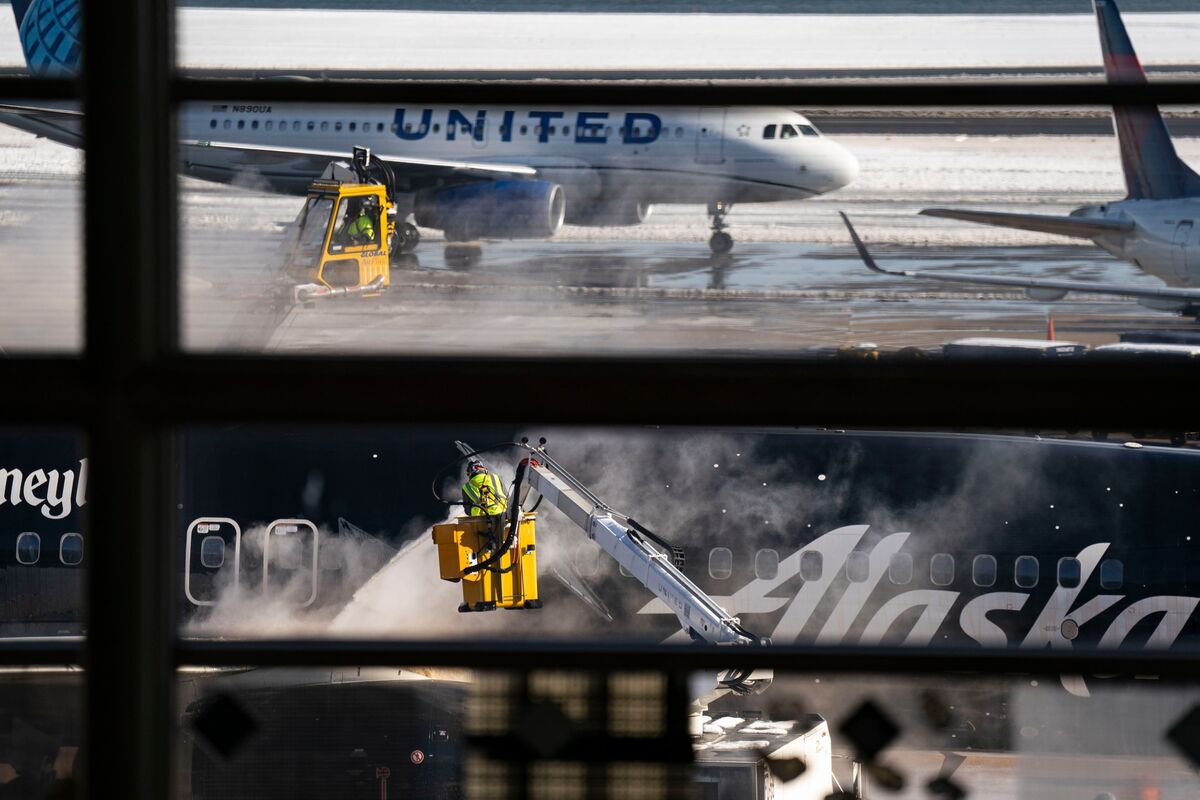
Thunderstorms across Texas combined with a cold snap in Chicago and New York raise the risk of significant travel delays over the Thanksgiving period, potentially straining an air traffic system still recovering from a record-long government shutdown. The situation poses short-term operational and revenue disruption risks for airlines, airports and logistics providers, which could translate into transient downside pressure on travel-related equities and service performance in the coming days.
Market structure: Short-term winners are cargo-focused logistics (UPS, FDX) and ancillary services that can re-route capacity; clear losers are short-haul, schedule-dense passenger airlines (AAL, LUV) and airport-handling contractors where cancellations concentrate. Expect a 5–15% spike in delays/cancellations in impacted hubs over the next 72 hours, translating to single-digit revenue disruption for US legacy carriers on a weekly basis and transient margin squeezes from re-accommodation and crew costs. Cross-asset: near-term equity weakness in carriers is likely to lift airline options IV and push short-dated put demand; municipal airport-revenue bonds could show negligible credit impact while short-term commercial paper for airlines may see modest spread widening under liquidity stress.
Risk assessment: Tail scenarios include cascading network failure causing multi-day system outage (1–3% probability) or DOT enforcement and class-action suits if cancellation thresholds exceed statutory norms, creating earnings hits measurable in tens-to-low-hundreds of millions. Immediate (0–7 days): operational and bookings volatility; short-term (1–3 months): yield recovery or fare repricing; long-term: negligible if episode remains isolated. Hidden dependencies: crew-day clock constraints and gate/slot bottlenecks can amplify a small shock into outsized cancellations; cargo belly-space reallocation may materially re-price carrier revenue mix.
Trade implications: Favor tactical short-dated bearish exposure to schedule-dense carriers via 7–14 day put spreads on AAL and LUV sized 1–3% portfolio each (buy 2–4% OTM, sell 7–10% OTM) to limit premium decay; rotate proceeds into 1–3% long positions in UPS and FDX on any >2% pullback to capture holiday freight pricing. Implement a relative-value pair: long UPS (1.5%) / short AAL (1.5%) for a 30-day trade, close if spread compresses 50% or after 30 days. Timing: establish within 24–48 hours, plan exits 7–30 days depending on IV and cancellation metrics.
Contrarian angles: The market may overshoot downside for carriers—histor analogs (major holiday storms) show 4–8% equity drawdowns that largely reverse within 30 days as yields re-price; downside beyond 10% likely represents buying opportunity. Watch for unintended consequence: severe passenger disruption can shift consumer spend to premium last-mile logistics and post-holiday surge in expedited shipping, a catalyst that could re-rate FDX/UPS within 1–3 months. If cancellations fail to materialize (>3% hub cancellation rate sustained 48h), unwind shorts quickly as IV and near-term premium collapse will punish option holders.
AI-powered research, real-time alerts, and portfolio analytics for institutional investors.
Request DemoOverall Sentiment
mildly negative
Sentiment Score
-0.25
