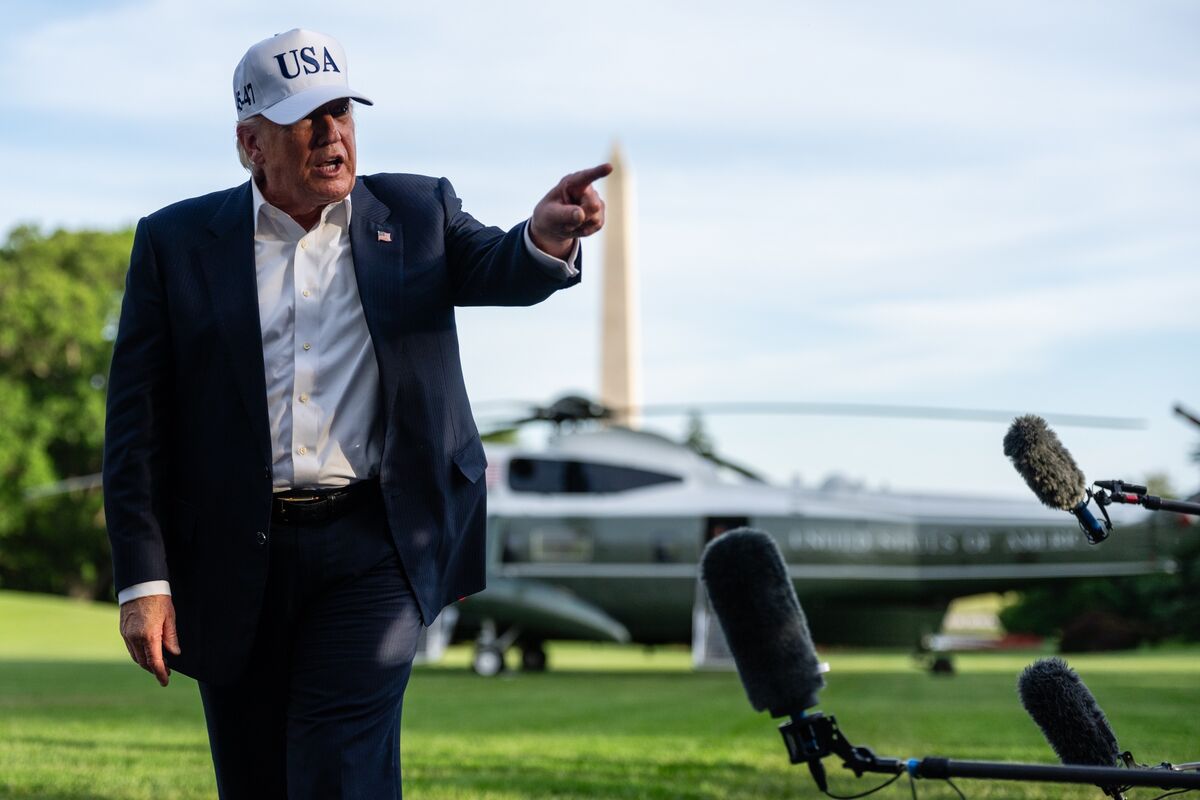
Donald Trump and Japanese Prime Minister Sanae Takaichi spoke by phone for about 15 minutes and reaffirmed the strength of the US-Japan alliance after Trump’s visit to Beijing. The two leaders agreed to keep communicating on key issues, including developments in the Indo-Pacific region. The update is diplomatically supportive but contains no direct policy or market-moving detail.
This call is less about optics than about signaling to allies and adversaries that Japan remains inside the core U.S. security perimeter after a high-profile China engagement. The second-order effect is a modest de-risking of a Japan geopolitical discount: defense procurement, ISR, missile defense, and dual-use infrastructure contractors should see better budget durability, especially if Tokyo reads the moment as permission to accelerate spending without looking unilateral. The biggest beneficiary is not the bilateral relationship itself, but the domestic coalition in Japan that argues for supply-chain resilience and a more explicit security posture.
The risk is that Beijing interprets the sequence as a soft containment message, which can surface first in non-military pressure: customs friction, tourism throttling, rare-earth signaling, or informal harassment of Japan-linked manufacturing. That matters most for autos, electronics, and industrial exporters with China-sensitive margins over the next 1-3 months, even if the headline tone remains calm. In a more constructive scenario, the conversation reduces the odds of policy whiplash in Tokyo and gives Japanese corporates cover to continue reshoring and redundancy capex over the next 12-24 months.
Consensus is likely underpricing how much of this flows through capital allocation rather than headlines. If alliance reassurance is credible, it incrementally lowers the cost of capital for Japan’s defense and infrastructure beneficiaries while raising the strategic value of non-China Asia supply chains. The contrarian miss is that this is not primarily a bilateral FX or tariff story; it is a medium-term capex re-rating story for firms exposed to defense procurement, industrial automation, power/grid hardening, and diversified electronics assembly.
AI-powered research, real-time alerts, and portfolio analytics for institutional investors.
Request DemoOverall Sentiment
neutral
Sentiment Score
0.05
