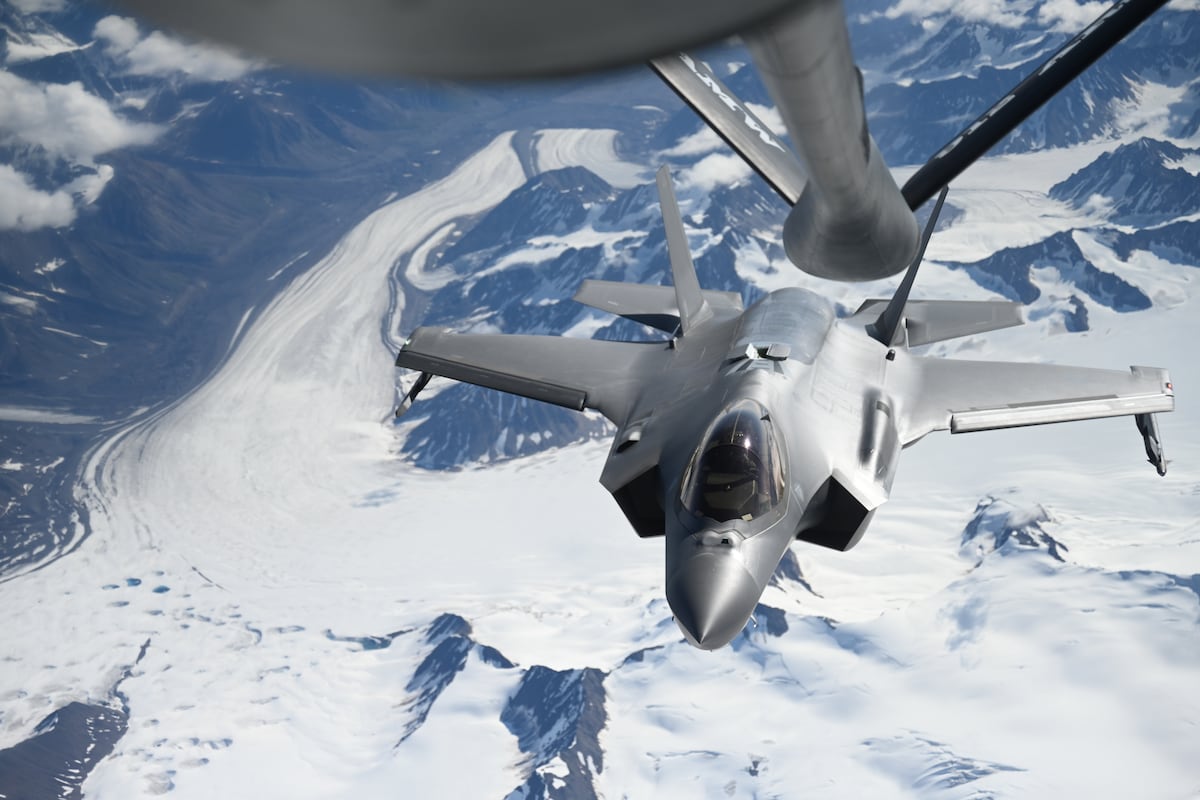
The F-35 Joint Strike Fighter program is significantly scaling back its Block 4 upgrade ambitions due to substantial cost overruns and delays, with the Government Accountability Office (GAO) reporting the upgrade is at least $6 billion over budget and years behind schedule, now targeting a subset of capabilities by 2031. This comes as the program's total acquisition costs have surged to over $485 billion, with lifetime costs exceeding $2 trillion, highlighting persistent financial challenges. Key contractors, including Lockheed Martin, are experiencing worsening delivery delays, with all 110 F-35s delivered in 2024 late by an average of 238 days, exacerbated by critical supply chain issues and engine delivery failures from RTX subsidiary Pratt & Whitney, underscoring systemic operational inefficiencies.
The F-35 program is experiencing critical operational and financial strains, as detailed in a recent Government Accountability Office (GAO) report. The planned Block 4 upgrade has been significantly scaled back and is now projected to be at least $6 billion over budget and years behind schedule, with a reduced set of capabilities not expected until 2031 at the earliest. This delay is a direct consequence of persistent issues with the prerequisite Technology Refresh 3 (TR-3) upgrade, which is approximately three years late. For the prime contractor, Lockheed Martin (LMT), these challenges have manifested in a severe degradation of production efficiency; all 110 F-35s delivered in 2024 were late, with an average delay of 238 days, a dramatic increase from an average of 16 days in 2021. This is compounded by systemic supply chain failures, evidenced by over 4,000 parts shortages on the final assembly line, double the historical average. Financially, the program's total acquisition cost has escalated to over $485 billion, a nearly 10% increase from the prior year's estimate, while the total lifetime cost now exceeds $2 trillion. Furthermore, RTX subsidiary Pratt & Whitney failed to deliver any F-35 engines on time in 2023 and 2024, signaling a broader weakness across the program's key suppliers, even though these specific delays have not yet impacted final aircraft production.
AI-powered research, real-time alerts, and portfolio analytics for institutional investors.
Overall Sentiment
strongly negative
Sentiment Score
-0.75
Ticker Sentiment
