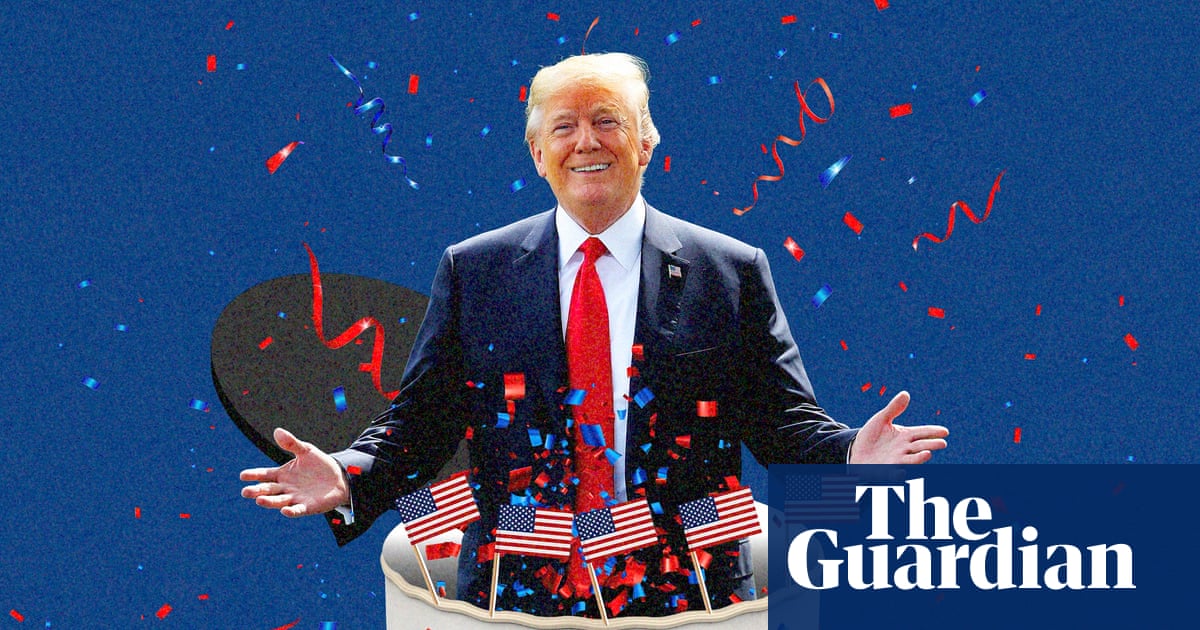
The article says America’s 250th anniversary has been overtaken by partisan spectacle, with Trump-aligned events, controversial beautification projects, and a $14.7m Lincoln Memorial reflecting pool renovation that briefly turned bright green and began peeling. It also highlights a broader clash over historical narrative, including executive action affecting Smithsonian and National Park materials, and rising concern about Christian nationalism and institutional erosion. The piece is largely political and cultural commentary with limited direct market implications.
The investable read-through is not on the symbolism itself but on the continued monetization of institutional conflict. In the near term, this kind of government-as-entertainment posture tends to aid private event operators, defense-adjacent contractors, and media platforms that can capture attention around patriotic programming, while further harming the credibility of public institutions that rely on trust to justify budget growth. The second-order effect is a widening gap between headline-driven “state spectacle” assets and the slower-moving cultural and educational institutions that actually absorb reputational damage.
The more important medium-term implication is regulatory. An administration that treats national commemorations as a loyalty test is likely to keep pushing on museums, parks, broadcasters, and federally funded cultural bodies, which raises execution risk for any vendor dependent on discretionary federal contracts or permit-heavy work. That argues for caution on firms exposed to government branding projects with weak procurement discipline; cost overruns, protests, and legal challenges can easily turn a one-off contract into a margin trap over the next 6-18 months.
The contrarian point is that this kind of polarization can be misread as uniformly bearish. In practice, heightened civic conflict often increases demand for “trusted” media, live sports, and heritage tourism, because consumers seek identity-safe content and physical experiences that feel less algorithmic. The market may be underpricing that bifurcation: the losers are legacy civic brands, while winners are operators with scale in live attendance, distribution, and patriotic monetization. The key question is whether the audience fatigue becomes broad enough to dent spending or merely reallocates it.
For event-related trades, the relevant catalyst window is the next 1-3 months: if the July/August spectacle keeps drawing criticism or logistical failures, the narrative of incompetence can compound and pressure associated vendors. Over a 12-month horizon, the bigger risk is not a single embarrassment but the institutional normalization of politicized procurement and cultural policy, which increases headline risk for any company reliant on federal visibility.
AI-powered research, real-time alerts, and portfolio analytics for institutional investors.
Request DemoOverall Sentiment
moderately negative
Sentiment Score
-0.35
