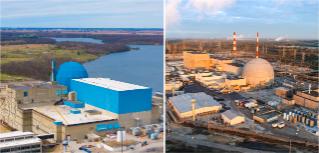
Constellation has completed its acquisition of Calpine from Energy Capital Partners, creating the nation's largest electricity producer with 55 gigawatts of capacity and 2.5 million retail and business customers while maintaining headquarters in Baltimore and a major presence in Houston. The deal combines Constellation's zero-emission nuclear fleet with Calpine's natural gas and geothermal assets, strengthens footprints in high-demand regions such as Texas and California, positions the company to power data centers and AI-era infrastructure, and commits more than $23 million annually in community and philanthropic giving.
Market structure: Constellation’s purchase (creating ~55 GW capacity and 2.5M retail customers) meaningfully scales an integrated clean+nuclear+gas platform, increasing its bargaining power for PPAs and capacity contracts in ERCOT/PJM/CAISO. Immediate winners: CEG (scale, diversified dispatch stack) and counterparties selling long‑duration products; losers: pure merchant gas generators (NRG, VST) and small retail suppliers facing pricing pressure. Expect modest upward pressure on regional natural gas offtake for fuel-security contracts and tighter basis spreads in Texas/California, while credit markets will reprice utility debt spreads if leverage rises. Risks: Tail risks include a regulatory divestiture or state-level retail remedies, a major nuclear/gas outage during integration, or a credit-rating downgrade forcing equity issuance — each could compress equity returns by 20–40% within 6–24 months. Near term (days–weeks) focus is on integration-cost headlines and rating agency commentary; medium term (3–12 months) is synergy realization vs. announced targets; long term (2–5 years) execution on advanced nuclear/geothermal/LDS investments and merchant exposure to renewables. Hidden dependency: earnings hinge on merchant market prices and capacity revenues in a handful of ISOs — transmission constraints or rapid renewable curtailment could flip economics. Trade implications: Primary actionable is long CEG (conviction) sized 2–3% of portfolio targeting 15–25% total return over 12–18 months, hedged with a 10–12% stop; offset with a short position in NRG or VST (1–1.5%) as a pair trade to express premium for integrated scale. Use options to concentrate upside: buy a 9–12 month CEG call spread sized 1% notional (long ~25% OTM / short ~55% OTM) to cap cost while keeping convexity. Rotate 5–10% from pure merchant gas names into integrated clean utilities (CEG, NEE, EXC) over 4–8 weeks, trimming if Henry Hub rises >30%. Contrarian view: Consensus underestimates integration and financing risk — large scale can be a liability if Constellation funds long‑duration projects with high leverage, leading to equity dilution within 12–36 months. Historical parallels (merchant-heavy rollups) show initial share outperformance followed by multi‑year stagnation if capex overruns occur; therefore the market may be underpricing conditional downside of a 1–2 notch ratings cut. Unintended consequence: political/regulatory backlash in CA/TX could force retail divestitures, reducing projected synergies by 20–40% and creating short opportunities.
AI-powered research, real-time alerts, and portfolio analytics for institutional investors.
Request DemoOverall Sentiment
moderately positive
Sentiment Score
0.55
Ticker Sentiment
