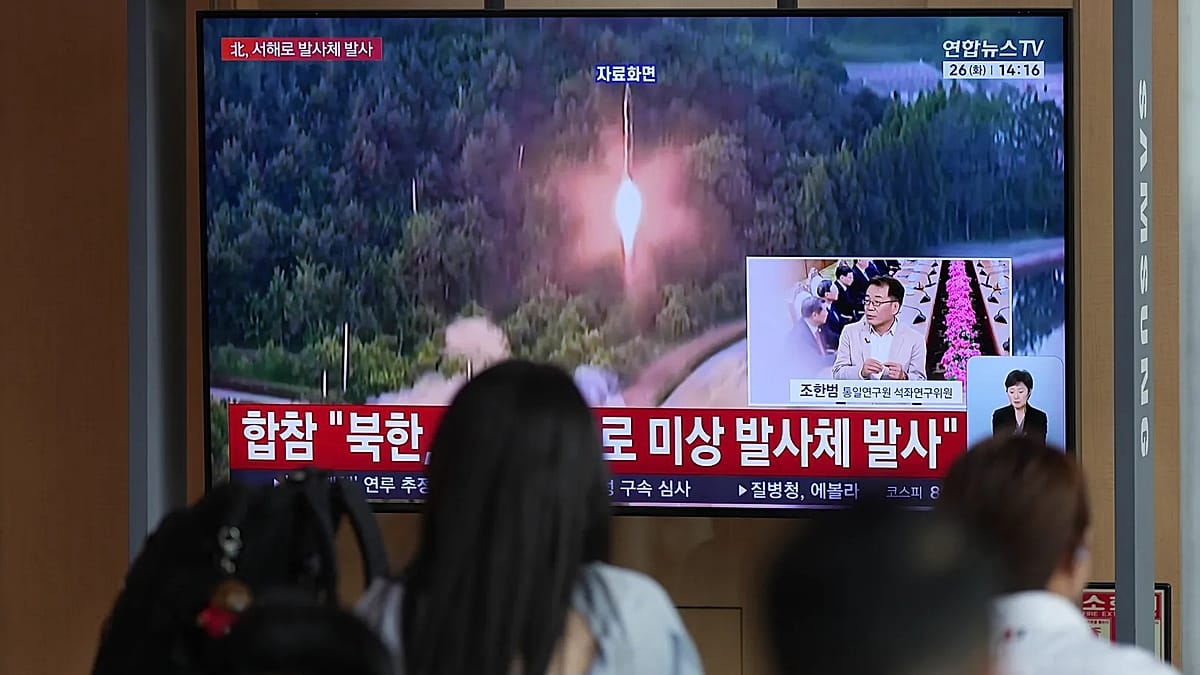
North Korea launched several projectiles, including a short-range ballistic missile, into the Yellow Sea, flying about 80 kilometres and marking its first launch in 37 days and eighth of the year. South Korea, the US, and Japan said they were in a state of full readiness while Seoul strengthened surveillance for possible additional launches. The article also highlights continued tensions with Seoul, closer Pyongyang-Moscow ties, and possible Chinese diplomatic engagement.
This is less about immediate kinetic damage and more about a regime shift in Northeast Asia risk premia. Repeated missile activity into a narrow maritime corridor keeps insurance, shipping, and defense procurement pricing on a higher floor, but the bigger second-order effect is policy: every launch makes incremental sanctions less potent while strengthening the case for Japan-Korea-US intelligence integration and missile-defense spending over the next 6-18 months.
The China/Xi angle matters more than the headline launch. A higher-profile Beijing visit would signal that North Korea is being economically buffered enough to sustain a more aggressive posture, which reduces the odds that external pressure alone will moderate behavior. That creates an unfavorable setup for any Korea-sensitive asset class: the risk is not one-off escalation, but a slow ratchet where markets stop reacting until a more disruptive event forces repricing.
The underappreciated catalyst is Russia-linked technology transfer. If Pyongyang is receiving better guidance, propulsion, or warhead know-how in exchange for manpower and munitions, the marginal test matters because it can compress the timeline for a credible multi-platform threat. That shifts the market’s focus from headline noise to defense budgets, particularly missile defense interceptors, sensors, and command-and-control, while leaving the broader Korean equity complex vulnerable to episodic de-risking. The consensus is likely underestimating how quickly these events can hit local FX and tourism sentiment even without direct conflict.
AI-powered research, real-time alerts, and portfolio analytics for institutional investors.
Request DemoOverall Sentiment
mildly negative
Sentiment Score
-0.20
