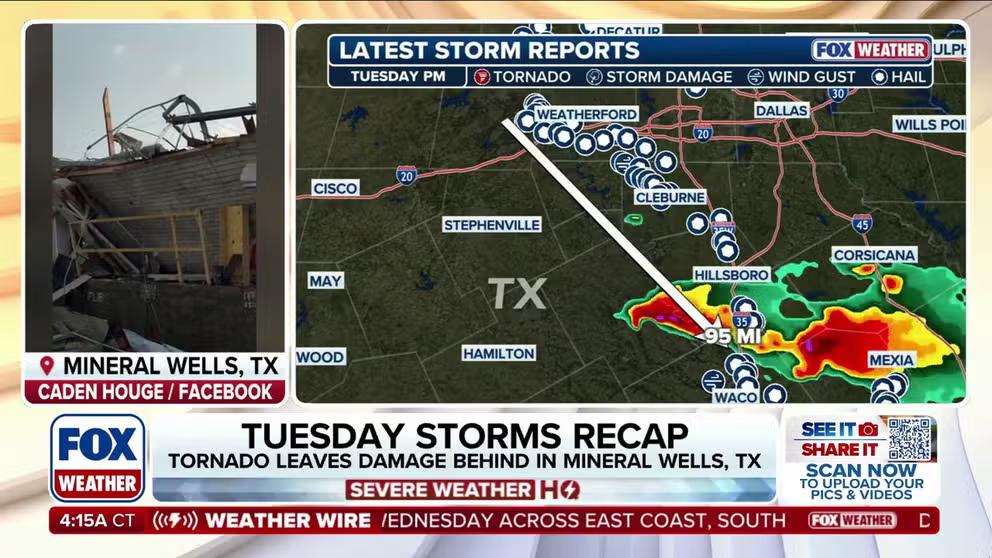
A tornado tore through Mineral Wells, Texas, causing significant structural damage, destroying or heavily damaging multiple buildings, and sending at least two people to the hospital. Officials declared a local state of disaster and imposed a curfew in heavily impacted areas while crews assess damage and secure the site. The event is materially negative for the local community and property base, but it is unlikely to have broad market impact.
The near-term equity impact is less about the headline damage and more about the forced pause in local economic activity. When a small regional hub gets hit this hard, the first-order hit to insurers and contractors is obvious, but the second-order winner is often any company with fast deployable rebuild capacity: roofing, building products, temporary power, debris removal, and regional logistics. That said, the market usually underestimates how quickly small-town reconstruction can become a margin event for suppliers with tight geographic density; replacement demand can arrive in a compressed 3-6 month window and lift volumes before national macro data reflects it.
The more interesting risk is to property/casualty loss ratios and reinsurance sentiment rather than to one local event. Severe convective storms have a way of sneaking into pricing models because they are frequent, dispersed, and hard to reserve against, which can force a mid-year repricing cycle if loss severity is running above assumptions. If this is part of a broader spring storm pattern, expect pressure first in homeowners books, then in commercial property, and finally in cat-exposed reinsurers if claims drift upward over several weeks.
On the other side, the event is a reminder that infrastructure resilience spending has become a real, not theoretical, budget line item. Municipalities and private operators in storm-prone corridors tend to accelerate capex after visible failures, which can benefit companies tied to resilient roofing, drainage, modular structures, and backup power. The consensus may be too focused on acute loss and not enough on the follow-on replacement cycle and insurance premium reset, which can create a better medium-term trade than chasing disaster headlines immediately after the event.
AI-powered research, real-time alerts, and portfolio analytics for institutional investors.
Request DemoOverall Sentiment
strongly negative
Sentiment Score
-0.78
