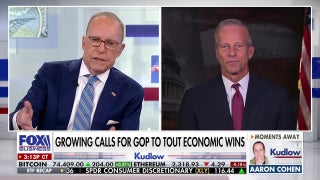
Markets are portrayed as improving on the back of Trump’s blockade of Iran’s oil and money, with stock markets up nine straight days and the S&P nearly back to its record close of around 7,000. Oil is said to be dipping below $100 a barrel, while rates are calm and CPI/PPI excluding war-time energy are described as soft to benign. The piece argues that geopolitical and sanctions pressure on Iran is boosting risk appetite and signaling an end to the conflict.
The market is likely pricing a faster decline in the geopolitical risk premium than the underlying policy regime can actually deliver. Even if headline tension eases, sanctions enforcement plus shipping/insurance frictions tend to linger for weeks to months, which means the near-term beneficiary is not broad risk assets so much as balance-sheet quality and low-input-cost sectors that can absorb volatility without margin compression.
The cleaner second-order winner is not simply defense or energy, but cyclicals with meaningful domestic demand exposure and little direct oil sensitivity; a calmer crude tape reduces the odds of a late-summer earnings reset for transports, chemicals, and consumer discretionary. The DOW’s small positive read-through is more about discount-rate stability than an earnings inflection, so any move here is likely to be multiple expansion-driven and therefore fragile if yields back up or crude retraces.
The main contrarian risk is that “peak optimism” arrives before verification: if enforcement tightens in a way that constrains supply less than feared, crude can mean-revert quickly and investors may unwind the recent beta bid. That creates a favorable setup for short-dated hedges rather than outright directional shorts, because the market can stay elevated on sentiment for days while fundamental confirmation is still incomplete. The bigger medium-term risk is that a prolonged blockade narrative eventually feeds into higher freight, higher petrochemical input costs, and delayed inflation relief, which would cap the rally in industrials and keep rate-sensitive equities capped.
Positioning is likely still underweight tail hedges after a strong nine-day tape, so the best asymmetry is to express a view through relative value: long domestic low-energy-input cyclicals versus short high-energy-intensity names, and hedge the latter with upside crude exposure. If the administration sustains the pressure campaign, the winners compound through lower volatility and lower input costs; if diplomacy re-enters, those trades should still hold because they are less dependent on a permanent oil shock than a broad risk-on move.
AI-powered research, real-time alerts, and portfolio analytics for institutional investors.
Request TrialOverall Sentiment
moderately positive
Sentiment Score
0.62
Ticker Sentiment
