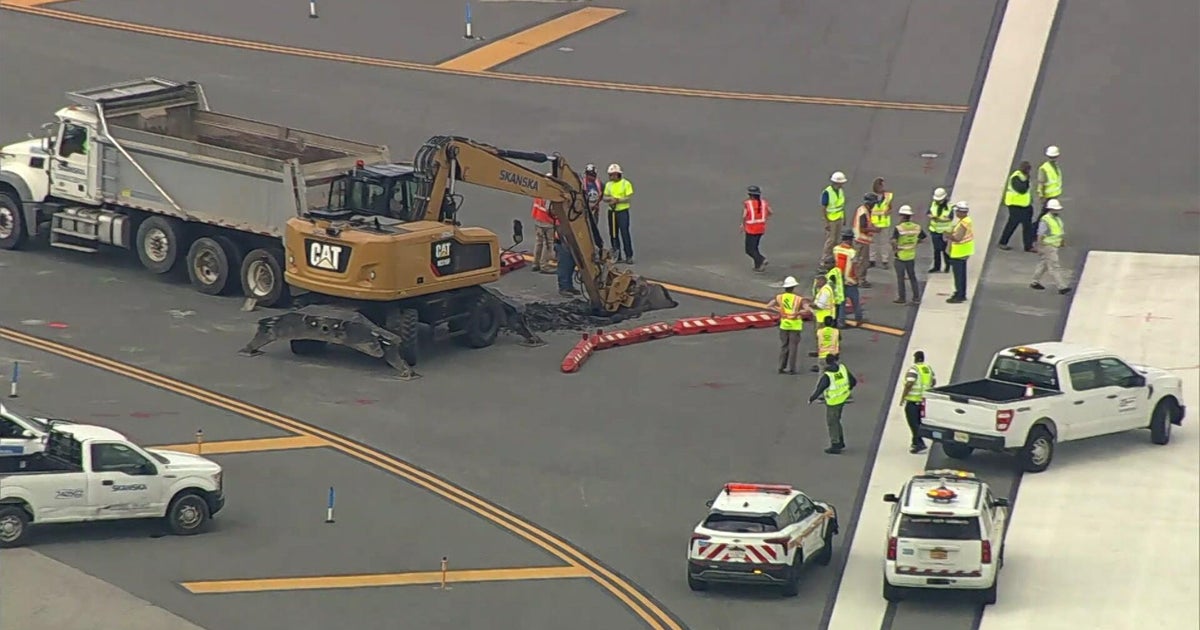
A sinkhole at LaGuardia Airport forced the closure of Runway 4/22, leaving the airport to operate on just one runway and raising the risk of extensive delays and cancellations. The shutdown is expected to last an undetermined amount of time, with thunderstorms later in the day likely to compound disruption. The event is operationally negative for travelers and airlines serving LaGuardia, but it appears localized rather than market-wide.
This is a short-duration disruption with asymmetric spillover into the airport ecosystem rather than a broad airline demand shock. The immediate losers are the carriers most exposed to LGA-originating business travel and same-day connections; the second-order hit is likely concentrated in yield compression on rebooked seats, crew mispositioning, and higher irregular-ops costs rather than a durable volume loss. Weather compounding the outage raises the probability that the operational impact lasts longer than the physical repair, which matters because even a 24-48 hour disruption can cascade into multi-day schedule normalization issues.
The bigger market signal is not the runway itself but the fragility of a constrained hub with limited rerouting capacity. Airports with spare runway capacity effectively monetize operational redundancy; LaGuardia does not, so any infrastructure event forces a disproportionate service degradation. That makes this a useful read-through for airport-concession and travel-exposed names: traffic may shift temporarily to JFK/Newark, but the local catchment still needs to fly, implying more disruption cost than demand destruction.
For traders, the cleaner expression is in airline beta and airport congestion proxies, not in a direct infrastructure trade. If the outage persists beyond one trading session, expect cancellations to hit near-term unit revenue and prompt downward estimate revisions for carriers with heavier Northeast short-haul exposure. The contrarian angle is that this may actually be constructive for carriers in aggregate over a quarter: reduced capacity during a weather event can support fares on remaining flights, so the net P&L damage depends on whether the disruption is measured in hours or days, not headlines.
The market is likely underpricing the operational knock-on to on-time performance metrics and customer compensation costs, but overpricing any long-term structural damage. If repairs are quick, this becomes a transient noise event; if the sinkhole source is tied to broader underground work, the tail risk is repeated closures and a more persistent overhang on LGA-dependent routes.
AI-powered research, real-time alerts, and portfolio analytics for institutional investors.
Request DemoOverall Sentiment
mildly negative
Sentiment Score
-0.25
