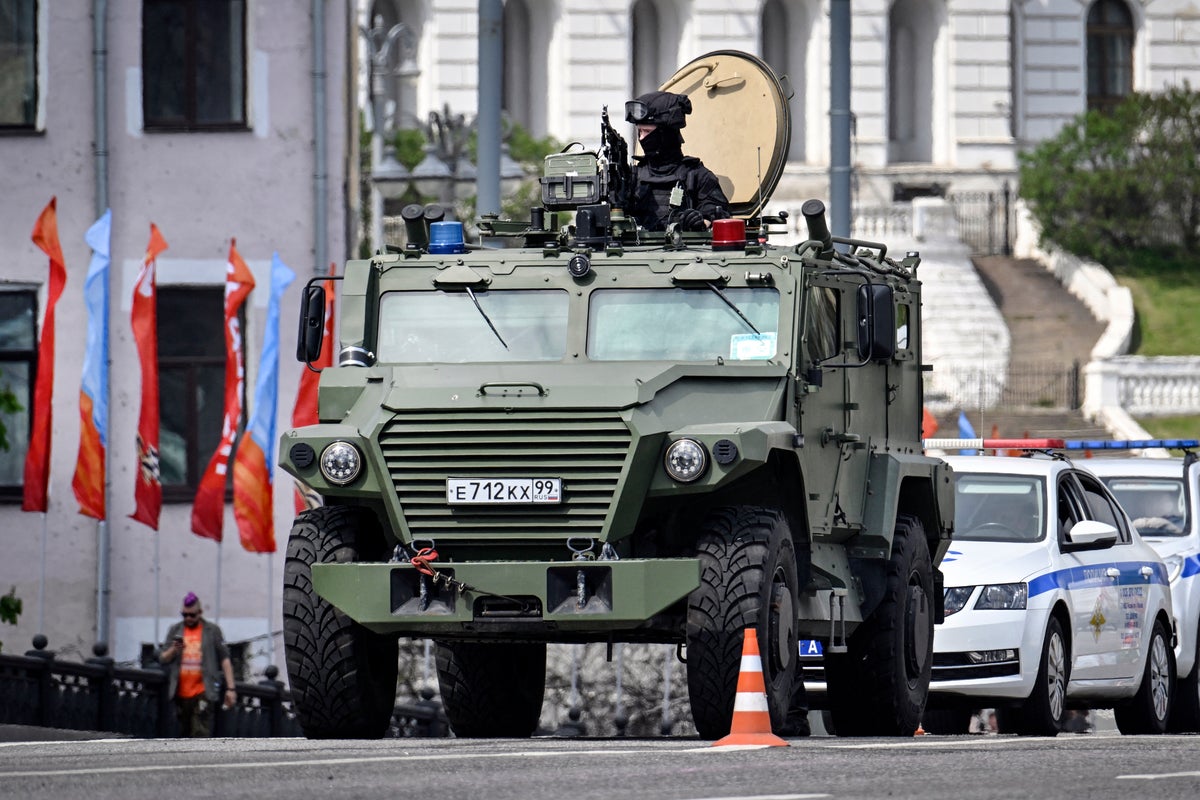
Russia warned it may strike foreign embassies in Kyiv and launch mass attacks on the Ukrainian capital if Ukraine disrupts Victory Day commemorations, while Ukraine said Russia had already violated its unilateral ceasefire 1,820 times by Wednesday morning. The article also reports drone incidents in Moscow and Latvia, plus Sweden detaining a suspected Russian shadow-fleet tanker, all of which underscore elevated regional security risk. A meeting between Ukrainian officials and Trump peace envoys adds a diplomatic angle, but the dominant takeaway is escalating wartime volatility.
The market implication here is less about the headline escalation itself and more about the widening perimeter of disruption. Even without a direct equity read-through, repeated strikes around Kyiv and spillover into Nato airspace raise the probability of a higher, more persistent European risk premium: defense procurement stays bid, insurance/transport costs creep up, and any asset with Baltic or Black Sea exposure becomes more expensive to underwrite. The practical second-order effect is that logistics bottlenecks and sanctions enforcement become self-reinforcing — every new incident increases political appetite for inspections, interdictions, and tighter compliance, which is structurally negative for sanctioned cargo flows and any gray-market shipping intermediaries.
The shadow-fleet enforcement angle is the cleaner tradable signal. Detentions and false-flag seizures tighten available tanker supply at the margin, but the bigger effect is operational: owners, charterers, and ports face higher legal and voyage risk, which can slow Russian crude movement even before formal sanctions bite harder. That tends to support freight rates and widen spreads for non-sanctioned tonnage providers, while pressuring anything that relies on opaque routing, AIS manipulation, or sanctioned counterparty exposure.
The contrarian point is that the immediate market reaction may already be too reflexively bullish for defense and too bearish for Europe risk assets. Unless the conflict broadens materially beyond signaling and localized strikes, the actual cash-flow impact on large-cap European industrials is usually delayed and diluted; the first beneficiaries are often not prime contractors but niche names tied to munitions, counter-UAS, border security, and military logistics. The key catalyst window is the next 3-10 trading days around Victory Day and any retaliation cycle; if those pass without a major kinetic escalation, risk premium can fade quickly.
AI-powered research, real-time alerts, and portfolio analytics for institutional investors.
Request DemoOverall Sentiment
strongly negative
Sentiment Score
-0.80
