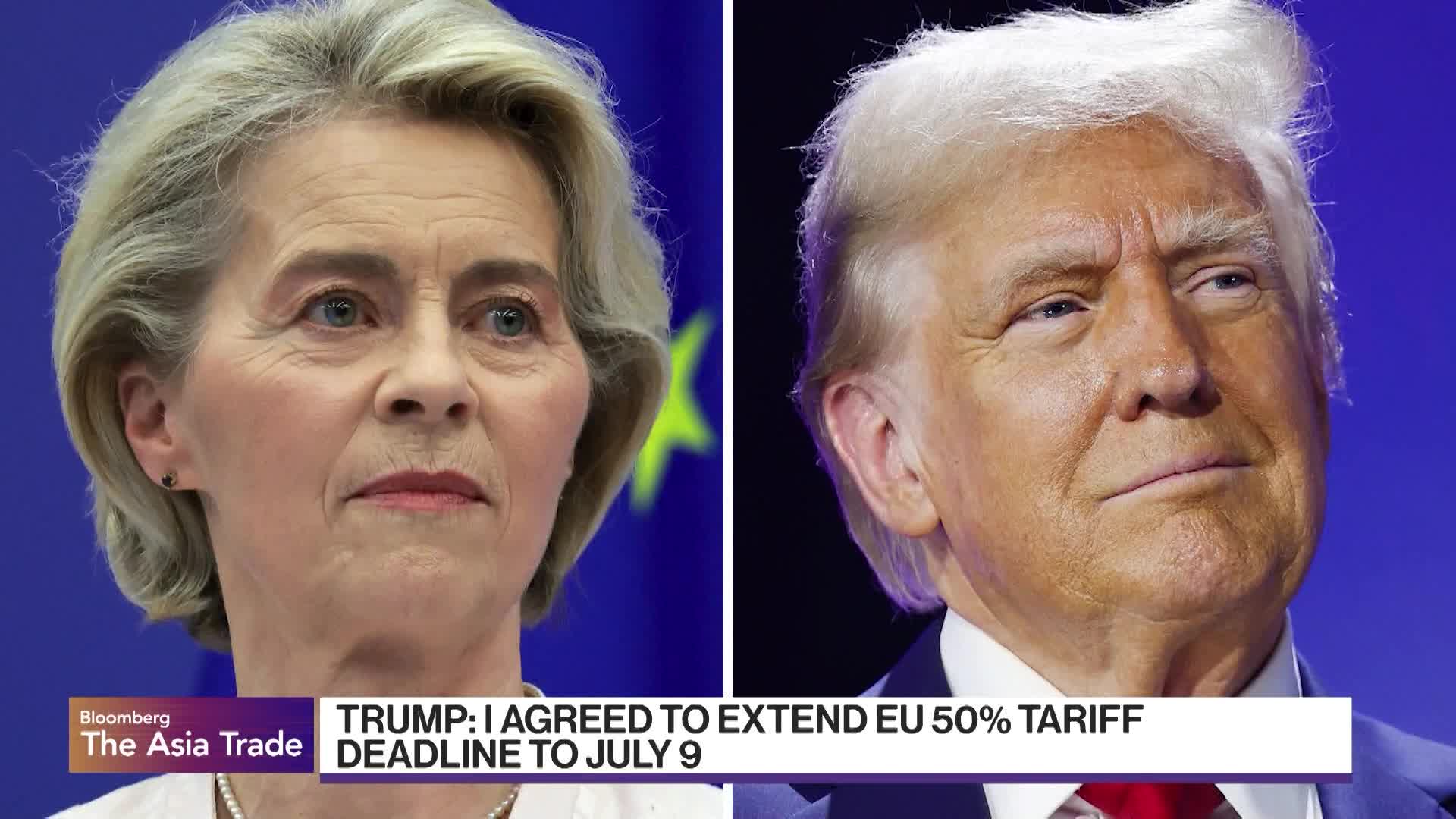
President Trump has extended the deadline for the imposition of 50% tariffs on goods from the European Union to July 9, following a phone call with Commission President Ursula von der Leyen. The extension provides additional time for negotiations and potentially averts immediate trade escalation between the US and the EU.
President Donald Trump has extended the deadline for the imposition of 50% tariffs on goods from the European Union to July 9, following a discussion with Commission President Ursula von der Leyen. This decision temporarily averts an immediate and significant escalation in transatlantic trade tensions, providing a crucial window for further negotiations. The market's reaction, characterized by a 'mildly positive' sentiment (score 0.15) and a moderate 'market_impact_score' (0.55), suggests a degree of relief, though tempered by the understanding that underlying trade disputes remain unresolved. The extension offers a brief respite for industries potentially affected by these substantial tariffs, particularly those reliant on EU-US supply chains, but the overarching uncertainty regarding future trade policy persists beyond the new deadline.
AI-powered research, real-time alerts, and portfolio analytics for institutional investors.
Request DemoOverall Sentiment
mildly positive
Sentiment Score
0.15
