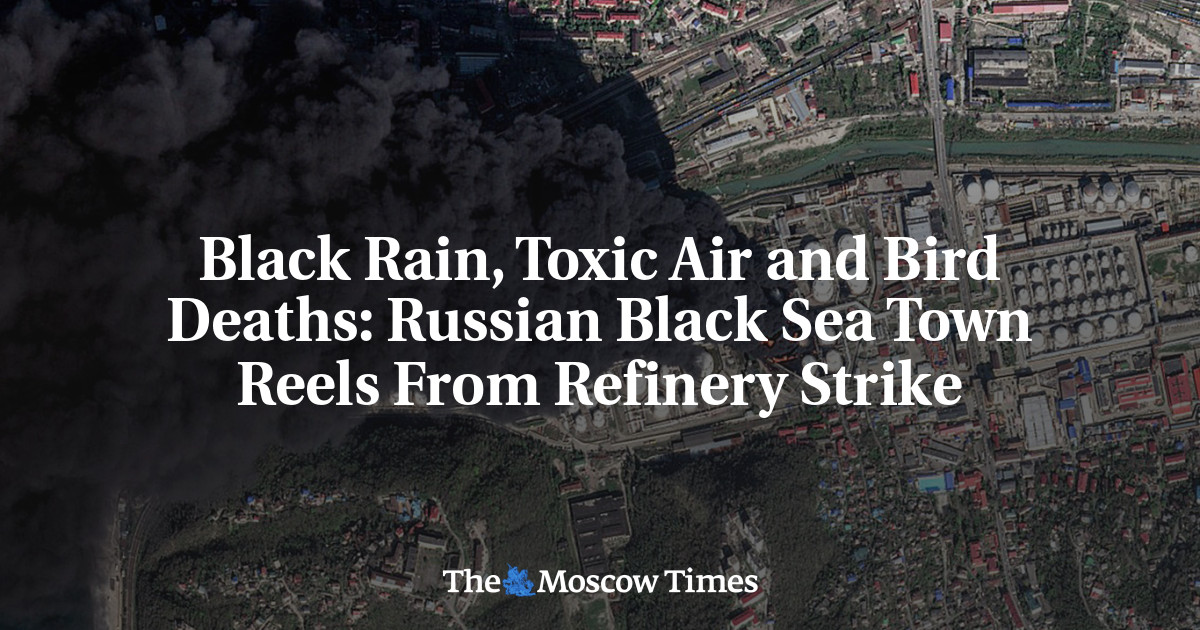
A Ukrainian strike on Rosneft’s Tuapse oil refinery triggered a major fire, a 7-kilometer oil slick in the Black Sea, and pollution across the Tuapse River, prompting a state of emergency. The refinery processes about 12 million metric tons of crude annually and is a key export route for naphtha, fuel oil and diesel, making the incident relevant to Russian fuel exports and regional energy logistics. Officials said the blaze was contained but still burning, while contaminated smoke, black rain and wildlife deaths underscore significant environmental damage.
The immediate market read is not just higher Russian product disruption, but a worsening reliability premium across the entire Black Sea fuel corridor. When refinery outages coincide with visible environmental damage and river overflow, the bottleneck is no longer only crude throughput; it also becomes port operations, insurance, local logistics, and the willingness of counterparties to handle cargoes with elevated contamination risk. That tends to tighten regional diesel and naphtha balances first, then propagate into Mediterranean arbitrage and floating storage economics over the next 1-3 weeks.
Second-order, the incident raises the probability that Russia leans harder on less transparent export channels and shorter-haul barrels, which is structurally negative for realized pricing and netbacks even if headline export volumes hold up. The more important medium-term effect is on maintenance and spare capacity: repeated strikes force refineries to carry more downtime buffer, reducing optionality just as seasonal demand is peaking into late summer. That can support cracks even if Brent itself is rangebound, because product supply is being removed faster than crude supply.
The contrarian point is that the cleanest trade may be outside obvious Russian proxies. If the market has already priced a generic geopolitics premium into crude, the underappreciated winner is non-Russian middle distillate exposure and non-Black Sea logistics assets with immediate access to Atlantic Basin supply. The risk to the thesis is a rapid containment announcement plus rerouting of flows through unaffected Russian ports, which would cap the move in crude but is less likely to fully repair product tightness or insurance spreads within days.
AI-powered research, real-time alerts, and portfolio analytics for institutional investors.
Request TrialOverall Sentiment
extremely negative
Sentiment Score
-0.85
