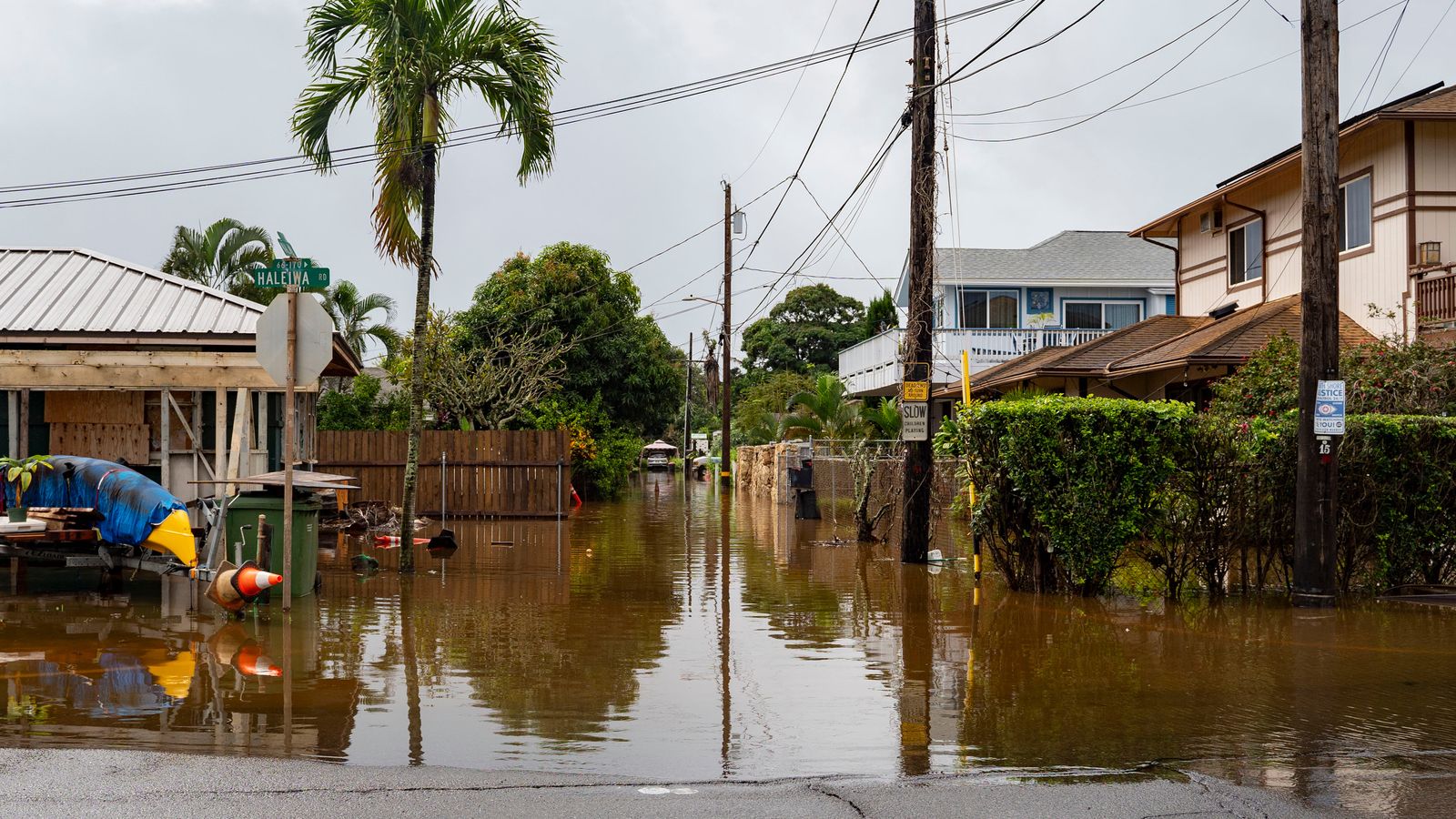
Key event: Hawaii is experiencing its worst flooding in over 20 years with more than 5,500 people under evacuation and roughly 4,000 directly in a dam evacuation zone; the 120-year-old Wahiawa dam is at risk of imminent failure. Governor Josh Green estimates storm damage could reach $1bn, with airports, schools, roads, homes and a hospital affected. Impact: likely localized hits to tourism and transportation, elevated insurance and reconstruction costs, and near-term state fiscal pressure; monitor insurers, airport operations and state/FEMA relief actions.
Flooding of this scale will compress near-term liquidity for local governments and regional banks through emergency spending, temporary tax base erosion (tourism/housing), and accelerated drawdowns on state disaster funds — expect a clear spike in short-term muni issuance and potential rating pressure on small, Hawaii-focused obligations within 1–6 months. National reinsurers and primary P&C carriers will see elevated claims flow over the next 30–90 days; reinsurers typically reprice at the next renewal cycle (~6–12 months), so the true earnings impact is staggered rather than instantaneous.
Reconstruction demand creates a pathway to outsized revenue for building-materials and heavy-equipment suppliers: aggregates, ready-mix, and excavator hours are frontloaded in the first 3–12 months after damage assessments, while larger civil contracts (road/bridge/levee repair) convert over 6–24 months and attract selective large-cap contractors. Conversely, supply-chain pinch points (local ports, barges, specialized crews) will raise short-term input costs and extend project timelines, benefiting firms with regional logistics capacity or inventory-heavy models.
Travel, lodging, and regional air carriers with concentrated Hawaii exposure will suffer booking displacement and higher operating costs near term; however, national leisure demand can re-rate once recovery timelines are visible and FEMA/insurer-funded rebuilds support return visits. The market often overshoots on insurer/airline downside in the first 2–8 weeks; by 3–9 months the tradeable opportunity shifts to cyclicals that capture reconstruction flows or insurers that can materially increase premiums at renewal.
AI-powered research, real-time alerts, and portfolio analytics for institutional investors.
Request DemoOverall Sentiment
strongly negative
Sentiment Score
-0.70
