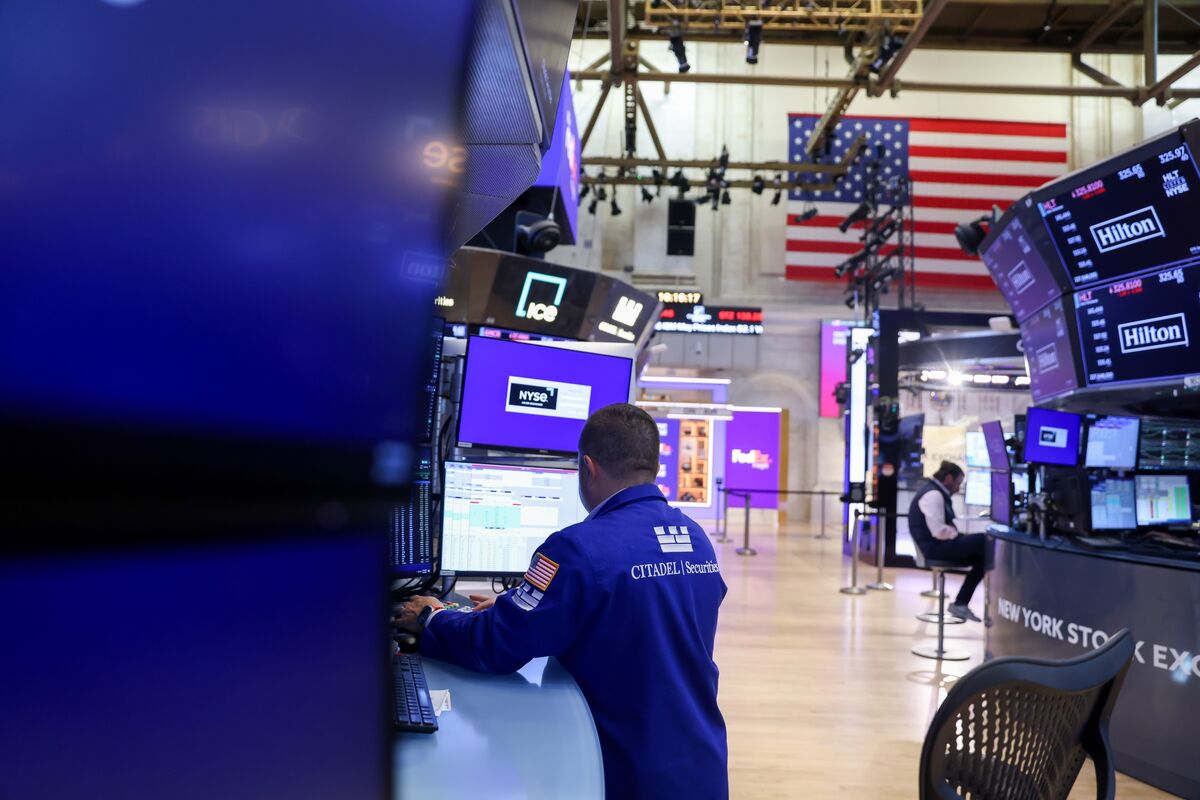
Goldman Sachs and Barclays trading desks warned that Friday's selloff may signal more downside risk, citing crowded positioning, narrow market breadth, and higher-for-longer rates. The message is that momentum-heavy stocks could be vulnerable to abrupt pullbacks rather than assuming the rout was a one-off. The article points to elevated volatility and fragile market internals, but does not cite a specific macro shock or earnings event.
This kind of tape is more dangerous than a headline-driven macro shock because it attacks the market’s internal financing conditions. When breadth is this narrow, a modest air-pocket can force systematic de-risking: vol-control funds, risk-parity, and trend-followers all respond to the same signal, so a small spot move can translate into an outsized decline over 1-3 sessions. That makes the fragility self-reinforcing rather than merely sentiment-driven.
The second-order effect is not just lower equity prices; it is higher implied correlation and a steeper vol term structure, which tends to punish crowded growth and momentum exposures first. The market’s “winner” in the near term is not a defensive sector per se, but liquidity itself: index hedges, cash, and short-dated downside convexity. If rates stay restrictive, higher discount rates keep compressing the duration-sensitive end of the equity market even if earnings remain stable.
The key catalyst window is days to weeks, not months. A rebound in breadth can stabilize positioning quickly, but it likely needs either a benign rate impulse or a forced unwinding of the “higher for longer” narrative; absent that, every rally becomes a candidate for selling into. The contrarian miss is that this may be less about a new bearish regime than about a crowded ownership reset—meaning the first leg lower can be sharp even if the eventual drawdown is limited.
For BCS and GS specifically, the desks’ warning is reputationally useful: it can precede higher trading revenue and client demand for hedges, but it also signals tighter risk appetite that can slow capital markets activity if the selloff persists. In other words, they may benefit tactically from volatility, yet the broader fee pool and underwriting calendar get hit if the move spills from a one-day rout into a multi-week risk-off phase.
AI-powered research, real-time alerts, and portfolio analytics for institutional investors.
Request DemoOverall Sentiment
mildly negative
Sentiment Score
-0.30
Ticker Sentiment
