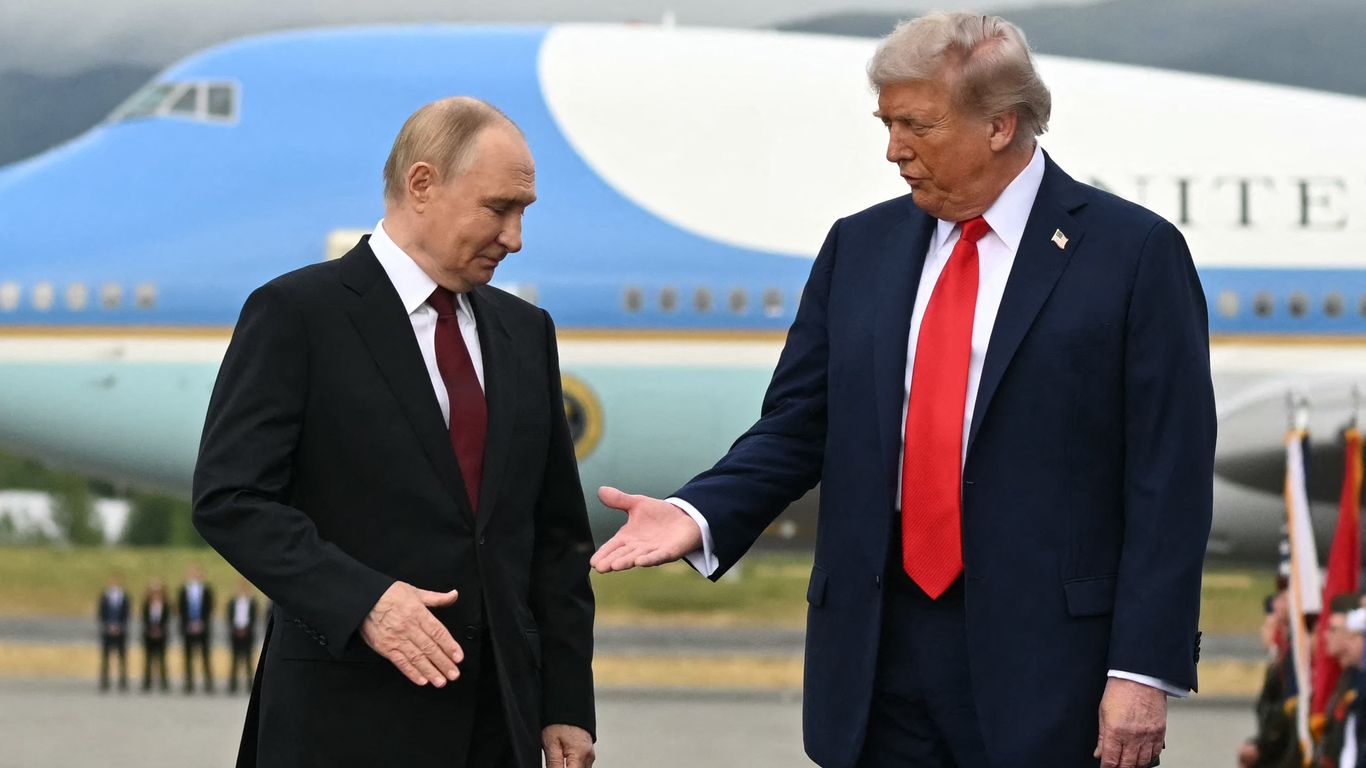
Russian President Putin's proposed peace terms for Ukraine, relayed by President Trump, demand Ukraine cede the Donetsk and Luhansk regions and freeze current front lines in Kherson and Zaporizhzhia, alongside U.S. recognition of Russian sovereignty over these territories. These maximalist demands, which also include discussions on security guarantees potentially involving China rather than NATO, indicate a low probability of a significant breakthrough in upcoming diplomatic efforts, including President Zelensky's meeting with Trump and a potential trilateral summit, underscoring persistent geopolitical instability.
Russian President Vladimir Putin's peace terms, as communicated by U.S. President Trump, represent a maximalist negotiating stance that significantly lowers the probability of a near-term diplomatic breakthrough. The core demands—Ukraine's complete withdrawal from the Donetsk and Luhansk regions and a freeze of the front lines in Kherson and Zaporizhzhia—are highly asymmetrical, requiring substantial territorial concessions from Ukraine for what is presented as a Russian concession to halt advances that have already stalled. This proposal is almost certain to be rejected by Kyiv, casting doubt on the productivity of President Zelensky's upcoming White House visit and the proposed trilateral summit. While Putin's willingness to discuss security guarantees for Ukraine is a minor positive signal, his suggestion of China as a potential guarantor signals a clear intent to counter any NATO-led security architecture. The situation underscores persistent geopolitical instability, with the high market impact score reflecting the ongoing risk of conflict continuation or escalation, which will continue to influence energy, agricultural, and defense-related markets.
AI-powered research, real-time alerts, and portfolio analytics for institutional investors.
Request DemoOverall Sentiment
strongly negative
Sentiment Score
-0.60
