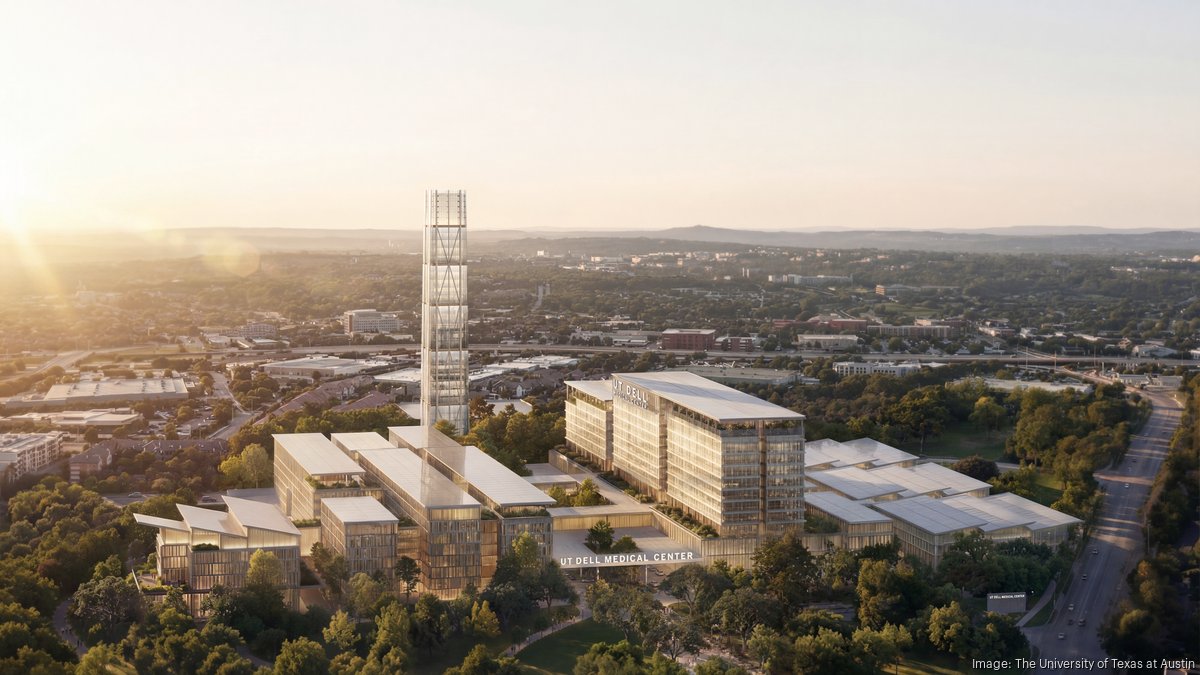
Michael and Susan Dell pledged $750 million to support the new UT Dell Medical Center in North Austin, pushing their lifetime University of Texas giving above $1 billion. The project, slated to open in 2030 with 300-500 beds, will also support scholarships, student housing and the Texas Advanced Computing Center, and is being positioned as an AI-native hospital and health system. The development should bolster Austin’s life-science ecosystem and could attract additional private medical and life-science investment around the UT Dell Campus for Advanced Research.
This is less a one-off philanthropy headline than a signal that Austin’s hospital complex is becoming a long-duration infrastructure anchor for an adjacent innovation district. The second-order effect is that the land value, tenancy mix, and capital allocation around North Austin should re-rate years before first patient flow, because private diagnostics, outpatient, medtech, and AI workflow vendors will cluster where clinical demand is being deliberately manufactured. That benefits the broad Texas growth stack, but the most immediate public-market read-through is to suppliers of compute, clinical software, and specialized equipment rather than to the hospital operator itself.
The AI-native framing matters more than the bed count. If the facility is built around data-rich workflows from day one, procurement will tilt toward integrated platforms that can support imaging, oncology, genomics, scheduling, and decision support at scale; that raises switching costs and can create a multi-year vendor lock-in cycle. The underappreciated winner is the ecosystem around inference, storage, networking, and robotics-adjacent automation, while incumbent local providers face a future where higher-acuity patients and specialist talent may migrate toward the new center, compressing their profitable mix over time.
The biggest risk is timeline slippage: this is a 2030 opening with multiple intervening funding, permitting, and construction milestones, so the equity market is likely to over-discount near-term impact and underprice execution risk. A second-order downside is that the project could catalyze competition for scarce clinical labor and drive up real-estate and wage inflation in North Austin before revenue ramps. Consensus is probably too bullish on immediate monetization and too bearish on the longer-dated platform effects; the right frame is a 3-5 year optionality trade, not a quarter-to-quarter catalyst.
AI-powered research, real-time alerts, and portfolio analytics for institutional investors.
Request DemoOverall Sentiment
strongly positive
Sentiment Score
0.78
Ticker Sentiment
